#Chiloe Islands UNESCO world heritage sites
#Chiloe north
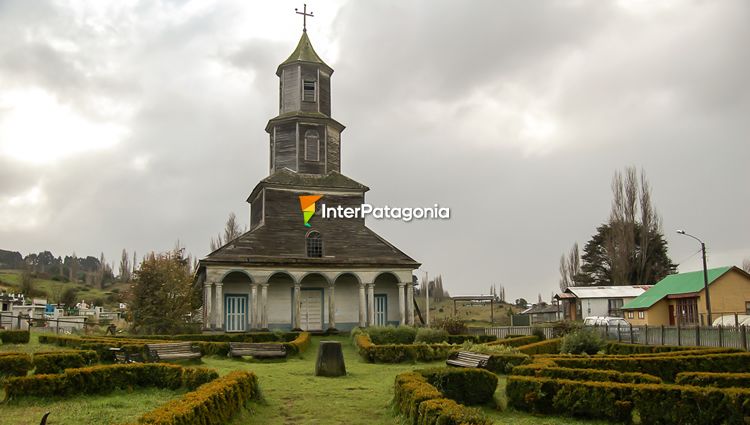
#Church of Colo
in
#Quemchi
at
W.233, Colo
#
The church was built from wood around 1890 and remains in good condition.
#Church of Tenaun
in
#Tenaun
on
Teniente Merino St
#
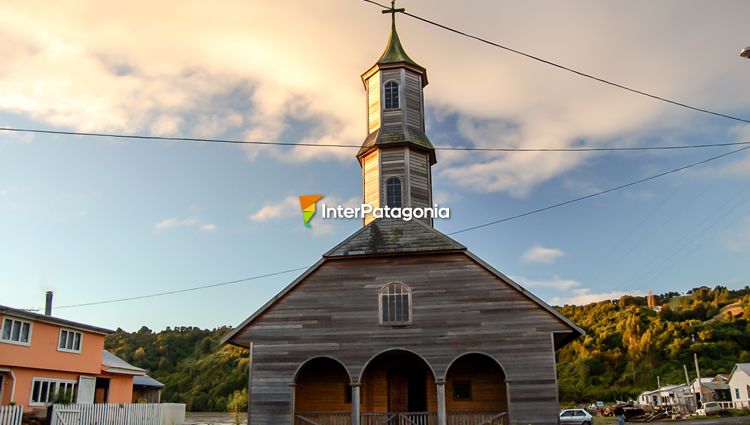
The church is based on a base of stones and coigue wood. Its structure is composed mainly of wood of tepa, tenio and cinnamon. The interior lining is made of larch wood, while the outer covering is made of larch tiles and cypress overlap of the Guaitecas and larch. The roof is made of corrugated sheets of galvanized iron.
#Church San Juan Bautista
in
#San Juan de Coquihuil
at
W-235 47
#
Commonly referred to as «Church of San Juan» —Spanish: Iglesia de San Juan—, is within the Diocese of Ancud; its construction was finished around 1887.
#Church of Our Lady of Sorrows
in
#Dalcahue
at
Manuel Rodríguez 154
#
It was built at the end of the 19th century in a site formerly occupied by a Jesuit missionary chapel.
#Chiloe central
#Church of Quinchao
in
#Quinchao
at
Villa Quinchao
#
The patron saint of the church is Our Lady of Grace, whose feast day is celebrated on December 8. On this day hundreds of people flock to the village of Quinchao to participate in the Our Lady of Grace Festival, one of the most important religious festivals on the archipelago of Chiloe.
#Church of Santa María de Loreto
in
#Achao
at
Progreso 04
#
The Achao church is one of the oldest traditional Chiloé churches built in the 18th and 19th centuries, and survives almost intact from de Jesuit mission era.
#Church of St Mary
in
#Rilan
at
515 Emilio Marquez St.
#
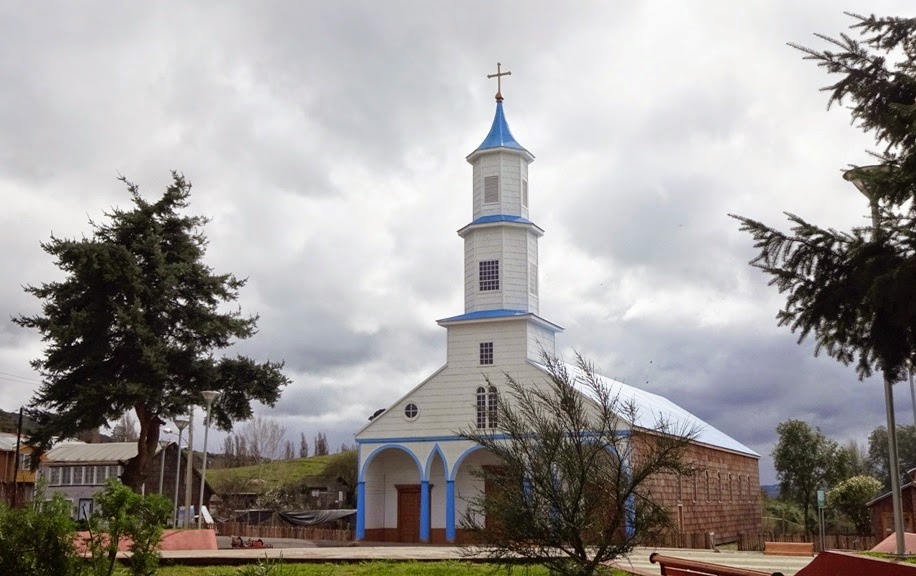
The history of the church dates back to 1658, when Rilan was a settlement for indigenous communities. The current church was built early in the 19th century from coigue and cypress wood and is lined with alerce, cypress and manio.
#Church of San Francisco
in
#Castro
on
Gamboa St.
#
Castro is Chile's third oldest city in continued existence. It was founded in February, 1567 by Martín Ruiz de Gamboa, who was sent by his father-in-law, temporary governor of Chile Rodrigo de Quiroga, to establish a city on the Chiloe Archipelago called Santiago de Castro. That same year, a church was built with the name of the apostle Saint James (Santiago in Spanish), which was to be used in the evangelization of the indigenous peoples of Chiloe.
#Church of Senora de Gracia
in
#Castro
on
Plaza de Nercon
#
It is 40 metres long, 15 metres wide, and has a tower that stretches 25 metres high. Inside there is a sculpture of Saint Michael with a demon at his feet that was made with only one piece of wood, and the interior paint makes it appear as though it were marble.
#Church San Antonio de Padua
in
#Chonchi
at
W-625, Vilupulli
#
Built at the beginning of the 20th century, the patron saint of the church of Vilupulli is St Anthony – also the patron saint of the Church of Colo – whose feast day is celebrated on June 13.
#Church of St Charles Borromeo
in
#Chonchi
at
Francisco Corral 297
#
This church belongs to the parish of San Carlos.
#Chiloe south
#Church of the Nativity of Maria
in
#Puqueldon
at
Ichuac
#
In the early 1990s, the local community in Ichuac joined together to coordinate reparations on the church and it is currently considered to be in good condition.
#Church of Jesus of Nazareth
in
#Puqueldon
at
Aldachildo
#
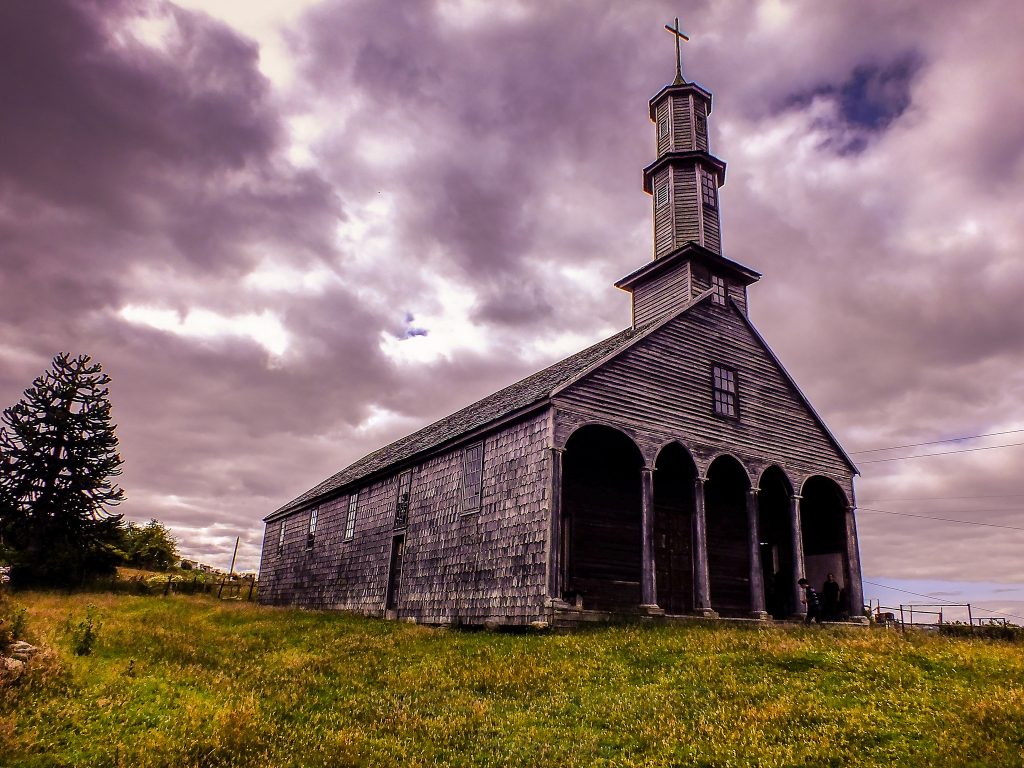
The Church of Aldachildo was completed at the end of the 19th century and has not been subject to reparations or replacement of materials. It is currently in good condition although there has been some deterioration of the exterior and nave panels.
#James the Apostle Church
in
#Puqueldon
at
Detif
#
Built on a stone base to protect it from soil humidity, the church was made from coigue and alerce wood and lined with alerce tiles. Due to the scarcity of metals on the islands of Lemuy and Chiloe, wooden rivets were used in place of iron nails.
#Chiloe east
#Our Lady of the Rosary Church
on
#Chelin Island
#
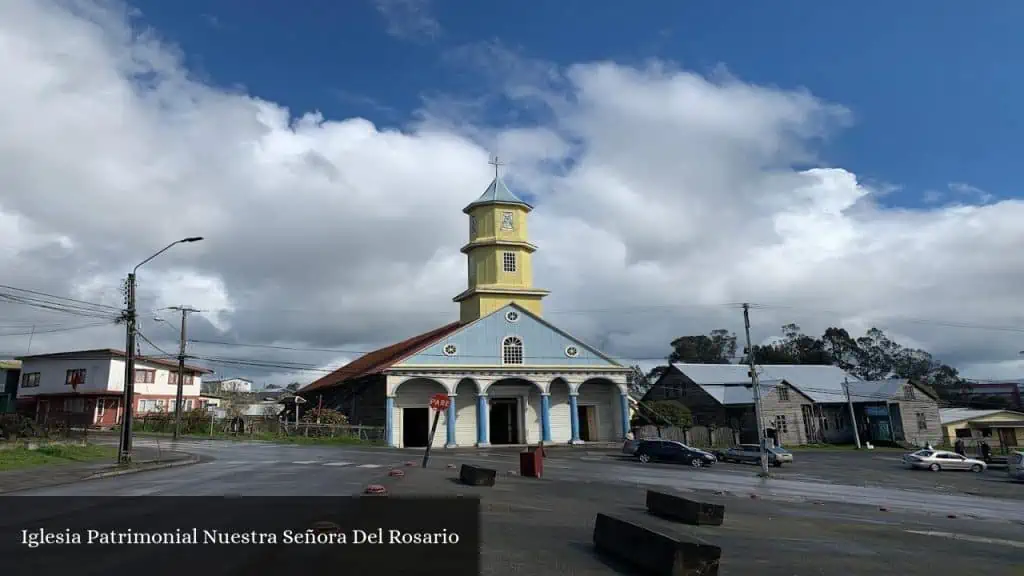
Construction of the church, built from wood, was completed in 1888 and it was restored in 1990.
#Jesus Nazareno Church
on
#Caguach Island
#
In 1919, the original Church of Caguach was destroyed completely by a fire, and rebuilt in 1925 by local inhabitants using wood, the material used in the original structure. This was the third church built in Caguach.