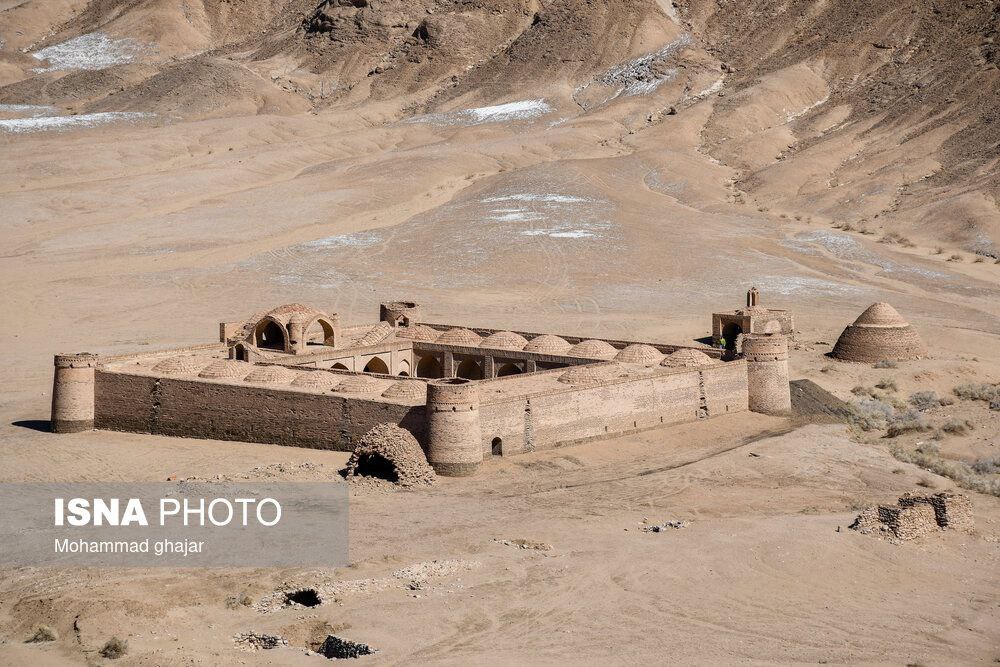
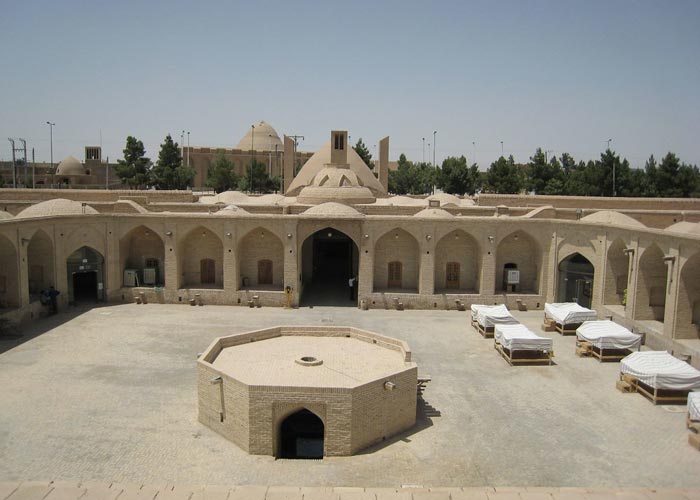
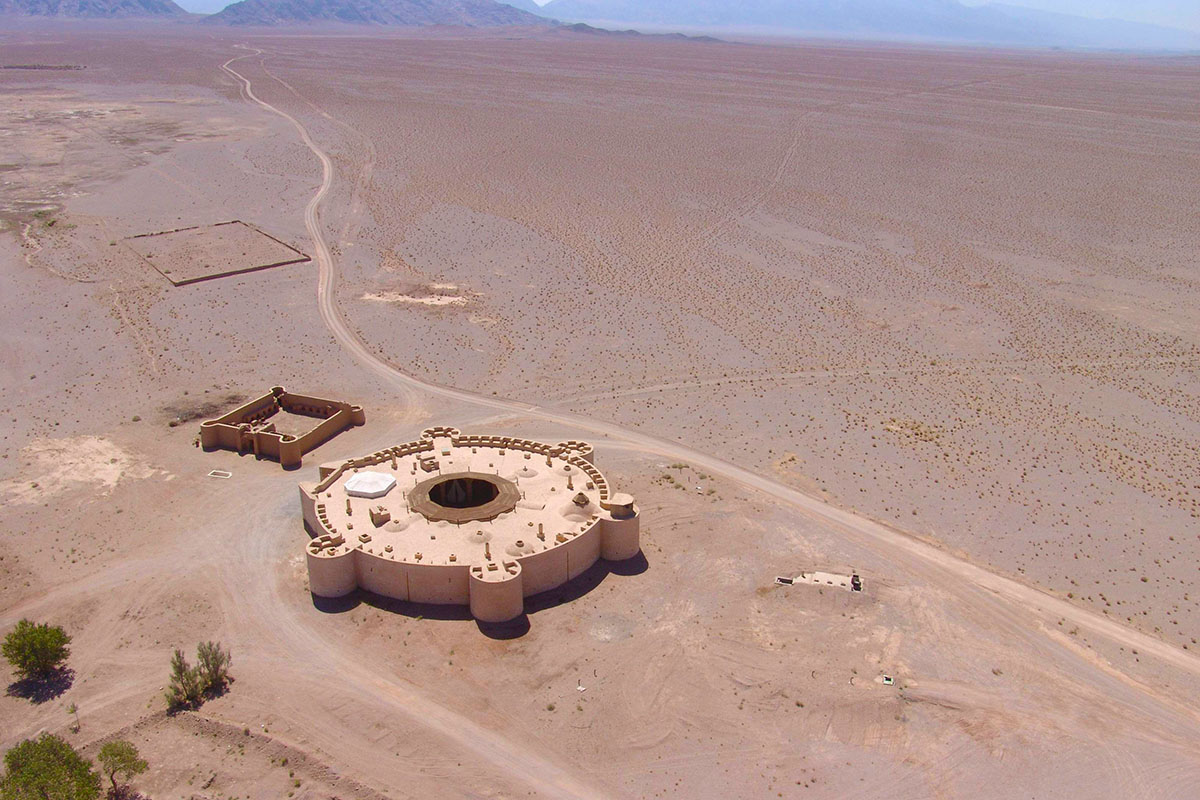
#Iran UNESCO world heritage sites #north east + #north west + #south
#Alborz province [capital = Karaj]
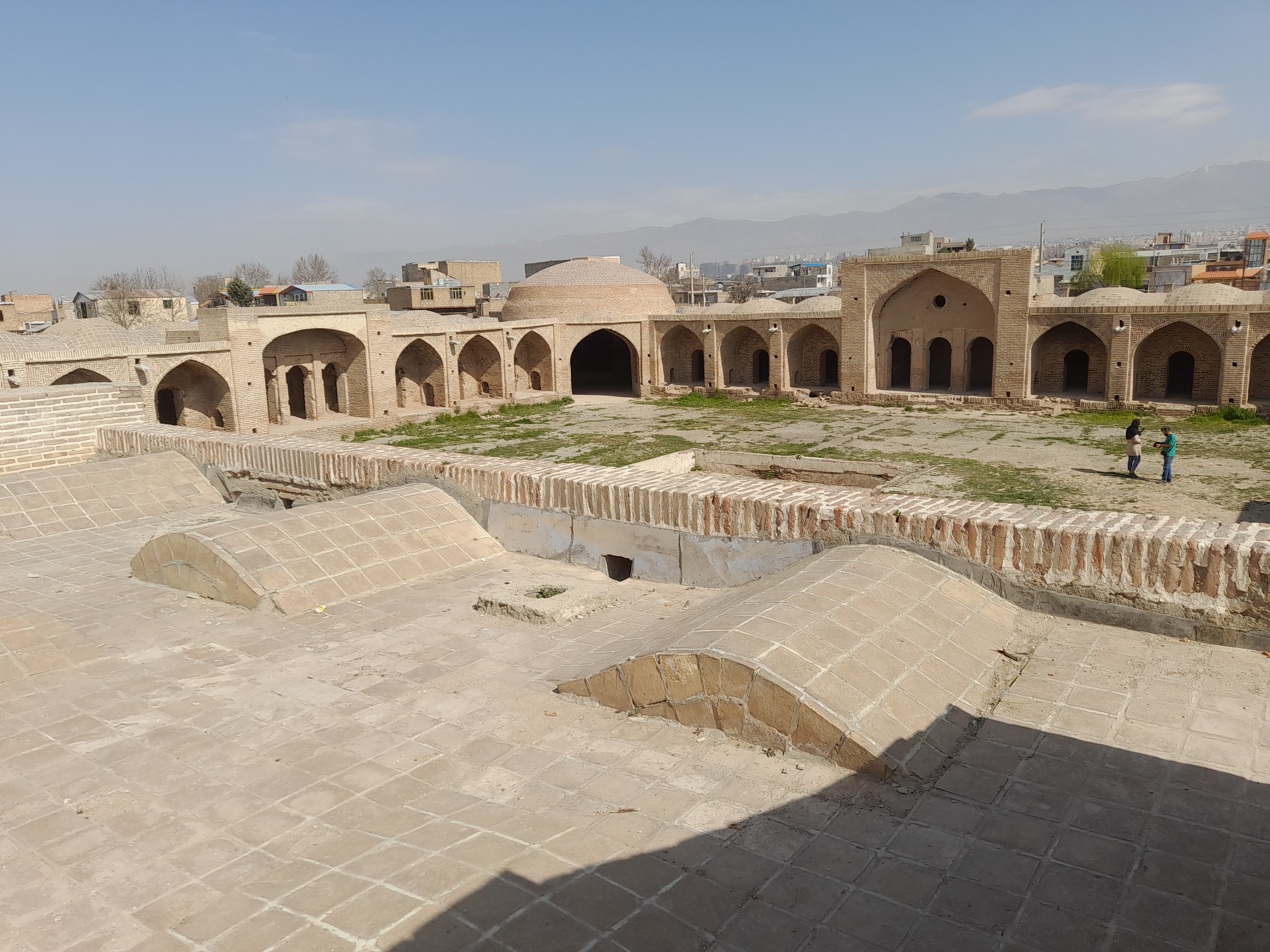
#Caravanserai
in
#Yengi Emam
at
#
N35 56 10.63 E50 43 10.64
#Ardabil province [capital = Ardabil]
#Sheikh Safi Al-Din Ardabili's Shrine
in
#Ardabil
at
#
N38 14 55 E48 17 29
#
The layout of the ensemble became a prototype for innovative architectural expressions and a reference for other khanegahs. As the shrine of a prominent Sufi master, who also was the founder of the Safavid Dynasty, the property has remained sacred in Iran up to the present day.
#Saein Shah Abbasi Caravanserai
in
#Nir
at
#
N38 0 3.76 E47 52 53.71
#Bushehr province [capital = Bushehr]
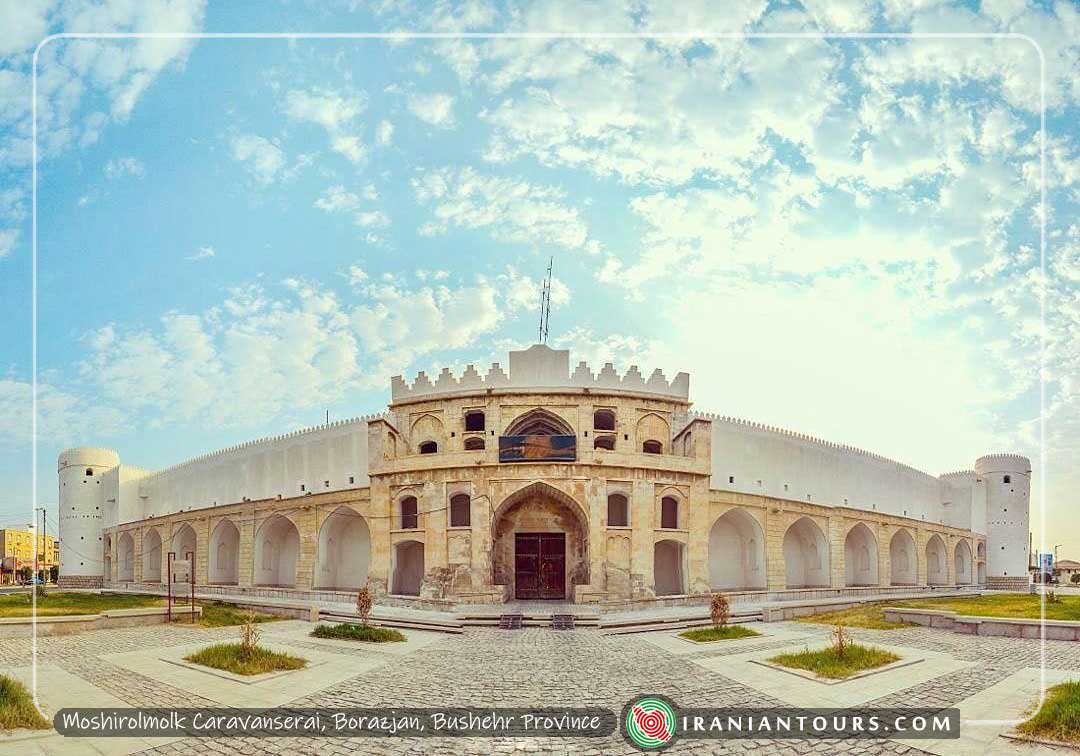
#Moshiralmak Caravanserai
in
#Borazjan
at
#N29 16 1.61 E51 12 29.73
#East Azerbaijan province [capital = Tabriz]
#Saint Stepanos Ensemble
in
#Jolfa
at
#monastery + Darresham & Chupan Chapel
#
The three monuments represent a blend of architectural styles from the Byzantine, Persian, Eastern Orthodox, Assyrian, Persian, Muslim, and Armenian cultures.
#Khaje Nazar Caravanserai
in
#Jolfa
at
#N38 58 38.8 E45 34 37.1
#Historic Bazaar Complex
in
#Tabriz
on
#
Jomhoori Eslami street
#
The lasting role of the Tabriz Bazaar is reflected in the layout of its fabric and in the highly diversified and reciprocally integrated architectural buildings and spaces, which have been a prototype for Persian urban planning.
#Goujebel Caravanserai
in
#Goouydaraq
at
#
N38 20 38.02 E46 51 48.06
#Jamal Abad Caravanserai
in
#Miyaneh
at
#
N37 16 18.89 E47 50 35.16
#Fars province [capital = Shiraz]
#Caravanserai
in
#Izadkhast
at
#
N31 30 48.11 E52 7 59.54
#Archaeological site
in
#Pasargad
at
#N30 11 37.788 E53 10 2.244
#
It includes, among other monuments, the compact limestone tomb on the Morgab plain that once held Cyrus the Great's gilded sarcophagus; Tall-e Takht ("Solomon's Throne"), a great fortified platform built on a hill and later incorporated into a sprawling citadel with substantial mud-brick defences; and the royal ensemble, which consists of several palaces originally located within a garden layout (the so-called "Four Gardens").
#Persian Garden
in
#Pasargad
#
It is best to imagine Pasargadae as a group of garden pavilions in a park: essentially a camp of nomads, but made out of natural stone. Stylistically, the Audience Hall, the Residential Palace, the garden pavilions A and B, and the Gate belonged to the architectural tradition of the Iranian nomads, who lived in large tents.
#City
of
#Persepolis
at
#N29 56 3.984 E52 53 25.008
#
Renowned as the gem of Achaemenid (Persian) ensembles in the fields of architecture, urban planning, construction technology, and art, the royal city of Persepolis ranks among the archaeological sites which have no equivalent and which bear unique witness to a most ancient civilization.
#Eram Garden
in
#Shiraz
at
#District 1
#
Eram garden, located along the northern shore of the Khoshk River in Shiraz, is one of the most famous and beautiful Persian gardens in all of Iran.
#Palace
in
#Sarvestan
at
#N29 11 43.94 E53 13 51.84
#
The Sarvestan Palace was built by the Sasanian king Bahramgur (r. 420-438) and dominates an immense, empty plain. The name "palace" is a bit misleading, because the monument's function is not really understood. It may in fact have been a hunting lodge or even a sanctuary.
#Qaleh Dokhtar
in
#Firuzabad
on
#Firouzabad-Kerman road
#
The fortified palace contains many of the recurring features of Sasanian palace and civic architecture: long halls, arches, domes, recessed windows, and stairways.
#Ardashir Reliefs
in
#Firuzabad
at
#Investiture + Victory + Khurreh (Shahr-e Gour)
#
Ahura Mazda and Ardashir I is a rock relief from Sasanian Persia. This relief was carved around 235 which makes it one of the oldest Sasanian rock reliefs. The relief is well-preserved and is mostly unharmed.
#Ardashir Palace
in
#Firuzabad
at
#Atashkadeh
#
The structure contains three domes, among other features, making it slightly larger and more magnificent than its predecessor, the nearby castle of Dezh Dokhtar. However, it seems that the compound was designed to display the royalty image of Ardashir I, rather than being a fortified structure for defense purposes.
#Shapur Cave
in
#Kazerun
on
#Shahpoor Cave Road
#
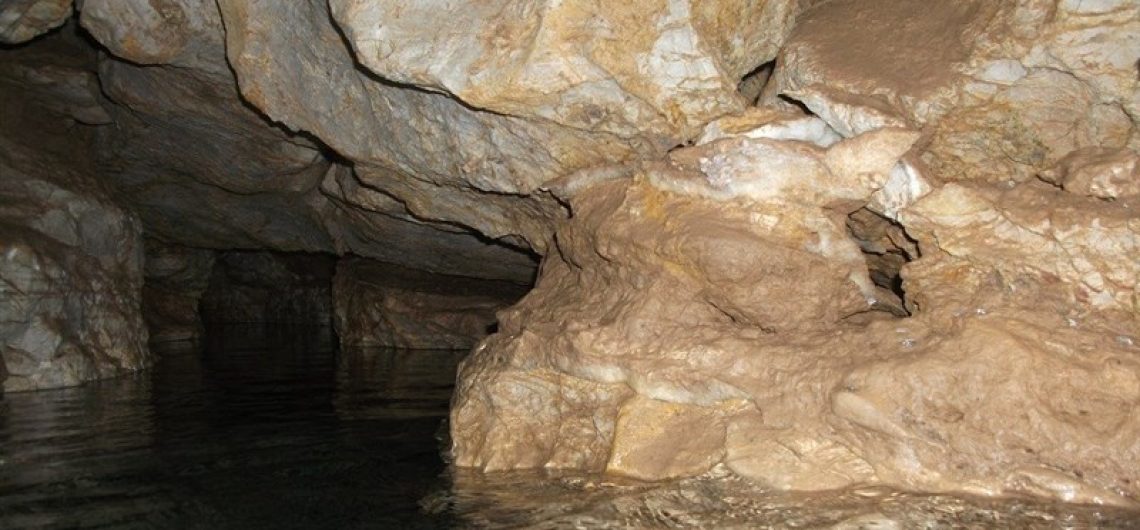
In the cave, on the fourth of five terraces, stands the colossal statue of Shapur I, the second ruler of the Sasanid Empire. The statue was carved from one stalagmite. The height of statue is 7 m. and its shoulders are 2 m. wide, and its hands are 3 m. long.
#Bishapur Palace City
in
#Kazerun
at
#Bishapur
#
The most important point about this city, is the combination of Persian and Roman art and architecture that hadn't been seen before Bishapur construction.
#Gilan province [capital = Rasht]
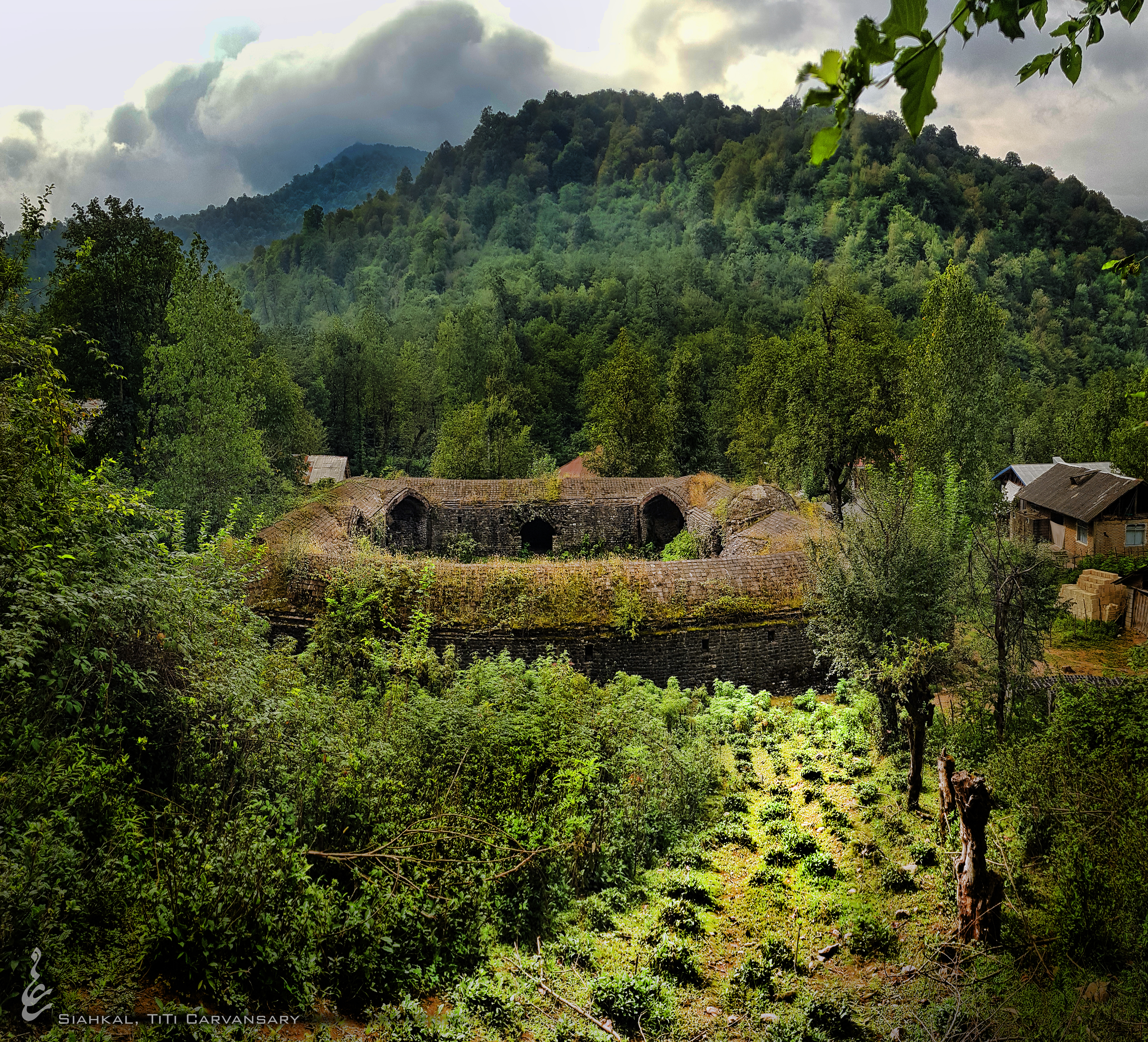
#Titi Caravansary
in
#Siahkal
at
#N37 2 41.19 E49 54 8.05
#Hyrcanian Forests
in
#Siahrud + Qaleh Rudkhan + Subatan
#
Their floristic biodiversity is remarkable: 44% of the vascular plants known in Iran are found in the Hyrcanian region, which only covers 7% of the country.
#Golestan province [capital = Gorgan]
#Hyrcanian Forests
at
N36 39 55 E54 24 5.5 + N37 3 56 E49 9 9.88 + N37 56 7.98 E48 49 56.4
See above.
#Gonbad-e Qabus Tower
in
#Gonbad Kavus
at
#Emam Khomeini Shomali
#
It is an outstanding and technologically innovative example of Islamic architecture that influenced sacral building in Iran, Anatolia and Central Asia.
#Hyrcanian Forests
at
N37 20 26.39 E55 43 32.3 + N37 25 17.3 E55 43 27.4
See above.
#Hamedan province [capital = Hamedan]
#Archaeological remains of ancient Hegmataneh
in
#Hamedan
at
#Cultural Heritage and Tourism Base on Ekbatan Street
#
Hegmataneh provides important and rare evidence of the Medes civilization in the 7th and 6th centuries BCE.
#Caravansary
in
#Tajabad-e Sofla
at
#N34 52 35.88 E48 13 14.62
#Shah Abbasi Caravanserai
in
#Farasfaj
at
#N34 29 16.68 E48 16 58.76
#Hormozgan province [capital = Bandar Abbas]
#Caravanserai
in
#Bastak
at
#N27 11 54.6 E54 22 33.5
#Isfahan province [capital = Isfahan]
#Caravanserai
in
#Maranjab
at
#N34 17 56.89 E51 48 44.59
#Fin Garden
in
#Kashan
on
#Amir Kabir Street
#
Completed in 1590 during the Safavid era, it is considered the pinnacle of Persian garden design, blending natural spring water with symmetrical architecture to create a "paradise on earth".
#Safavid (Gabr Ābād) Caravanserai
in
Kashan
at
#N33 46 6.96 E51 29 22.29
#Qanat Mozd Abad
in
#Meymeh
#
In winter locals put fabric in clay urns and they put the urns in some holes on the dams. Then, when water pressure increased the urns expanded and the dam were closed. In spring they broke the urns to let the water behind the dams flow to the fields.
#Qanat
in
#Vazvan
#
This Qanat has an underground dam which stores the water in winter (around 4 months), to provide the agricultural fields with more water in springtime.
#Sheikh Ali Khan chair siah caravanserai
in
#Jahadabad
at
N32 52 5.37 E51 22 13.45
#Abbasi Caravanserai
in
#Gaz
at
N32 48 33.69 E51 36 33.56
#Chehel Sotoon Palace
in
#Isfahan
on
#Imam Hossein Square
#
Chehel Sotoun is a pavilion in the middle of a park at the far end of a long pool, in Isfahan, Iran, built by Shah Abbas II to be used for his entertainment and receptions.
#Meidan Emam
in
#Isfahan
on
#Naghsh e Jahan Square
#
Built by Shah Abbas I the Great at the beginning of the 17th century, and bordered on all sides by monumental buildings linked by a series of two-storeyed arcades, the site is known for the Royal Mosque, the Mosque of Sheykh Lotfollah, the magnificent Portico of Qaysariyyeh and the 15th-century Timurid palace.
#Atiq Comprehensive Mosque
in
#Isfahan
on
#Majlesi Street
#
Its double-shelled ribbed domes represent an architectural innovation that inspired builders throughout the region. The site also features remarkable decorative details representative of stylistic developments over more than a thousand years of Islamic art.
#Caravanserai
in
#Mahyar
at
#N32 15 54.06 E51 48 35.04
#Abbasi Caravanserai Aminabad
in
#Esfarjan
at
N31 40 21.7 E52 4 6.41
#Caravanserai
in
#Kuhpayeh
at
N32 42 48.35 E52 26 8.83
#Caravanserai
in
#Neyestanak
at
N32 58 16.34 E52 47 57.71
#Qanat of the Moon
in
#Ardestan
at
#N33 22 45 E52 22 30
#
The two-story aqueduct of Mon Ardestan is the only two-story aqueduct in the world, which is unique and unique in this respect.
#Kerman province [capital = Kerman]
#Cultural Landscape
in
#Maymand
#
Maymand is a self-contained, semi-arid area at the end of a valley at the southern extremity of Iran's central mountains. The villagers are semi-nomadic agro-pastoralists. They raise their animals on mountain pastures, living in temporary settlements in spring and autumn. During the winter months they live lower down the valley in cave dwellings carved out of the soft rock (kamar), an unusual form of housing in a dry, desert environment.
#Chah-e Karo Caravanserai
near
#Dubinovka
at
N31 34 9.6 E56 51 0.61
#Ganjali khan caravansarai
in
#Kerman
at
#Ganjali Khan Square
#Qanat of Gowhariz
in
#Joupar
#
Gohar riz Qanat in Kerman Province, consists of six Qanat chains, 129 wells and is considered as one of the longest Qanats in South Iran.
#Historical Shahzadeh Garden
in
#Mahan
at
#Prince Garden
#
The garden is 5.5 hectares with a rectangular shape and a wall around it. It consists of an entrance structure and gate at the lower end and a two-floor residential structure at the upper end. The distance between these two is ornamented with water fountains that are engined by the natural incline of the land. The garden is a fine example of Persian gardens that take advantage of suitable natural climate.
#Lut Desert
in
#Shahdad
at
#Mansour Sadeghizadeh
#
The Lut Desert, or Dasht-e-Lut, is located in the south-east of the country. Between June and October, this arid subtropical area is swept by strong winds, which transport sediment and cause aeolian erosion on a colossal scale. Consequently, the site presents some of the most spectacular examples of aeolian yardang landforms (massive corrugated ridges). It also contains extensive stony deserts and dune fields.
#Cultural Landscape
in
#Bam
at
#N29 7 0.588 E58 22 0
#
Arg-e Bam is the most representative example of a fortified medieval town built in vernacular technique using mud layers (Chineh), sun-dried mud bricks (khesht), and vaulted and domed structures. Outside the core area of Arg-e Bam, there are other protected historic structures which include Qal'eh Dokhtar (Maiden's fortress, ca. 7th century), Emamzadeh Zeyd Mausoleum (11-12th century), and Emamzadeh Asiri Mausoleum (12th century and historic qanat systems and cultivations southeast of the Arg.
#Qanat of Ghasem Abad
in
#Bam
#
Throughout the arid regions of Iran, agricultural and permanent settlements are supported by the ancient qanat system of tapping alluvial aquifers at the heads of valleys and conducting the water along underground tunnels by gravity, often over many kilometres.
#Qanat of Akbar Abad
in
Bam
See above
#Kermanshah province [capital = Kermanshah]
#Cultural Landscape of Uramanat
in
#Mezran
at
#N35 6 26.49 E46 28 40.26
#
Tiered steep-slope planning and architecture, gardening on dry-stone terraces, livestock breeding, and seasonal vertical migration are among the distinctive features of the local culture and life of the semi-nomadic Hawrami people who dwell in lowlands and highlands during different seasons of each year.
#Monumental bas-relief
in
#Bisotun
at
#N34 23 18 E47 26 12
#
This symbolic representation of the Achaemenid king in relation to his enemy reflects traditions in monumental bas-reliefs that date from ancient Egypt and the Middle East, and which were subsequently further developed during the Achaemenid and later empires.
#Safavid Caravansary
in
#Bisotun
at
#N34 23 04.32 E47 26 05.76
#Khuzestan province [capital = Ahvaz]
#Archaeological site
in
#Shush
at
#N32 11 22.05 E48 15 22.94
#
The excavated architectural monuments include administrative, residential and palatial structures.
#Chogha Zanbil ziggurat
in
#Khamat
at
#N32 0 30.852 E48 31 19.625
#
The complex was protected by three concentric enclosure walls: an outer wall about 4 km in circumference enclosing a vast complex of residences and the royal quarter, where three monumental palaces have been unearthed (one is considered a tomb-palace that covers the remains of underground baked-brick structures containing the burials of the royal family); a second wall protecting the temples (Temenus); and the innermost wall enclosing the focal point of the ensemble, the ziggurat.
#Sarai Afzal Caravanserai
in
Shushtar
at
N32 2 38.26 E48 51 7.66
#Historical Hydraulic System
in
#Shushtar
at
#N32 1 7 E48 50 9
#
The property has an ensemble of remarkable sites including the Salasel Castel, the operation centre of the entire hydraulic system, the tower where the water level is measured, damns, bridges, basins and mills.
#Kohgiluyeh and Boyer-Ahmad province [capital = Yasuj]
#Balad Shapur Caravanserai
in
Dehdasht
at
N30 47 17.53 E50 33 41.49
#Kurdistan province [capital = Sanandaj]
#Cultural Landscape of Hawraman
in
#Daleh Marz
at
#N35 6 26.49 E46 28 40.26
#
The villages are unique in that the rural area embraces many dense and step-like rows of houses in such a way that the roof of each house forms the yard of the upper one, making it a special sight to see.
#Abdul Ghaffar Khan Historical Caravanserai
in
#Bagh-e Sheykh
at
N34 59 26.99 E50 26 49.04
#Lorestan province [capital = Khorramabad]
#Yafteh Cave
in
#Khorramabad
at
N33 30 29.76 E48 12 41.24
#
A rich collection of ornaments made of marine shells, tooth and hematite has been discovered in the early Upper Paleolithic deposits in both early and recent excavations in the Yafteh cave.
#Kaldar Cave
in
Khorramabad
on
Sefid Kooh Road
#
The site reveals Mousterian and Baradostian cultures, offering insights into early human evolution and migration from Africa to Eurasia.
#Ghamari Cave
in
Khorramabad
at
N33 29 31.59 E48 20 44.06
See above.
#Gilvaran Cave
in
Khorramabad
at
N33 28 12.34 E48 18 56.2
See above.
#Konji cave
in
Khorramabad
at
Sarab-e Yas
See above.
#Gar Arjeneh Rock-shelter
in
Khorramabad
at
N33 26 30.65 E48 20 21.64
See above.
#Caravanserai
in
Chameshk
at
N33 14 16.64 E48 12 40.81
#Markazi province [capital = Arak]
#Qanat
in
Ebrahim Abad
#
It is distinguished as the only conical qanat in the world. This design, resembling an "inverted volcano," enhances structural stability and makes maintenance easier.
#Mazandaran province [capital = Sari]
#Bagh-e Abas Abad
in
#Behshahr
at
#Abbas Abad Lake
#
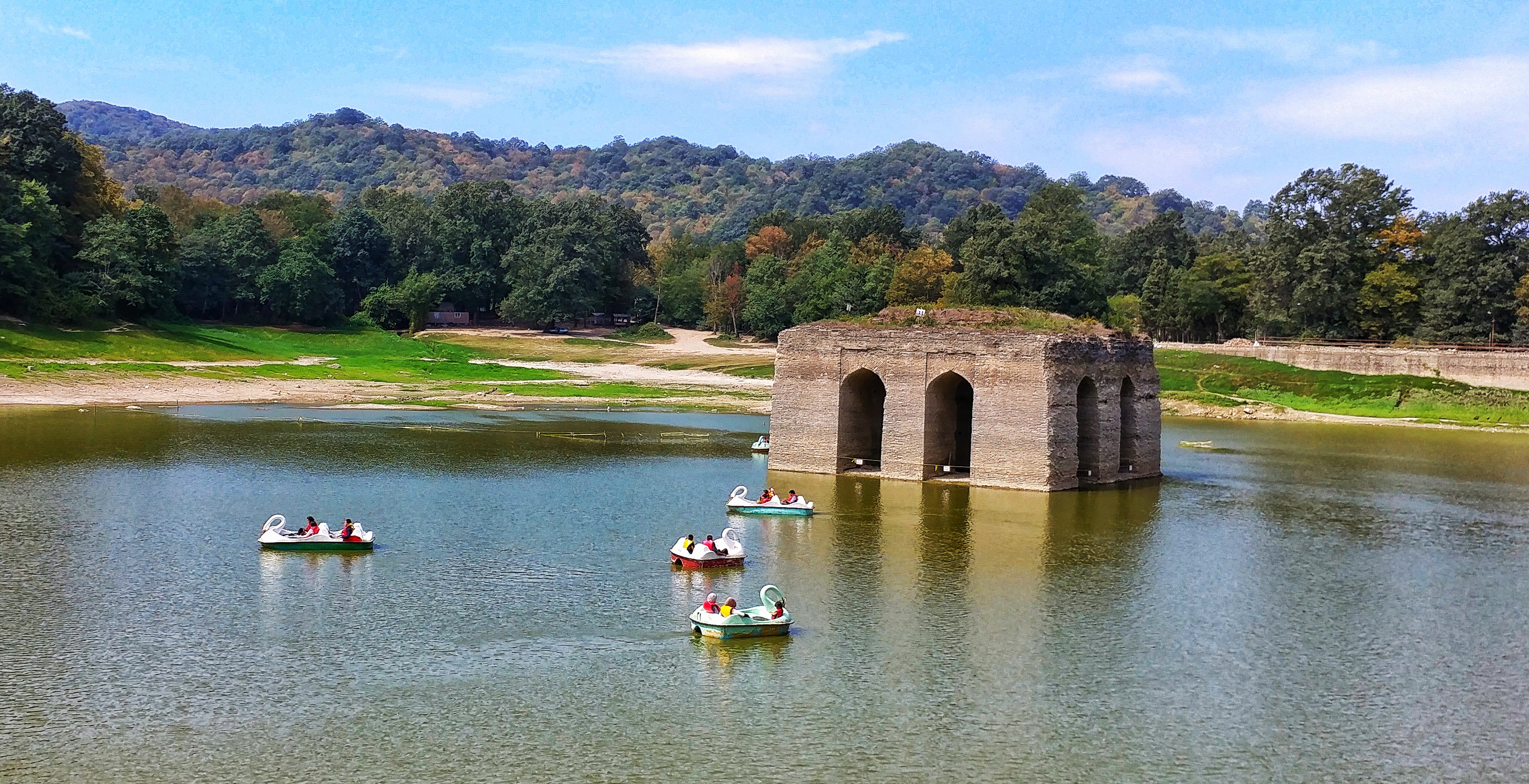
This complex includes Abbas Abad Dam, dam reservoir and lake, flower garden, palace, bathroom, water mill and two brick towers.
#Hyrcanian Forests
at
N36 5 55.78 E53 23 37.5 + N36 10 24.9 E52 24 14.19 + N36 16 44.79 E52 7 30.2
#
See Hyrcanian Forests above.
#Qanat
in
#Baladeh
#
The traditional communal management system still in place allows equitable and sustainable water sharing and distribution.
#Hyrcanian Forests
at
N36 32 45.69 E51 40 3.5 + N36 15 30.8 E51 13 1.7 + N36 43 38.09 E51 3 50.28
#
See Hyrcanian Forests above.
#Qazvin province [capital = Qasvin]
#Saraye Sa'd-o-Saltaneh Caravanserai
in
#Qazvin
at
#N36 16 9.46 E50 0 2.55
#Lambesar Castle
in
#Razmian
at
#N36 32 48.50 E50 13 41.03
#
From Shahrestan-e Bala it is easy to get an overall view of the fortress, with the high citadel at the northern end of the slope, and on each side of the tilted table of rock, the ruins of towers, walls and other fortifications.
#Qosṭinlār Fortification
in
#Rajai Dasht
at
#Alamout Rd
#Šams Kelāyeh Fortification
in
#Mo'allem Kalayeh
at
#N36 28 14.26 E50 29 7.35
#
Together, the fortifications illustrate the strategic organisation, resilience, and cultural significance of the Nezāri Ismaʿili state.
#Širkūh Fortification
in
#Sharak
at
#N36 23 28.64 E50 24 56.90
See above.
#Alamūt Castle
in
#Mo'allem Kalayeh
at
#Khorramshahr Blvd
#
This castle, in addition to being a unique historical attraction, also has a very beautiful and soulful nature.
#Ilān Fortification
in
#Yarafi
at
#N36 25 26.23 E50 39 5.62
See Širkūh Fortification above.
#Navizaršāh Castle
in
#Garmaroud
at
#N36 23 26.33 E50 43 34.95
#
The remnants of this structure are a few chambers and rooms, the main building and a part of its wall.
#Qom province [capital = Qom]
#Deyre Gachin Caravanserai
on
#Haram ta Haram Freeway [n#2]
at
#N35 3 30.07 E51 25 12.49
#Razavi Khorasan province [capital = Mashhad]
#Qelli Caravanserai
in
Kalateh Torkha
at
N37 9 11.86 E56 55 14.67
#Caravanserai
in
Mazinan
at
N36 18 28.36 E56 48 23.19
#Caravanserai
in
#Mehr
at
N36 17 4.53 E57 8 36.97
#Shah Abbasi Caravanserai
in
Zafarāniyeh
at
N36 9 56.59 E58 5 10.43
#Caravanserai
in
#Fakhr-e Davud
at
N35 59 59.59 E59 18 48.55
#Robāt-e Sharaf Caravanserai
in
#Shurlukh
at
#N36 15 59.65 E60 39 18.58
#Abbas Abad Caravanserai
in
#Taybad
at
N34 59 45.37 E60 43 6.12
#Qasabeh Qanat
in
#Gonabad
#
Ghasabe Qanats of Gonabad also is called kariz Kai Khosrow is one of the oldest and largest qanats in the world built between 700 BC to 500 BC.
#Caravanserai
in
Fakhr Ābād
at
N34 44 40.69 E58 3 19.39
#Semnan province [capital = Semnan]
#Shah Abbasi Caravanserai
in
#Abbasabad
at
N36 21 40.39 E56 23 16.35
#Caravanserai
in
#Meyandasht
at
N36 25 41.27 E56 3 38.08
#Caravanserai
in
#Mayamey
at
N36 24 33.07 E55 39 11.88
#Ahouvan Anoushiravan + Abbasi Ahovan Caravanserai
in
Ahevanu
at
N35 46 14.63 E53 43 56.54 + N35 46 13.94 E53 43 48.52
#Qasr Bahram Caravanserai
in
#Kavir National Park
at
N34 45 55.01 E52 10 37.69
#Sistan and Baluchestan province [capital = Zahedan]
#Burnt City
of
#Shahr-i Sokhta
at
#N30 35 38 E61 19 40
#
The structures, burial grounds and large number of significant artefacts unearthed there, and their well-preserved state due to the dry desert climate, make this site a rich source of information regarding the emergence of complex societies and contacts between them in the third millennium BC.
#South Khorasan province [capital = Birjand]
#Akbarieh Historical Garden
in
#Birjand
on
#Moallem Boulevard
#
This complex includes several mansions , the oldest building is "Heshmat ol-Molk" Mansion which is located in the eastern end and has two floors. There are many tall pine trees on both sides of the main street .
#Carvansarai
in
#Sarayan
at
#N33 51 19.03 E58 31 4.86
#Forty Bay (Chehel Pāyeh) Carvansarai
in
#Tabas
at
N31 56 24.04 E57 8 25.47
#Rabat Carvansarai
in
Deh-e Mohammad
at
N33 59 29.62 E56 58 45.04
#Carvansarai
in
Robat-e Khan
at
N33 21 58.97 E56 4 13.49
#Tehran province [capital = Tehran]
#Trans-Iranian Railway
in
#Tehran
at
#Javadiyeh, Railway Square
#
The railway is notable for its scale and the engineering works it required to overcome steep routes and other difficulties. Its construction involved extensive mountain cutting in some areas, while the rugged terrain in others dictated the construction of 174 large bridges, 186 small bridges and 224 tunnels, including 11 spiral tunnels.
#Golestan Palace
in
#Tehran
on
#Fifth Khordad Avenue, Arg Square, Panzdah-e-Khordad Street
#
Built around a garden featuring pools as well as planted areas, the Palace's most characteristic features and rich ornaments date from the 19th century. It became a centre of Qajari arts and architecture of which it is an outstanding example and has remained a source of inspiration for Iranian artists and architects to this day.
#Shahr-e Jadid-e Parand Caravanserai
in
#Robat Karim
at
N35 27 29.62 E50 58 28.55
#West Azerbaijan province [capital = Urmia]
#Throne of Solomon
in
#Tazeh Kand-e-Nosrat Abad
at
#Takab Takht-e Soleyman
#
Located here, in a harmonious composition inspired by its natural setting, are the remains of an exceptional ensemble of royal architecture of Persia's Sasanian dynasty (3rd to 7th centuries).
#Shah Abbassi Caravanserai
in
Kafacherin
at
N38 27 57.6 E44 37 24.7
#Monastery
in
#Saint Thaddeus
at
#N39 5 32.00 E44 32 40.00
#
The monastery’s architecture stands out with its characteristic Armenian conical roofs and large church structure. The use of polygonal drums and conical roofs on its domes enhances its visibility from afar.
#Dzordzor Chapel
in
#Chamanlu
at
#N39 11 16.00 E44 28 34.00
#
The Surb Astvatsatsin chapel is the only surviving structure of the monastery. It was built in the 9th-10th centuries (according to some sources, in the 14th century).
#Yazd province [capital = Yazd]
#Rashti Caravanserai
in
#Aqda
at
#N32 26 26.6 E53 37 51.79
#Caravanserai
in
#Meybod
at
#N32 13 40.53 E54 0 33.1
#Ardakan Caravanserai
in
#Kharanaq
at
N32 20 41.81 E54 40 4.74
#Anjireh Ājori (Desert Paradise) + Anjireh Sangi Caravanserai
in
Dorbid
at
N32 9 11.68 E54 28 37.59 + N32 9 43.96 E54 29 2.54
#Historic City
of
#Yazd
at
#N31 54 5 E54 22 9
#
The earthen architecture of Yazd has escaped the modernization that destroyed many traditional earthen towns, retaining its traditional districts, the qanat system, traditional houses, bazars, hammams, mosques, synagogues, Zoroastrian temples and the historic garden of Dolat-abad.
#Dowlat Abad Garden
in
#Yazd
on
#Iran-shahr Street | Mojahedin Square
#
The garden's most iconic feature is its 33.8-meter-high adobe windcatcher (badgir), the tallest of its kind in the world. It functions as a traditional air conditioning system, channeling desert breezes into the pavilion to cool the interior.
#Qanat of Zarch
in
#Yazd
#
There’s a gallery to this place and its Pāyāb where you can see the well shafts and understand the interesting system of qanats.
#Pahlavanpur Garden
in
#Mehriz
on
#Kerman Road
#
Amazing combination of the adobe structures with old massive trees put this garden on the list of the best tourist attractions in Yazd.
#Hasam Abad-e Moshir Qanat
in
Mehriz
#
The qanat's "mother well" (main water source) is located near the Gharbaliz spring at the base of the Shirkooh Mountains. It carries fresh, mineral-rich water approximately 40 kilometers through Mehriz toward the city of Yazd.
#Caravanserai
in
#Zein-o-din
at
#N31 24 42.69 E54 42 24.67
#Zanjan province [capital = Zanjan]
#Mausoleum of Oljaytu
in
#Soltaniyeh
at
#N36 26 7.008 E48 47 48.012
#
The octagonal building is crowned with a 50 m tall dome covered in turquoise-blue faience and surrounded by eight slender minarets. It is the earliest existing example of the double-shelled dome in Iran. The mausoleum's interior decoration is also outstanding and scholars such as A.U. Pope have described the building as 'anticipating the Taj Mahal'.