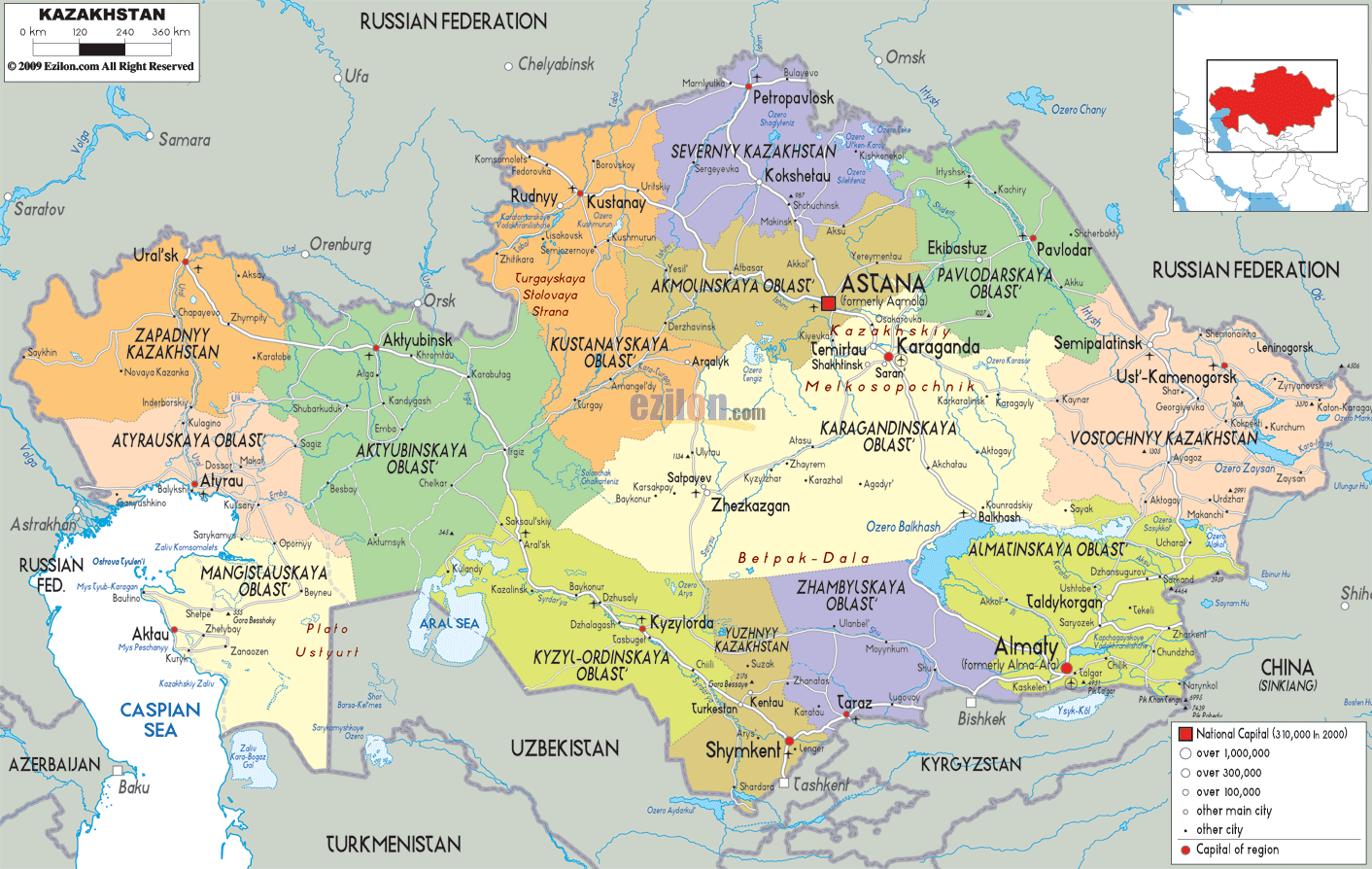
#Kostanay region [capital = Kostanay]
#Saryarka State Nature Reserve in #Naurzum at # N51 29 10.00 E64 18 13.00# It protects about 3,081 square kilometres (1,190 sq mi) of steppes, semi desert and forests.
#Kyzyl-Ordinskaya region [capital = Kyzylorda]
#Barsakelmes island near #Karateren at # N45 39 14 E59 56 14# Its territory is around 300 square kilometres. Some 250 species of plants constitute its flora. Its fauna numbers 56 species of animals, and includes, among others, the Transcaspian wild ass, goitered gazelle, corsac fox, and Eurasian wolf. There are 203 bird species in the area.
#Kaskakulan
in
#Karateren
at
#
N45 42 57 E61 1 47
# These are the main habitats of onager (kulan; Equus hemionus onager) and Persian gazelle (jairan; Gazella subgutturosa), to where they migrated after the area became dry.
# Locals believe the site holds a special energy, and miracles are said to occur during visits to the necropolis, where pilgrims often find improvement in their physical and spiritual well-being.
# Some 700 species of plants constitute its flora, 62 species are endemic. Its fauna includes, among others, the Kara Tau argali, Indian crested porcupine and beech marten. There are 118 bird species in the area.

# These are the main habitats of onager (kulan; Equus hemionus onager) and Persian gazelle (jairan; Gazella subgutturosa), to where they migrated after the area became dry.
#Mangystau region [capital = Mangystau]
#Beket-Ata underground mosque near #Karakiya at # N43 35 49.68 E54 4 12.57
# Locals believe the site holds a special energy, and miracles are said to occur during visits to the necropolis, where pilgrims often find improvement in their physical and spiritual well-being.
#Shopan-Ata necropolis
in
#Senek
at
#
N43 32 53.53 E53 23 16.29
# The necropolis is divided into two parts: Kazakh (Adaevskaya) and Turkmen. The necropolis is spread out on both sides of a shallow narrow ravine, descending from the southwest to the northeast along the slope of the Shopan Ata hill. It contains more than 4,000 burials of different times and types.

# The necropolis is divided into two parts: Kazakh (Adaevskaya) and Turkmen. The necropolis is spread out on both sides of a shallow narrow ravine, descending from the southwest to the northeast along the slope of the Shopan Ata hill. It contains more than 4,000 burials of different times and types.
#Karaman-Ata necropolis and underground mosque
in
#Beki
at
#
N43 53 59.2 E51 52 29.8
# The territory where the Karaman-Ata mosque is located is considered a sacred land, it is believed that miracles happen here, people are healed from ailments and filled with power.
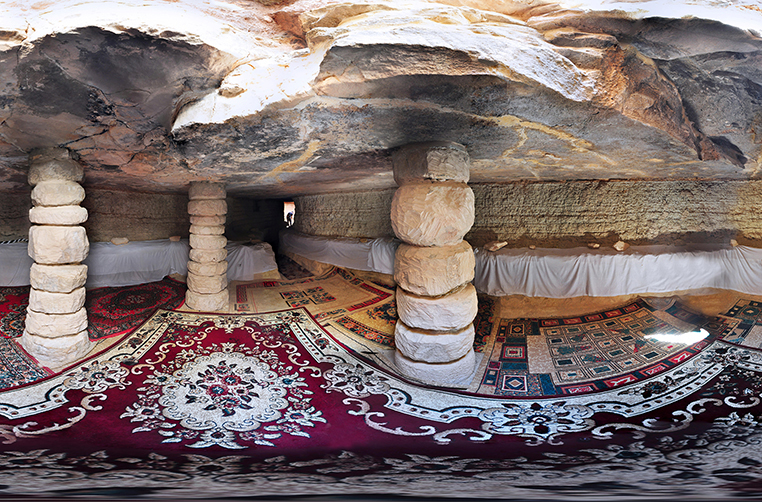
# The territory where the Karaman-Ata mosque is located is considered a sacred land, it is believed that miracles happen here, people are healed from ailments and filled with power.
#Shakpak-Ata underground cave structure
in
#Ashchimurin
at
#
N44 26 29 E51 08 00.1
# This architectural marvel showcases Kazakhstan's exquisite stone craftsmanship.
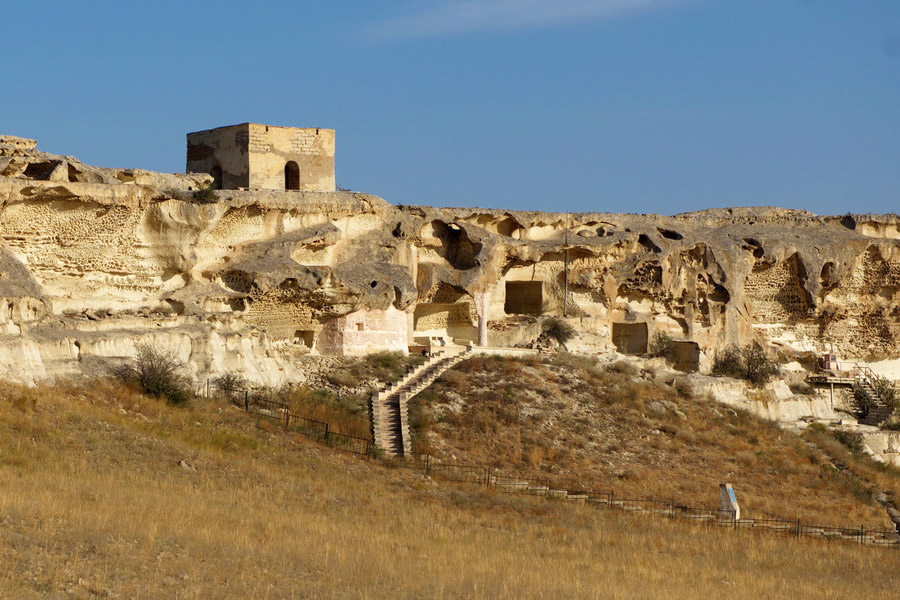
# This architectural marvel showcases Kazakhstan's exquisite stone craftsmanship.
#Sultan-Epe Underground Mosque
in
#Ashchimurin
at
#
N44 28 18.2 E51 00 35.1
# The mosque is a clear example of how the uniqueness of a construction is closely linked to its natural context and to the traditions established over the years, in other words the Genius Loci.
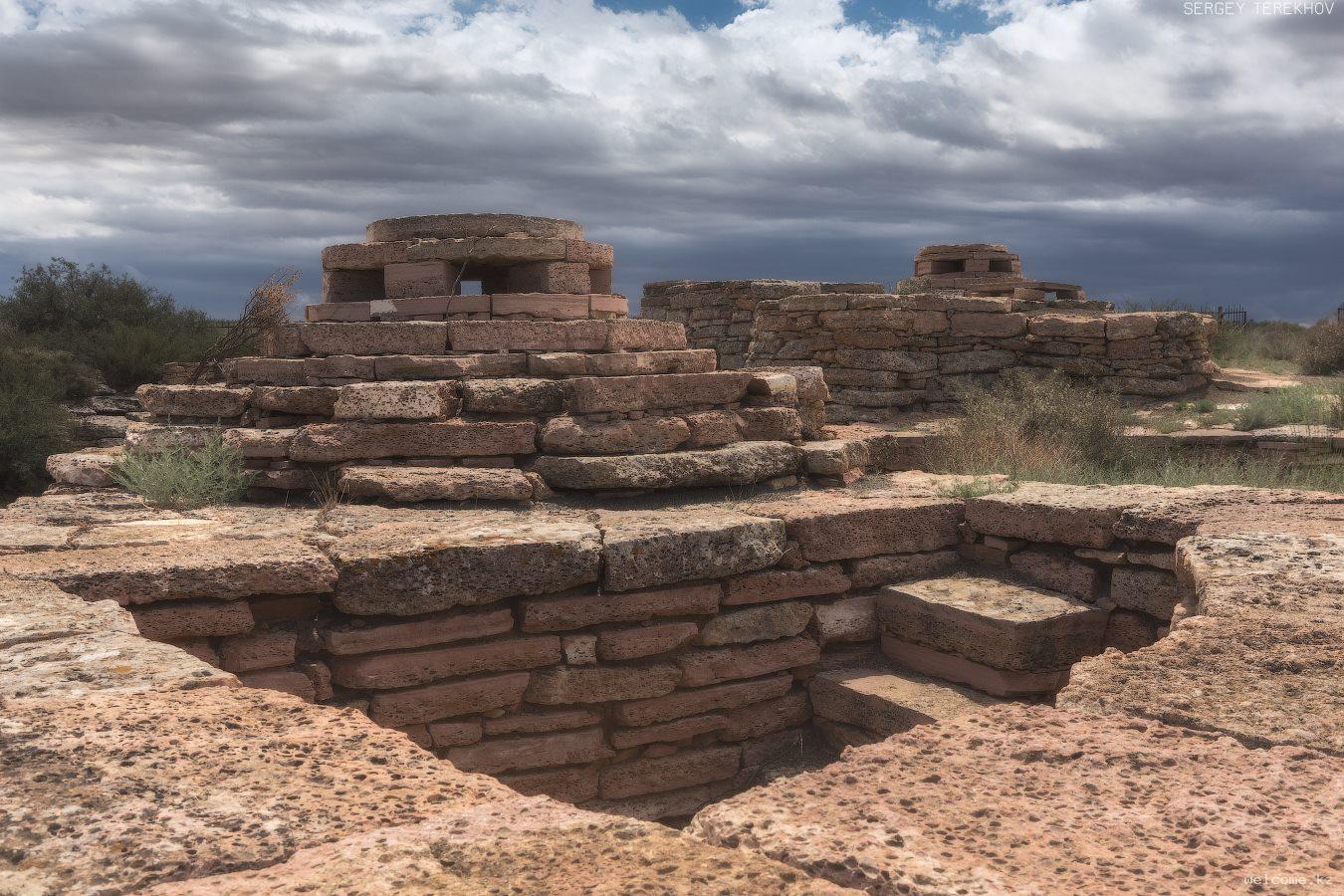
# The mosque is a clear example of how the uniqueness of a construction is closely linked to its natural context and to the traditions established over the years, in other words the Genius Loci.
#South Kazakhstan region [capital = Shymkent]
#Karatau State Nature Reserve in #Kentau at # N43 43 60 E68 40 44# Some 700 species of plants constitute its flora, 62 species are endemic. Its fauna includes, among others, the Kara Tau argali, Indian crested porcupine and beech marten. There are 118 bird species in the area.
#Mausoleum of Khoja Ahmed Yasawi
in
#Turkestan
at
#N43 17 35 E68 16 28
# In this partly unfinished building, Persian master builders experimented with architectural and structural solutions later used in the construction of Samarkand, the capital of the Timurid Empire. Today, it is one of the largest and best-preserved constructions of the Timurid period.
# In this partly unfinished building, Persian master builders experimented with architectural and structural solutions later used in the construction of Samarkand, the capital of the Timurid Empire. Today, it is one of the largest and best-preserved constructions of the Timurid period.
#Aksu-Jabagly State Nature Reserve
in
#Tyulkubas
at
#
N42 16 34 E70 40 27
# There are 44 mammal species in the Reserve that are enlisted as highly endangered in the red book of Kazakhstan. The most prominent species are the snow leopard which is, however, rarely seen. Somewhat more frequent is the Himalayan brown bear, the Tien Shan argali (Ovis ammon karelini), the Indian crested porcupine (Hystrix indica), and Menzbier's marmot.
# There are 44 mammal species in the Reserve that are enlisted as highly endangered in the red book of Kazakhstan. The most prominent species are the snow leopard which is, however, rarely seen. Somewhat more frequent is the Himalayan brown bear, the Tien Shan argali (Ovis ammon karelini), the Indian crested porcupine (Hystrix indica), and Menzbier's marmot.
#Sairam-Ugam State National Nature Park
in
#Ogem
at
#
Tolebi
# The area has high levels of species diversity, covering floral communities from steppe to high altitude zones. It is particularly known for stands of juniper forests, and stands of fruit and nut trees.
# The area has high levels of species diversity, covering floral communities from steppe to high altitude zones. It is particularly known for stands of juniper forests, and stands of fruit and nut trees.
Kazakstan tap # for more info