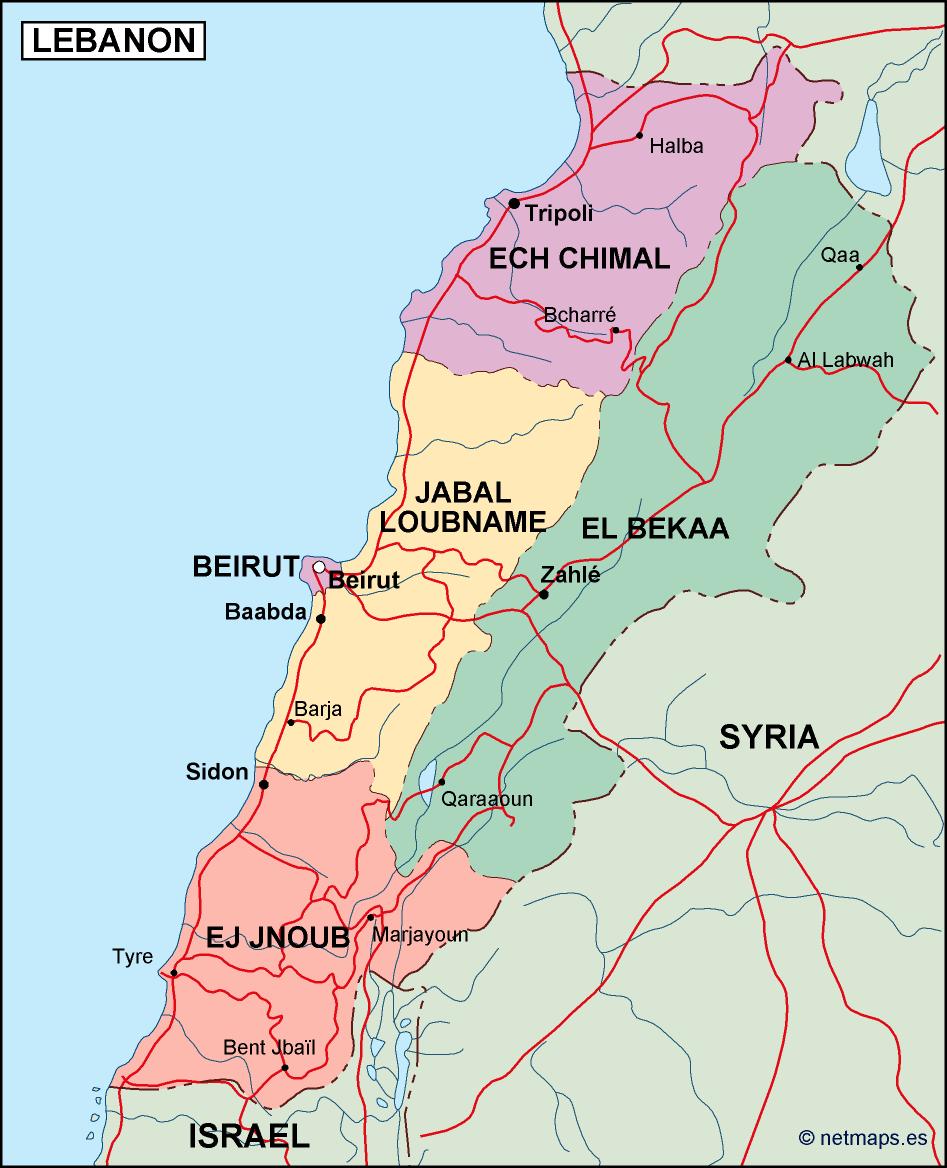
#Lebanon # UNESCO #world heritage sites
#Beqaa province [capital = Zalhe]
#City
of
#Anjar
#
The city of Anjar was founded by Caliph Walid I at the beginning of the 8th century. The ruins reveal a very regular layout, reminiscent of the palace-cities of ancient times, and are a unique testimony to city planning under the Umayyads.
#City
of
#Baalbek
#
This Phoenician city, where a triad of deities was worshipped, was known as Heliopolis during the Hellenistic period. It retained its religious function during Roman times, when the sanctuary of the Heliopolitan Jupiter attracted thousands of pilgrims. Baalbek, with its colossal structures, is one of the finest examples of Imperial Roman architecture at its apogee.
#El Jnoub province [capital = Sidon]
#Beaufort Castle
of
#Arnoun
#
The name "Beaufort" comes from Old French meaning "beautiful fortress", reflecting its striking position cut directly into a limestone cliff.
#Maron Castle
of
#Deir Kifa
#
Spanning between 17,000 and 20,000 square meters, the multi-layered fortification exhibits a beautiful blend of Aramaic-Canaanite, Crusader, and Islamic defensive engineering.
#Dubieh Castle
of
#Chaqra
#
The castle has a romantic and beautiful appearance
#Toron Castle
of
#Tebnine
#
The Tibnine Castle or Toron of the Knights was a very important Crusader castle, built in the mountains of Lebanon on the road connecting Tyre to Damascus.
#Chama Castle
of
#Chama
#
The castle was built by the Crusaders in 1116 AD in a strategic location overlooking the city of Tire and the coast of Haifa.
#Phoenician city
of
#Tyre
#
Tyre was directly associated with several stages in the history of humanity, including the production of purple pigment reserved for royalty and nobility, the construction in Jerusalem of the Temple of Solomon, thanks to the material and architect sent by the King Hiram of Tyre; and the exploration of the seas by hardy navigators who founded prosperous trading centres as far away as the western Mediterranean, that ultimately assured a quasi-monopoly of the important maritime commerce for the Phoenician city.
#Mount Lebanon province [capital = Baabda]
#Ruins
in
#Byblos
#
Byblos is a testimony to a history of uninterrupted construction from the first settlement by a community of fishermen dating back 8000 years, through the first town buildings, the monumental temples of the Bronze Age, to the Persian fortifications, the Roman road, Byzantine churches, the Crusade citadel and the Medieval and Ottoman town. Byblos is also directly associated with the history and diffusion of the Phoenician alphabet. The origin of our contemporary alphabet was discovered in Byblos with the most ancient Phoenician inscription carved on the sarcophagus of Ahiram.
#North Lebanon province [capital = Tripoli]
#Rachid Karami International Fair
in
#Tripoli
#
The fair was the flagship project of Lebanon's modernization policy in the 1960s. The close collaboration between Oscar Niemeyer, the architect of the project, and Lebanese engineers gave rise to a remarkable example of exchange between different continents. In terms of scale and wealth of formal expression, it is one of the major representative works of 20th century modern architecture in the Arab Near East.
#Christian monastic settlements
in
#Ouadi Qadisha + Horsh Arz el-Rab
#
The Qadisha valley is one of the most important early Christian monastic settlements in the world. Its monasteries, many of which are of a great age, stand in dramatic positions in a rugged landscape. Nearby are the remains of the great forest of cedars of Lebanon, highly prized in antiquity for the construction of great religious buildings.