#Mexico #north + #south UNESCO world heritage sites
#Aguascalientes state # [capital = Aguascalientes]
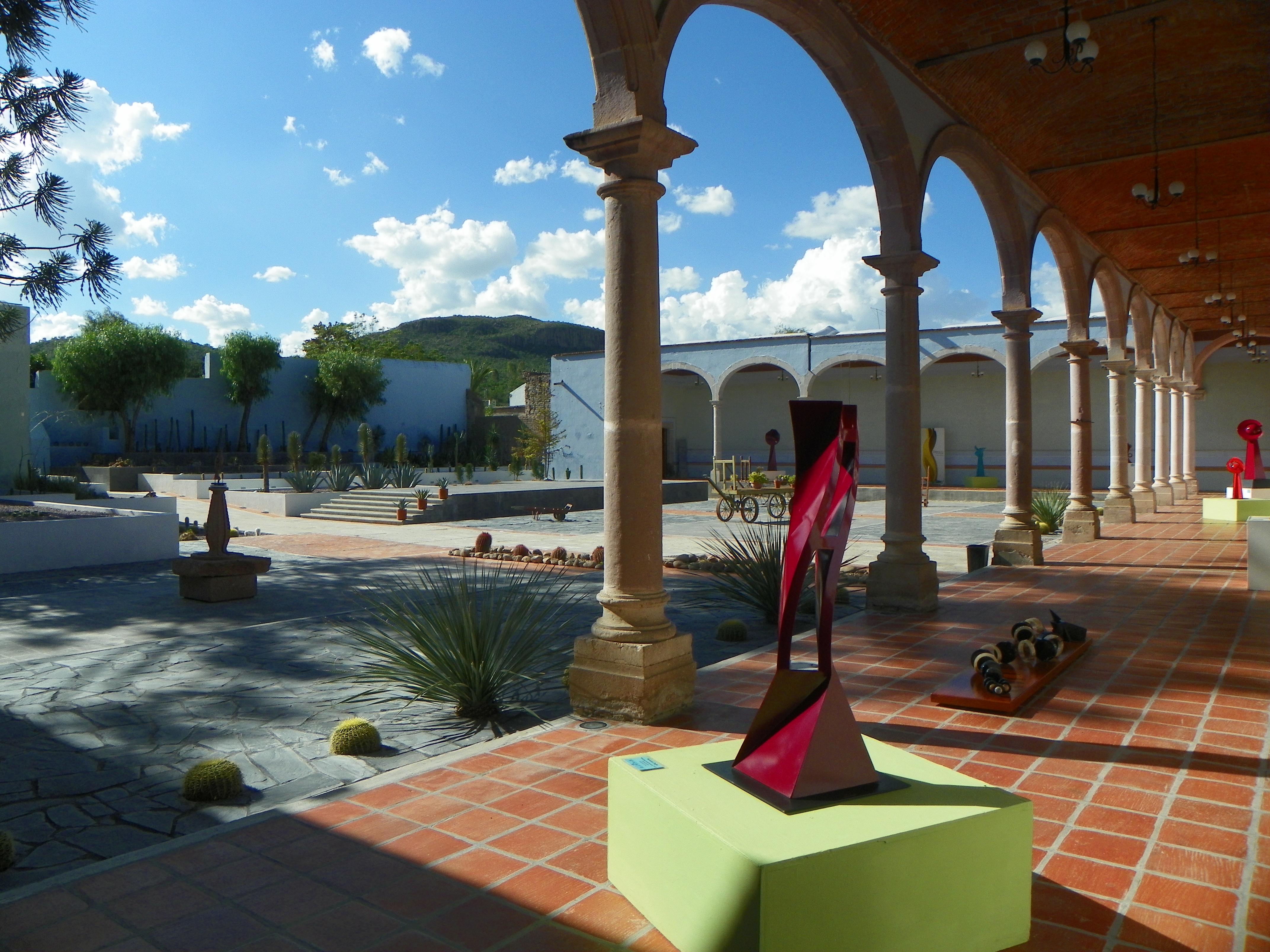
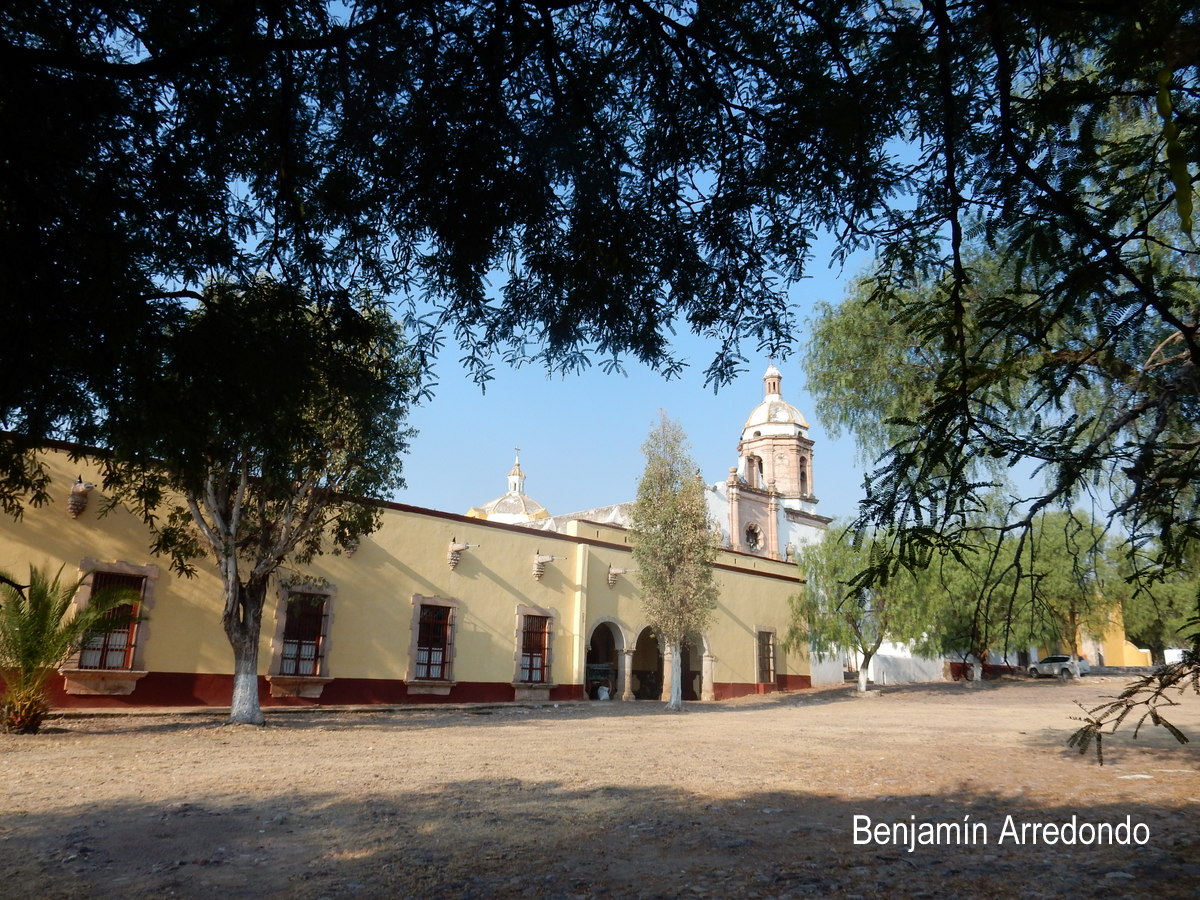
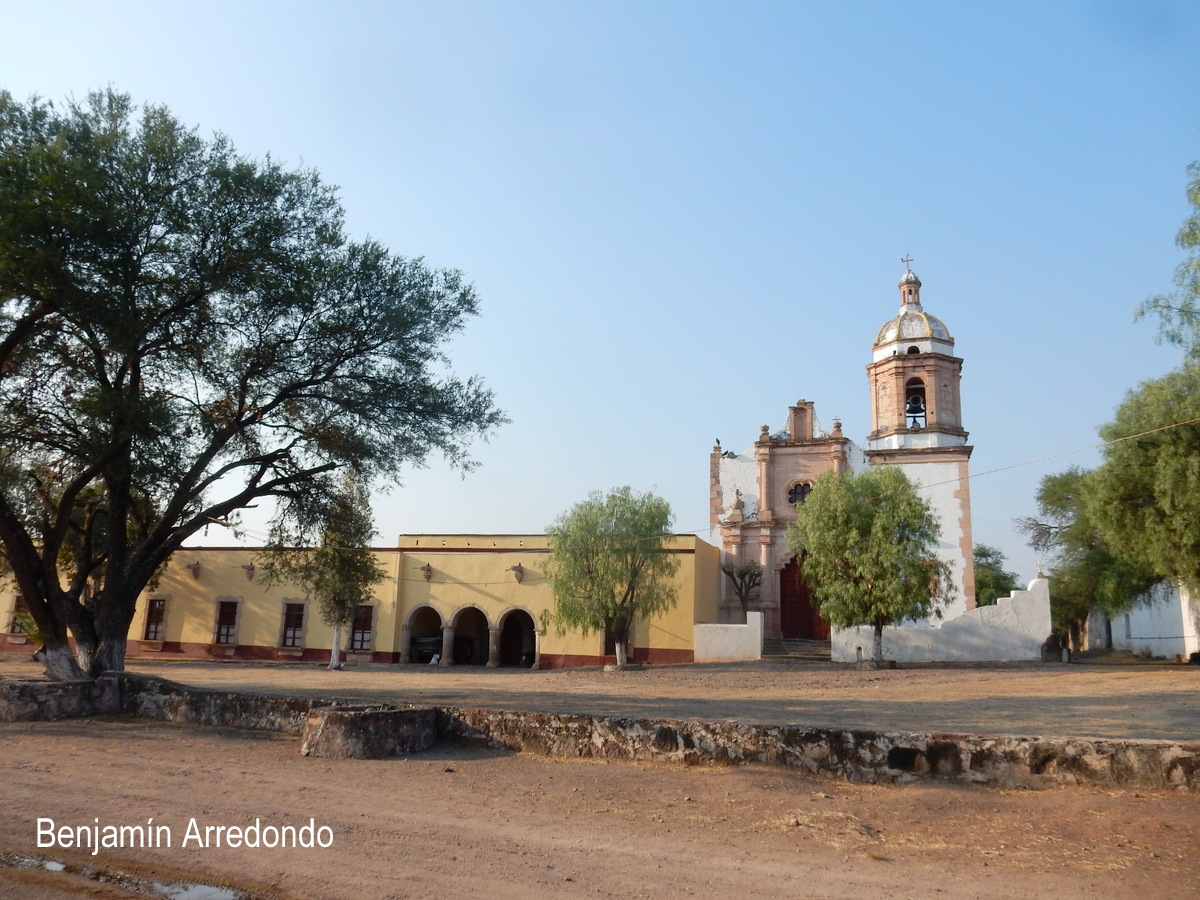
#Former hacienda of San Blas
in
#Pabellon de Hidalgo
at
#Plaza 24 de Enero No. 19
#
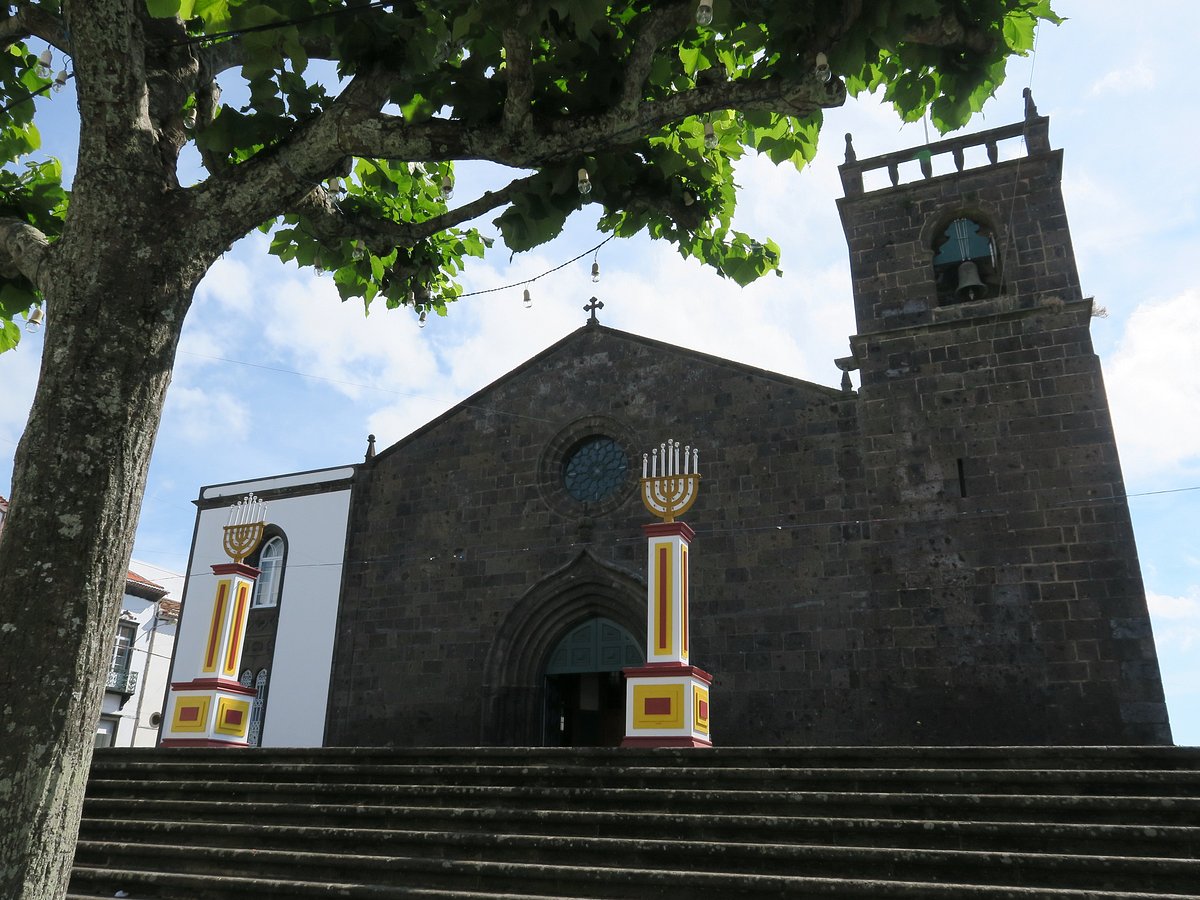
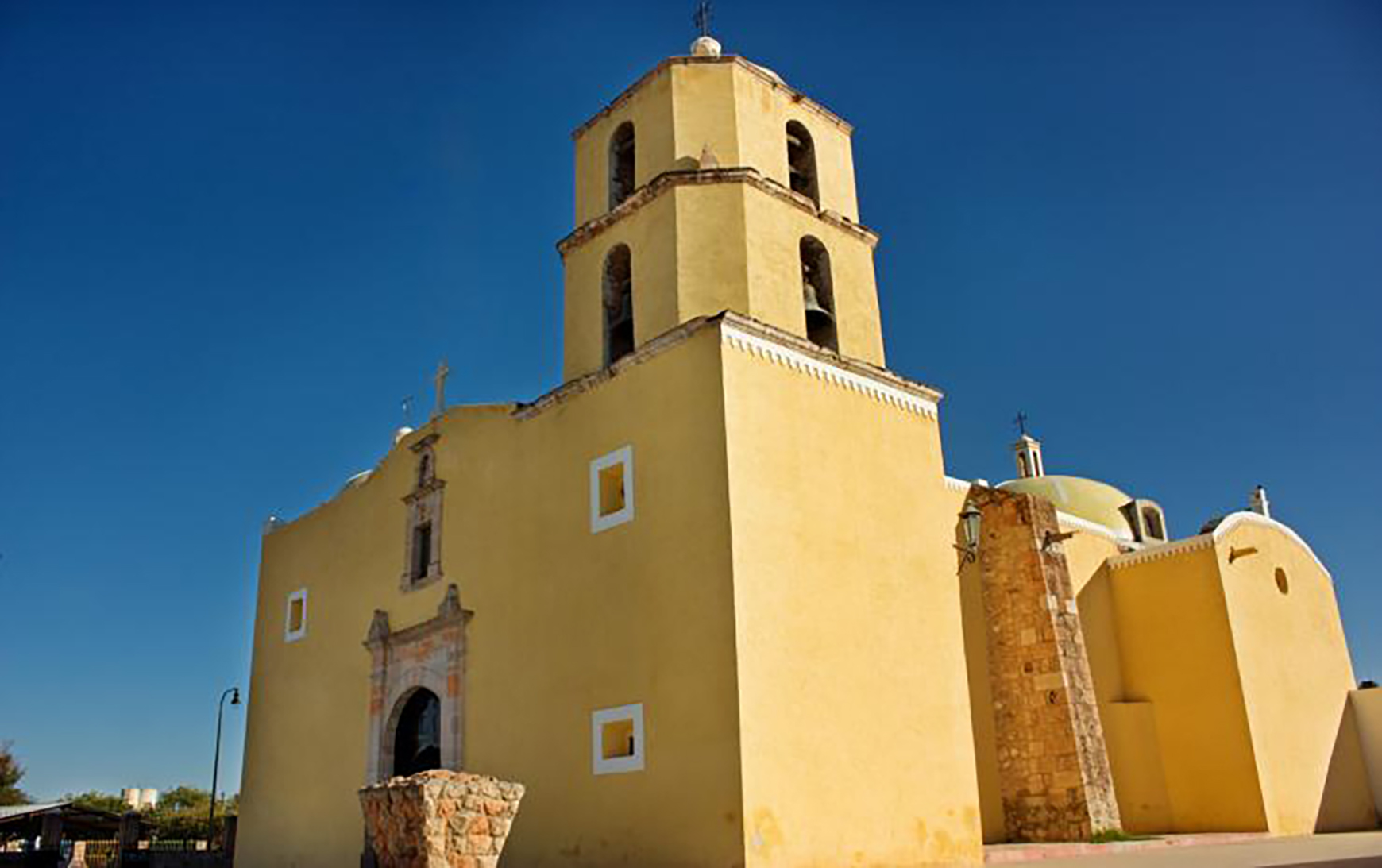
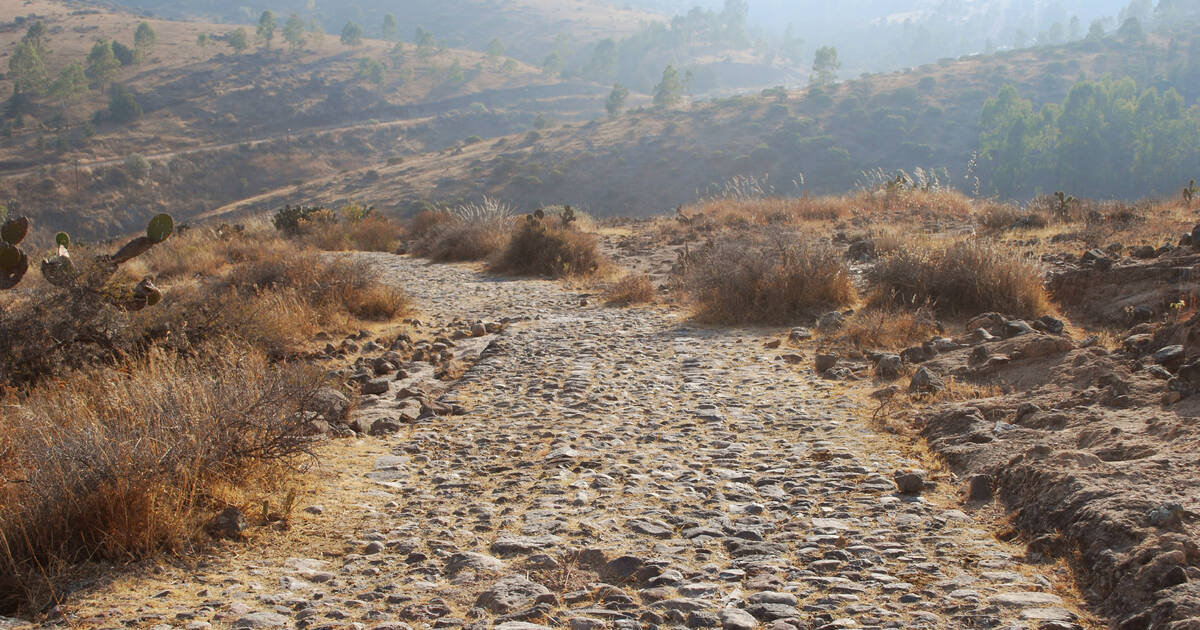
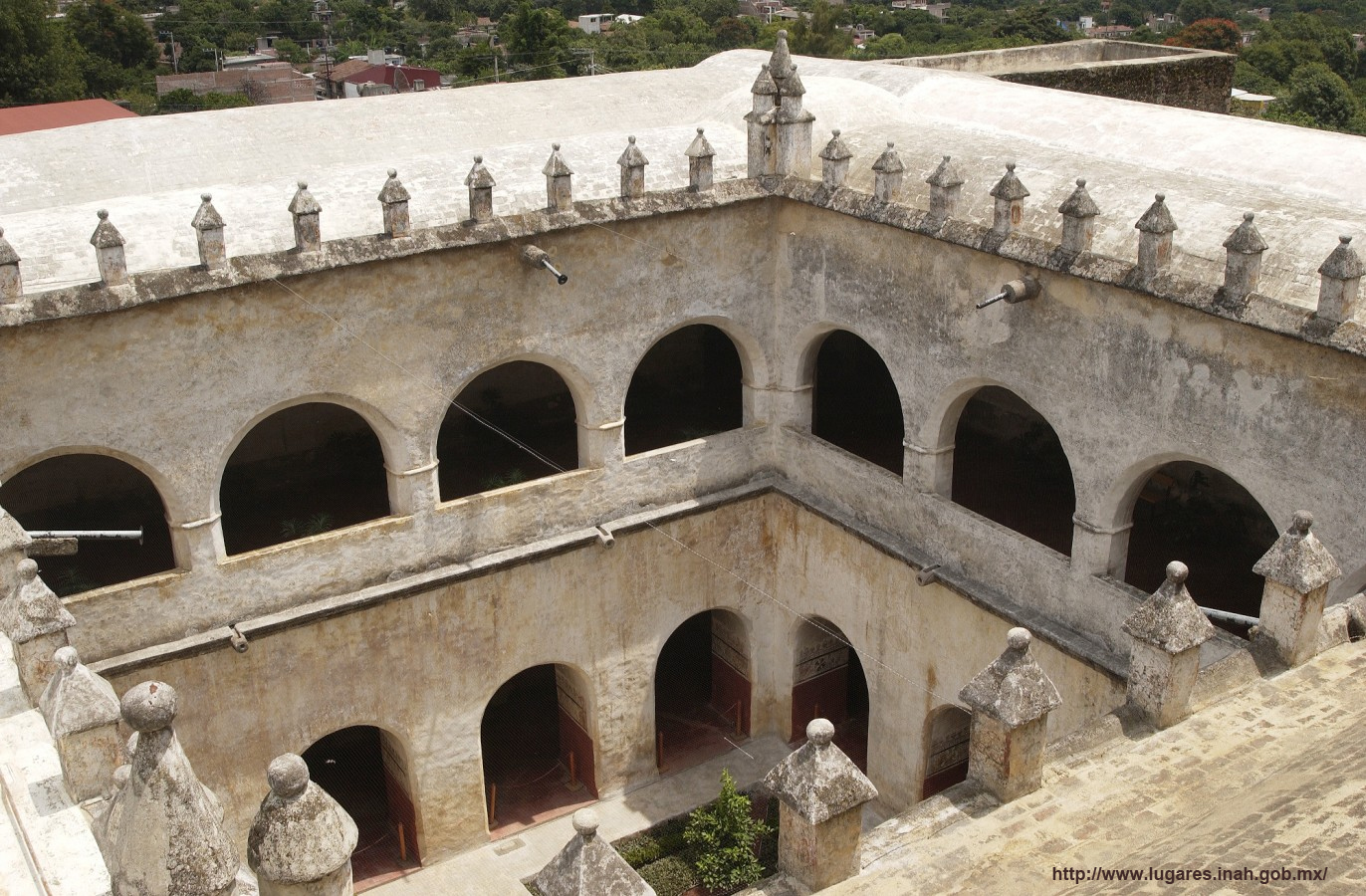
An ensemble of sites along the southern part of the Camino Real de Tierra Adentro, including examples of buildings, architectural and technological ensembles, illustrate a significant stage in human history - the Spanish colonial exploitation of silver and the transformation of associated rural and urban landscapes.
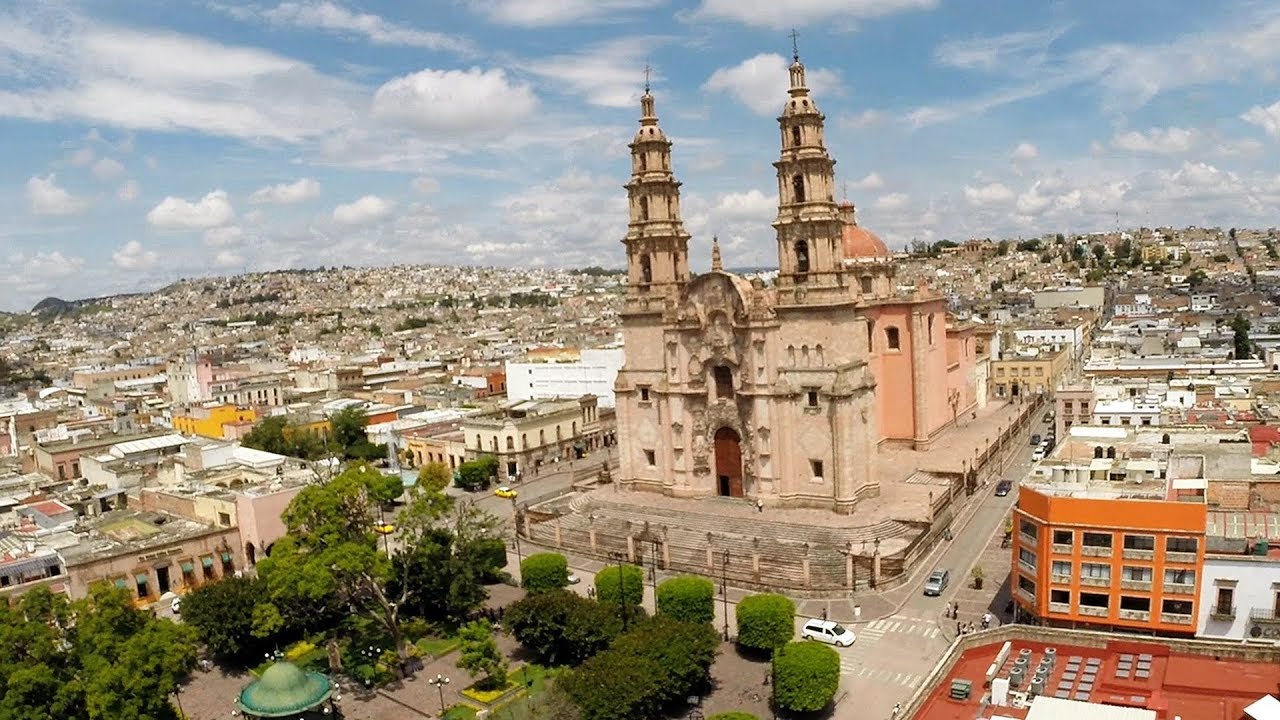
#Historic ensemble
of
#Aguascalientes
See above.
#Ex-Hacienda of Penuelas
in
#Aguascalientes
on
Mexico 45
See above.
#Ex-Hacienda of Cieneguilla
in
#Aguascalientes
on
Ruta Rural
See above.
#Baja California Norte state [capital = Mexicali]
#Archipelago of San Lorenzo
near
#Bahia de los Angeles
#
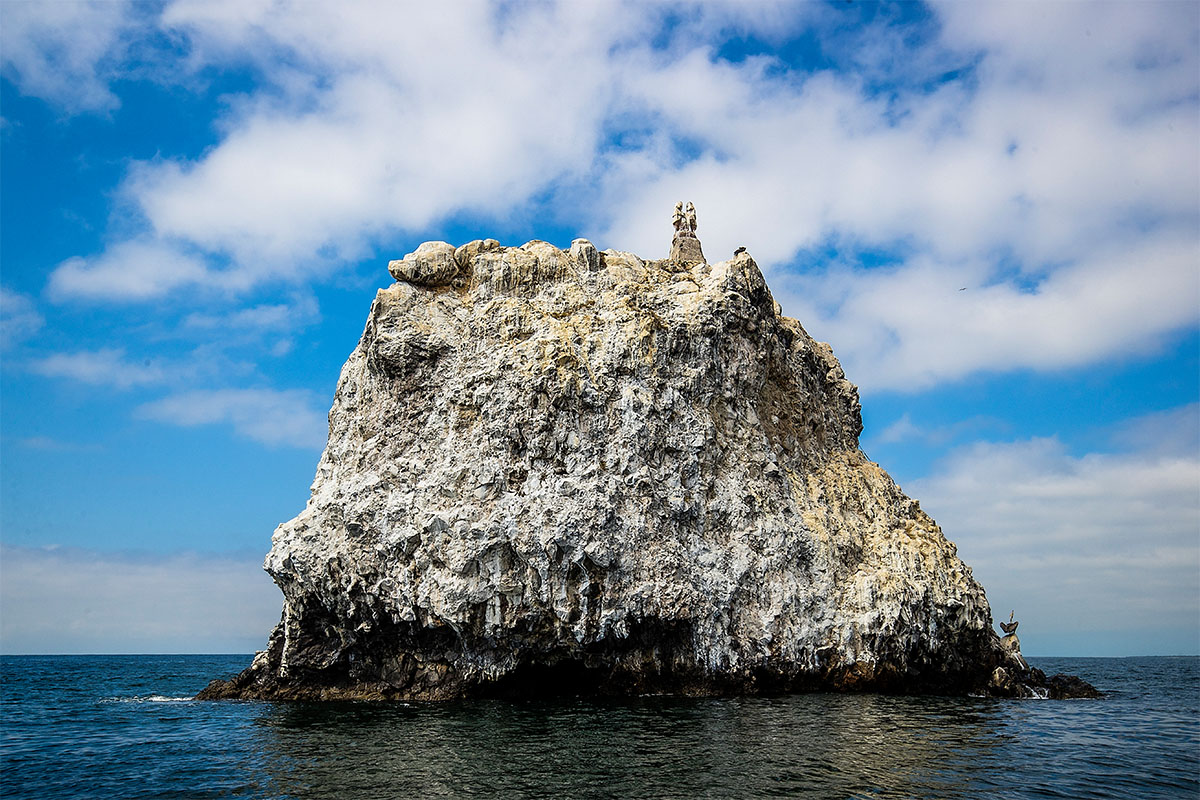
The park is comprised by the Archipelago islands of San Lorenzo, Las Animas, Salsipuedes, Rasa, and Partida with the surrounding maritime border of the islands with a total area of 50,442 hectares. The Archipelago islands are surrounded by deep, cold water rich in nutrients in the center part of the Gulf of California also known as the Sea of Cortez. Most of the park is comprised by maritime area. The small terrestrial portion consists of rugged islands with irregular coastline eroded with many sea cliffs.
#Baja California Sur state # [capital = La Paz]
#Rock Paintings of Sierra de San Francisco
in
#Reserva de la Biosfera El Vizcaino
#
They are remarkably well-preserved because of the dry climate and the inaccessibility of the site. Showing human figures and many animal species and illustrating the relationship between humans and their environment, the paintings reveal a highly sophisticated culture. Their composition and size, as well as the precision of the outlines and the variety of colours, but especially the number of sites, make this an impressive testimony to a unique artistic tradition.
#El Vizcaíno marine and coastal belt
in
#Reserva de la Biosfera El Vizcaino
#
Speciation both on land in the many islands and in the Gulf has resulted in a notable diversity of life forms with a high degree of endemism. The productivity of the Gulf also leads an extraordinary natural abundance of many marine species. There are some 900 species of fish, around 90 of them endemic, and roughly one third of the World's marine mammals occur within the property.
#Whale Sanctuary of El Vizcaino
in
#Reserva de la Biosfera El Vizcaino
#
The coastal lagoons of Ojo de Liebre and San Ignacio are important reproduction and wintering sites for the grey whale, harbour seal, California sea lion, northern elephant-seal and blue whale. The lagoons are also home to four species of the endangered marine turtle.
#Bahia de Loreto National Park
in
#Loreto
at
#N25 50 35.00
W111 13 0.00
#
Five main islands serve as the park's chief focal points and tourist destinations: Isla Coronados, Isla del Carmen, Isla Danzante, Isla Monserrat, and Isla Santa Catalina. Though the municipality of Loreto is not within park boundaries, it is the primary starting point for tours of the park and is considered a major influence on the area's ecology.
#Balandra Zone of Ecological Conservation
in
#La Paz
at
#Callejon Puerto Pichilingue 7 km
#
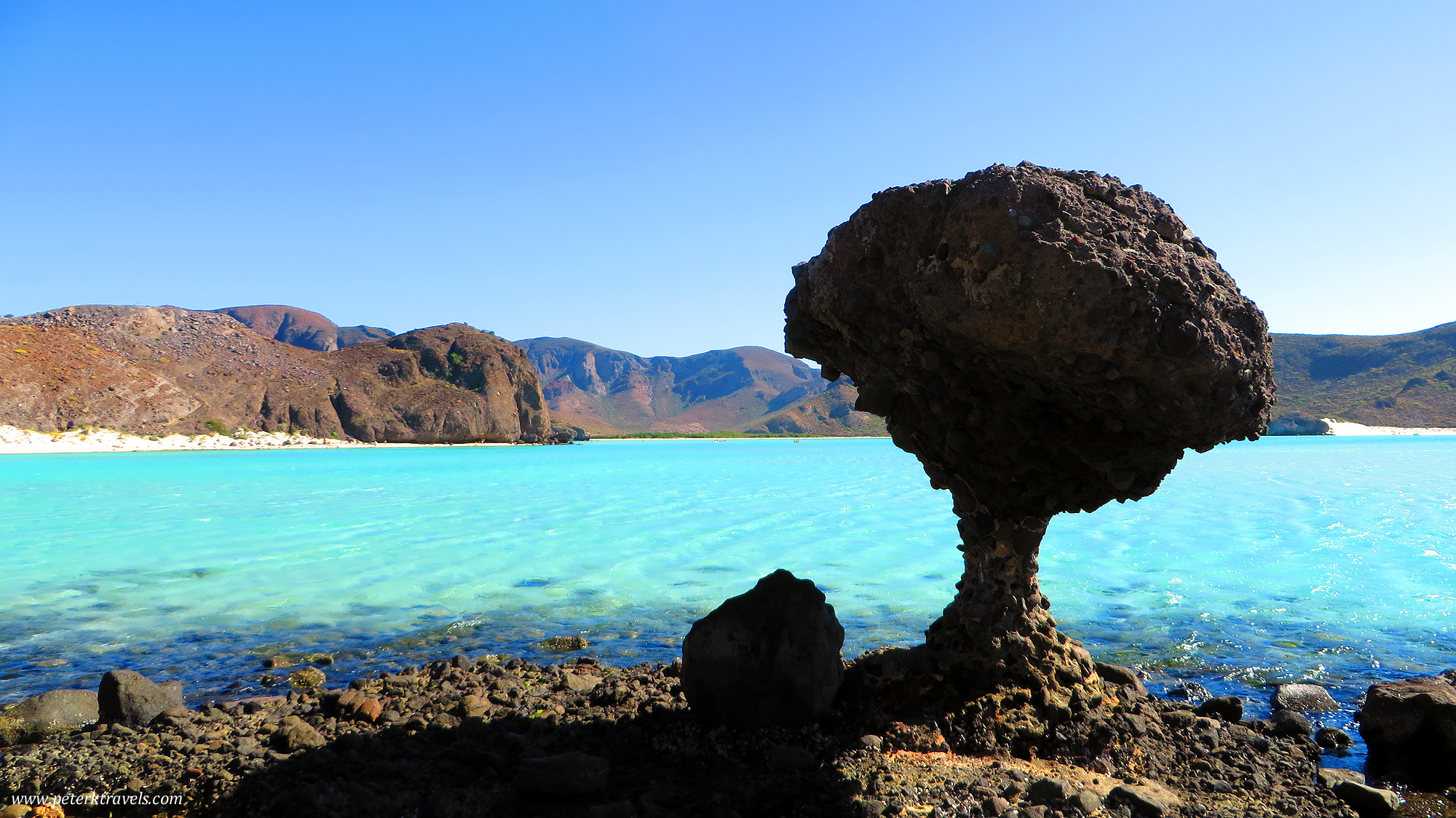
With its abundant biodiversity, Balandra offers an ideal setting for relaxation, swimming, snorkeling, kayaking, and hiking, allowing visitors to explore its well-maintained trails, scenic viewpoints, and captivating landscapes.
#Cabo Pulmo
in
#Los Cabos
at
#N23 27 0.00 W109 25 0.00
#
Bahía Pulmo is home to the oldest of only three coral reefs on the west coast of North America. Estimated to be 20,000 years old, it is the northernmost coral reef in the eastern Pacific Ocean.
#Cabo San Lucas
in
#Los Cabos
at
#N22 52 0 W109 52 0
#
Cabo has been rated as one of Mexico's top 5 tourist destinations; it is known for its beaches, scuba diving locations, balnearios, the sea arch El Arco de Cabo San Lucas, and marine life.
#Campeche state [capital = Campeche]
#Historic Fortified Town
of
#Campeche
at
#N19 50 47.004 W90 32 13.992
#
Campeche is a typical example of a harbour town from the Spanish colonial period in the New World. The historic centre has kept its outer walls and system of fortifications, designed to defend this Caribbean port against attacks from the sea.
#Ancient Maya City and Protected Tropical Forests of Calakmul
in
#Xpujil
at
#N18 3 10.9 W89 44 14.22
#
This property, while nowadays almost uninhabited and covered by tropical forest, is the heartland of the area in which, from the mid-first millennium B.C. to about A.D. 1000, the Maya civilization reached its climax, but where it also suffered the most dramatic downfall, resulting in an almost complete abandonment of formerly flourishing settlements. Since the area has, thereupon, remained virtually depopulated, it represents an exceptional testimony to a long-living civilization, offering possibilities for archaeological and ecological research and presentation of its results.
#Chiapas state [capital = Tuxtla Gutierrez]
#Pre-Hispanic City
of
#Palenque
at
#Carretera a Palenque- Zona Archaeologica Km. 8
#
The archaeological site of Palenque in the state of Chiapas is one of the most outstanding Classic period sites of the Maya area, known for its exceptional and well conserved architectural and sculptural remains. The elegance and craftsmanship of the construction, as well as the lightness of the sculpted reliefs illustrating Mayan mythology, attest to the creative genius of this civilization.
#Colima state [capital = Colima]
#Archipelago of Revillagigedo
on
#San Benedicto + Socorro + Roca Partida + Clarion
#
This archipelago is part of a submerged mountain range, with the four islands representing the peaks of volcanoes emerging above sea level. The islands provide critical habitat for a range of wildlife and are of particular importance for seabirds. The surrounding waters have a remarkable abundance of large pelagic species, such as manta rays, whales, dolphins and sharks.
#Chihuahua state [capital = Chihuahua]
#Archaeological Zone
in
#Nuevo Casas Grandes
at
#Paquime
#
It is the largest archaeological zone that represents the peoples and cultures of the Chihuahua Desert. Its development took place in the years 700-1475 and it reached its apogee in the 14th and 15th centuries. Its architecture marked an epoch in the development of the architecture of the human settlement of a vast region in Mexico and illustrated an outstanding example of the organization of space in architecture.
#Town
of
#Valle de Allende
#
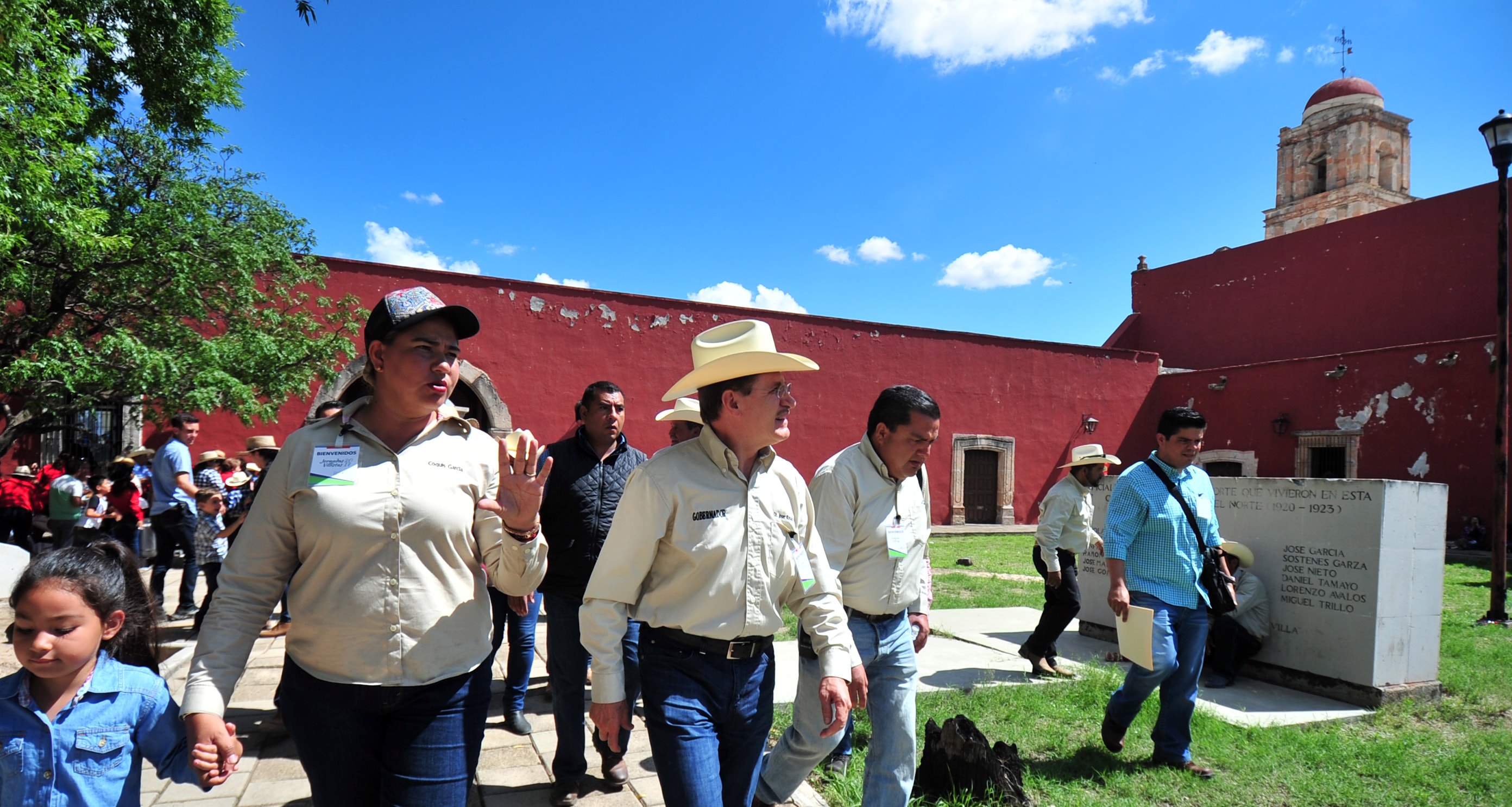
An ensemble of sites along the southern part of the Camino Real de Tierra Adentro, including examples of buildings, architectural and technological ensembles, illustrate a significant stage in human history - the Spanish colonial exploitation of silver and the transformation of associated rural and urban landscapes.
#Durango state north [capital = Durango]
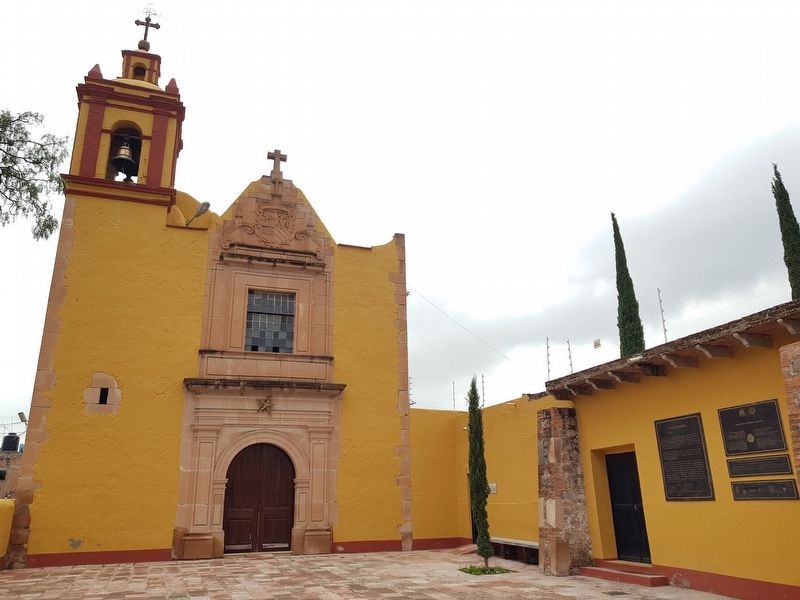
#Temple of San Miguel
in
#Villa Ocampo
See above.
#Former hacienda of the Limpia Concepcion
in
#Canutillo
See above.
#Town
of
#Inde
See above.
#Chapel of San Mateo of the Former hacienda
in
#La Zarca
See above.
#Town
of
#Mapimi
See above.
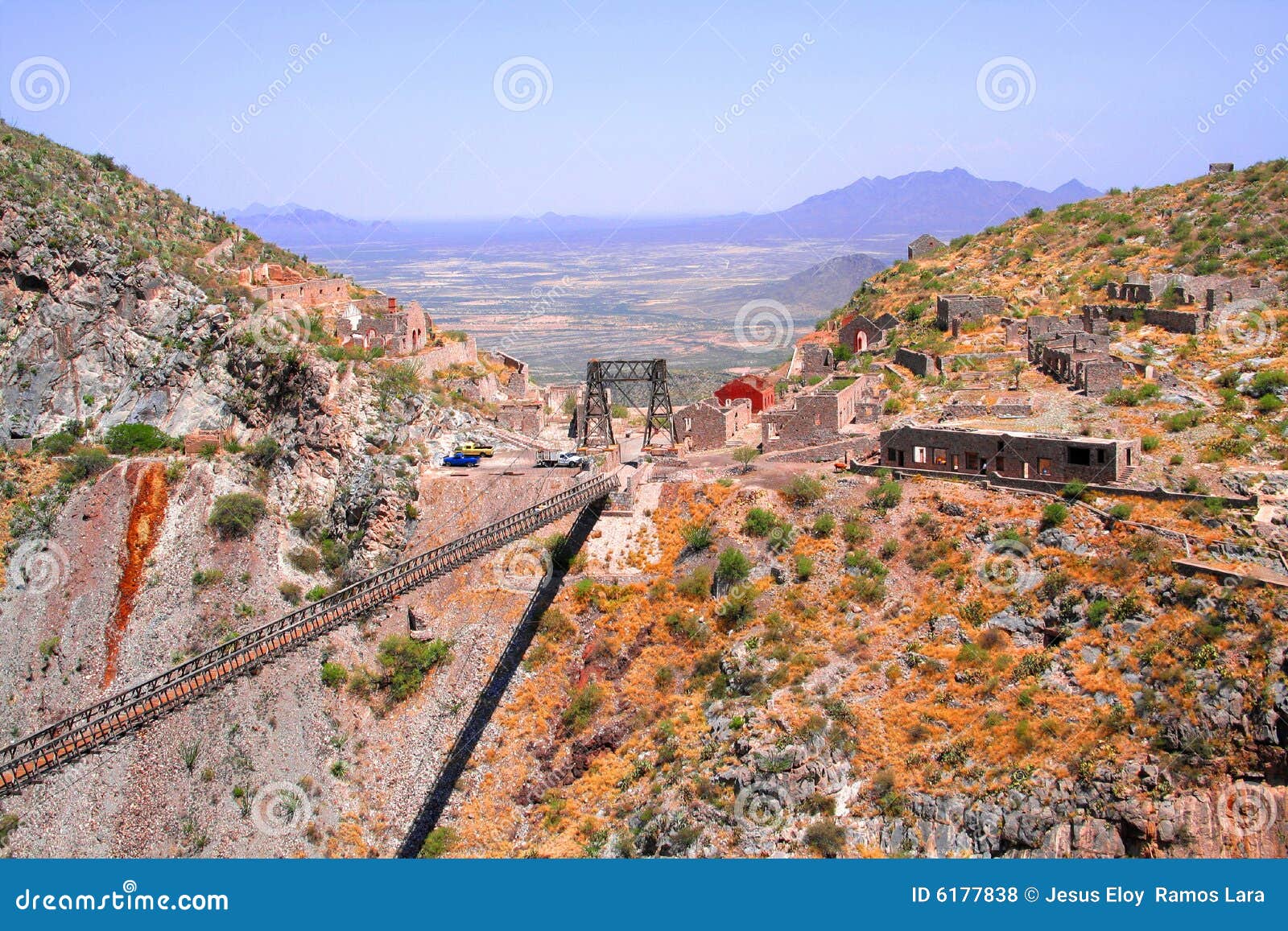
#Mine of Ojuela
in
#Mapimi
See above.
#Town
of
#San Pedro del Gallo
See above.
#Stretch of the Camino Real
from
San Pedro del Gallo to Nazas
See above.
#Durango state south [capital = Durango]
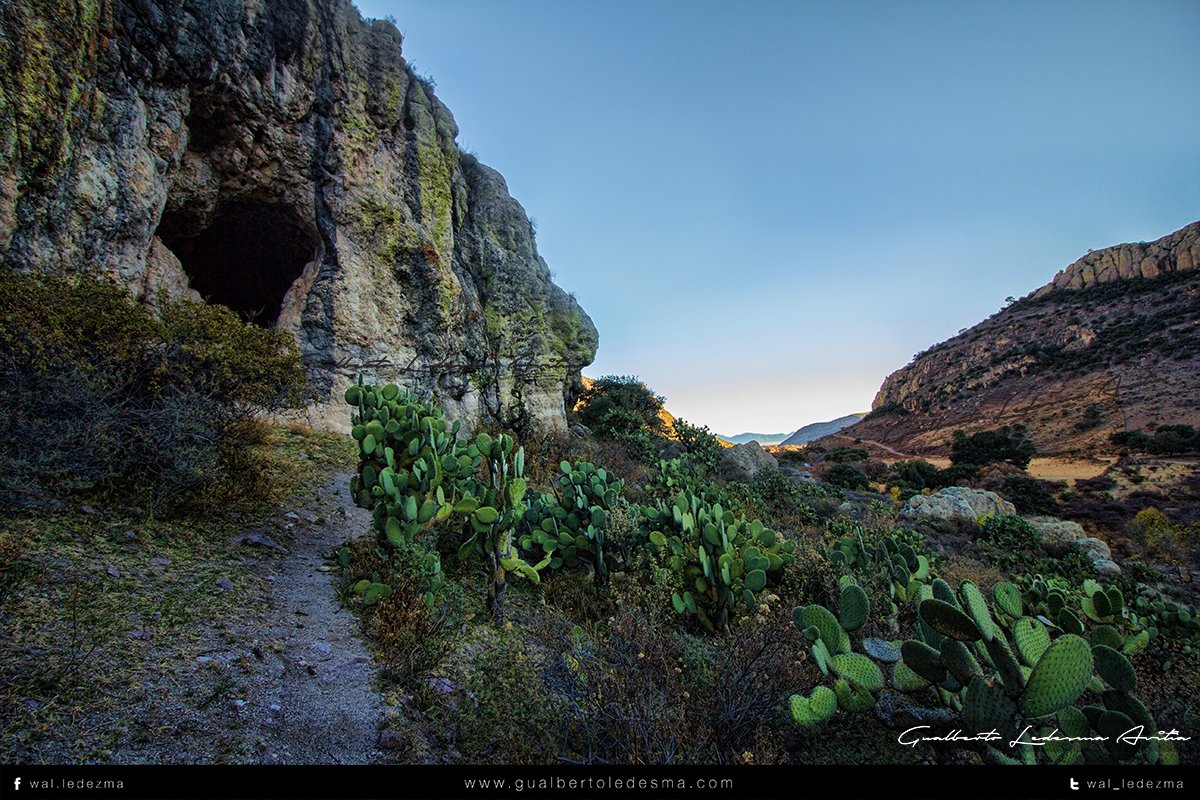
#Cave of Las Mulas de Molino
in
#Nuevo Ideal
See above.
#Chapels of the former haciendas of La Inmaculada Concepcion + La Limpia Concepcion
in
#Rodeo
on
routa 45 south
See Camino Real de Tierra Adentro above.
#Architectonic ensemble
of
#Nazas
See above.
#Chapel of the Refugio of the former hacienda
in
#Cuencame
at
Cuatillos
See above.
#Temples
in
#Cuencame
at
Francisco Sarabia, Alamedas
#
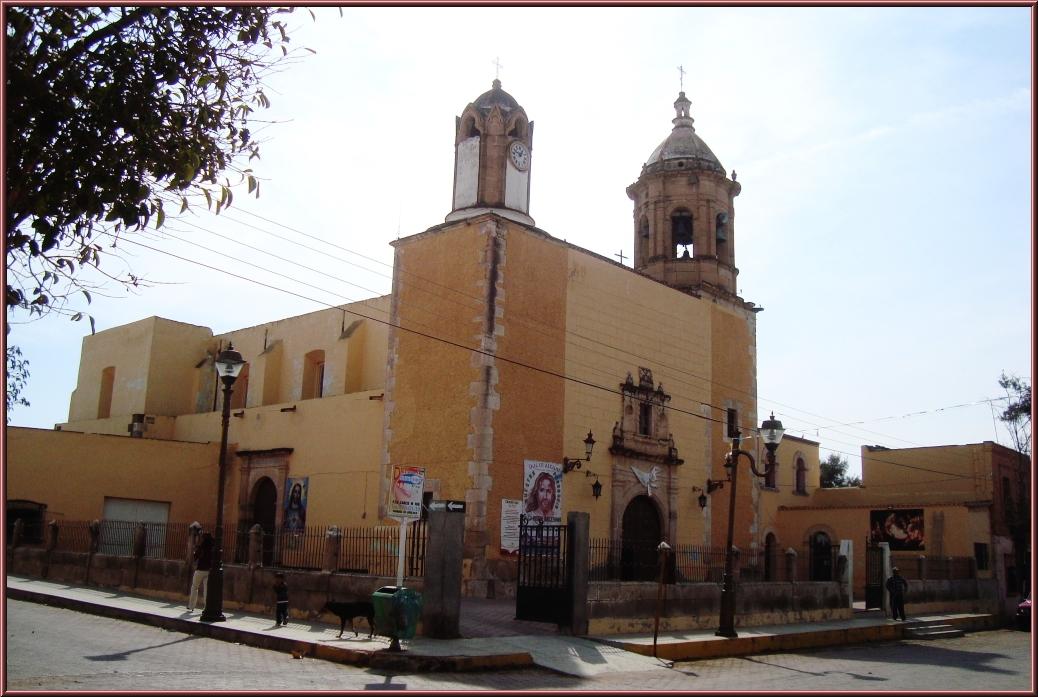
Tourist attractions of the city are the temple of San Antonio de Padua, the Temple of the Virgin of Solitude and the Sanctuary of the Virgin of Guadalupe.
#Temple
in
#San Jose de Avino
#
See Camino Real de Tierra Adentro above.
#Chapel of San Antonio of the Former hacienda of Juana Guerra
in
#Nombre de Dios
on
Carretera Sombrerete-Durango
See above.
#Temples
in
#Nombre de Dios
See above.
#Historic centre
of
#Durango
see
#detail
#
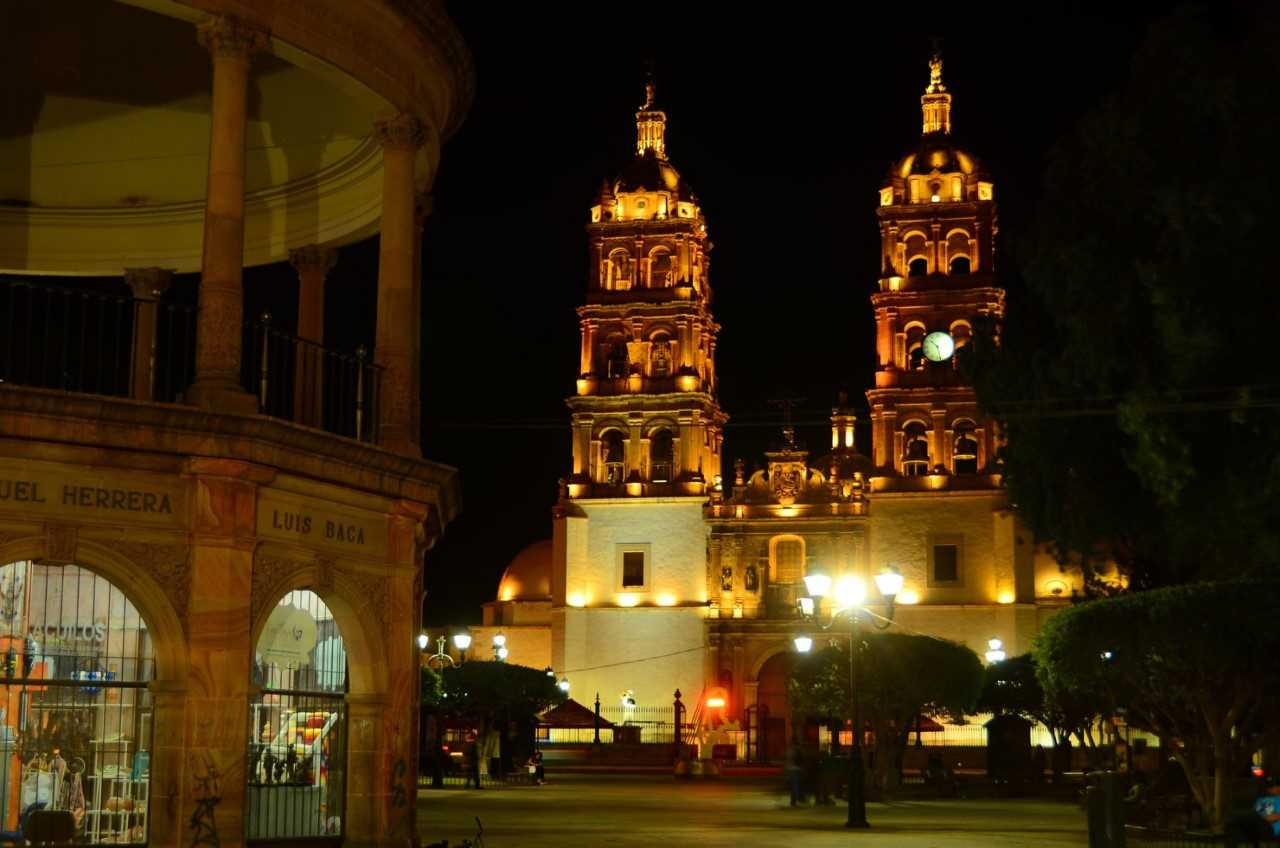
The city is noted for its colonial architecture, including Baroque, attesting to its relatively early colonization by the Spanish. The historic center contains the largest concentration of historic monuments in northern Mexico.
#Former hacienda of San Diego de Navacoyan
in
#
Durango
at
Puente del Diablo
#
La Hacienda de San Diego de Navacoyán, located on the banks of the Tunal River in the present-day state of Durango, was another significant stop on the itinerary of the Camino Real de Tierra Adentro. Travelers needed to cross this river to continue their route towards Chihuahua and New Mexico.
#Cerro Gordo Wixárika Route site
in
#
Pueblo Nuevo
at
#
N23 12 22.3 W104 56 37.7
#
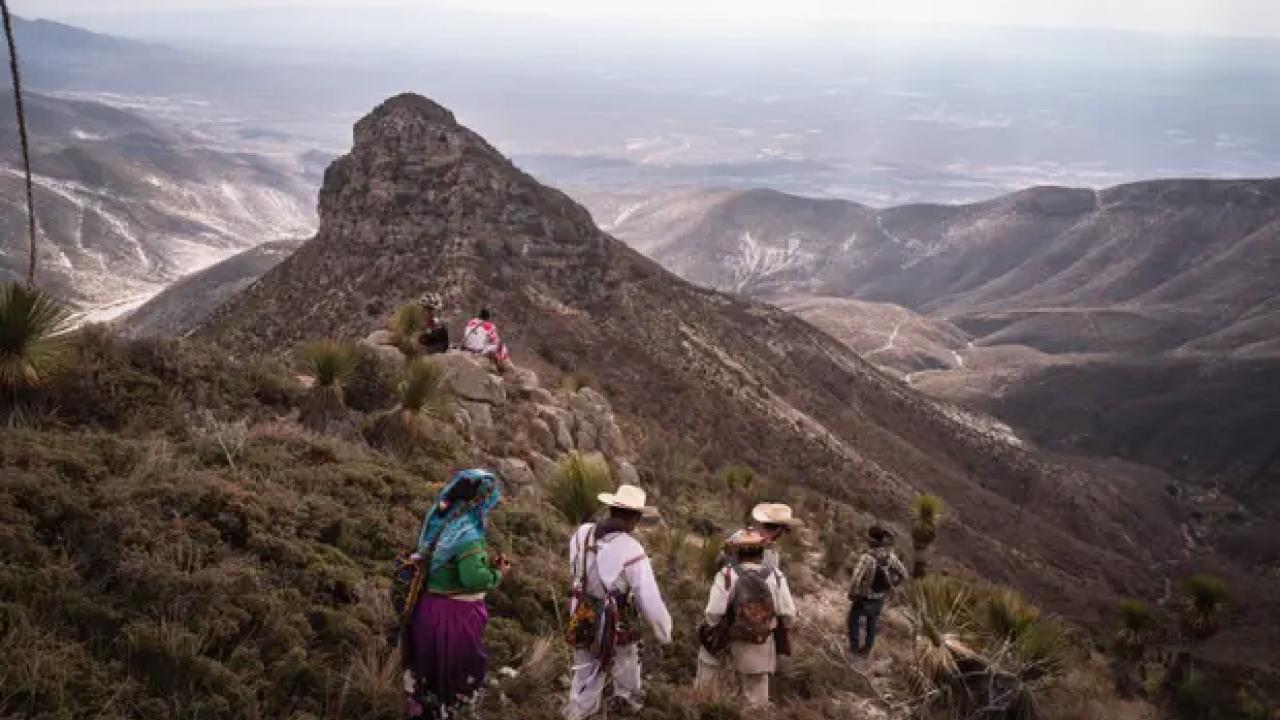
The route supports rituals tied to ancestral deities, agriculture, and community well-being. Known as “Tatehuarí Huajuyé” or the Path of Our Grandfather Fire, it embodies deep spiritual and environmental significance.
#Guanajuato state # [capital = Guanajuato]
#Historic Town
of
#Guanajuato
#
Founded by the Spanish in the early 16th century, Guanajuato became the world's leading silver-extraction centre in the 18th century. This past can be seen in its 'subterranean streets' and the 'Boca del Inferno', a mineshaft that plunges a breathtaking 600 m. The town's fine Baroque and neoclassical buildings, resulting from the prosperity of the mines, have influenced buildings throughout central Mexico.
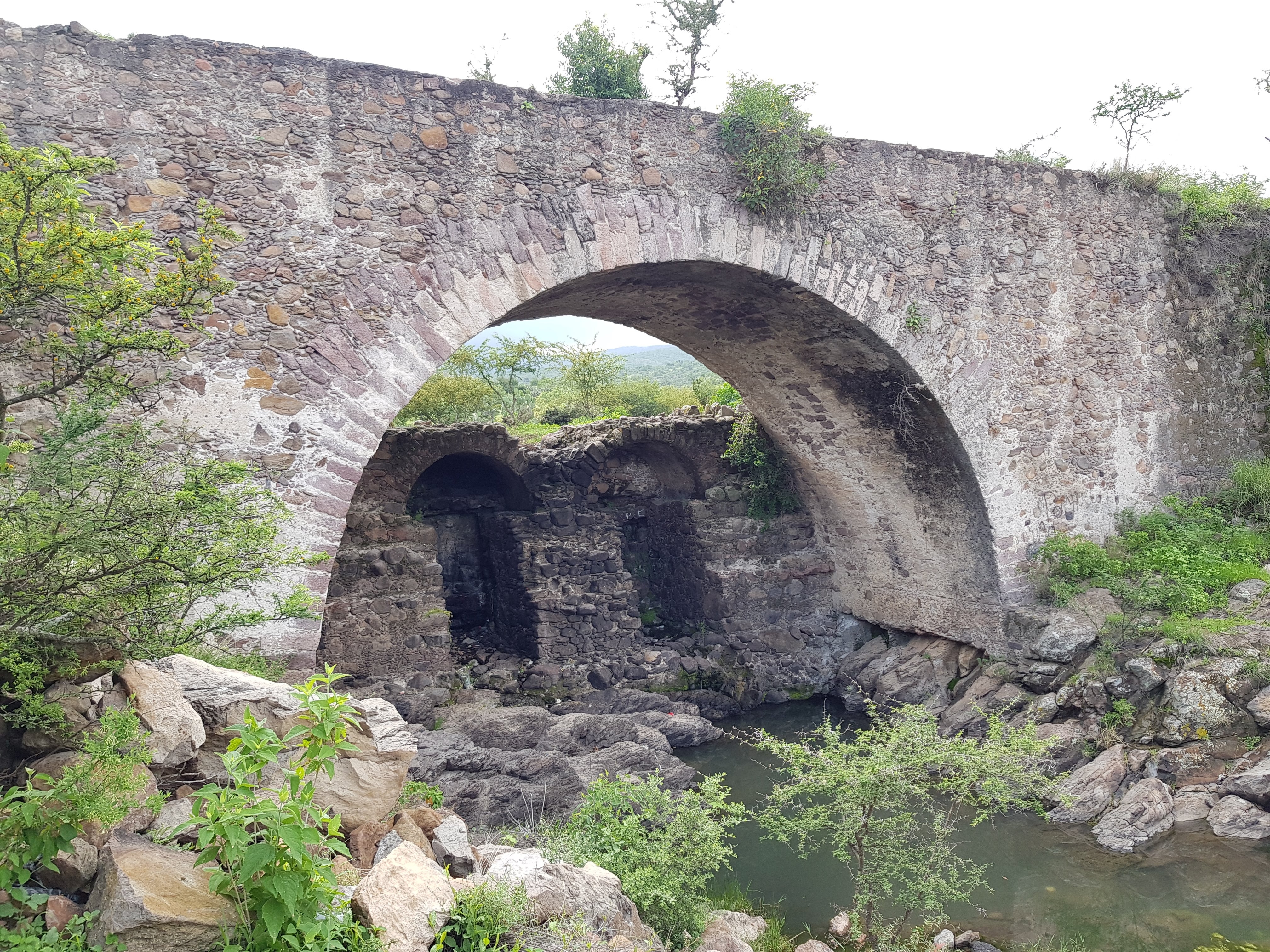
#Bridge of El Fraile
in
#Caldera
at
Celaya-Dolores Hidalgo
See Camino Real de Tierra Adentro above.
#Protective town
of
#San Miguel de Allende
#
The fortified town, first established in the 16th century to protect the Royal Route inland, reached its apogee in the 18th century when many of its outstanding religious and civic buildings were built in the style of the Mexican Baroque. Some of these buildings are masterpieces of the style that evolved in the transition from Baroque to neoclassical.
#Former Royal hospital of San Juan de Dios
in
#San Miguel de Allende
at
#
San Pedro 4, Centro
See Camino Real de Tierra Adentro above.
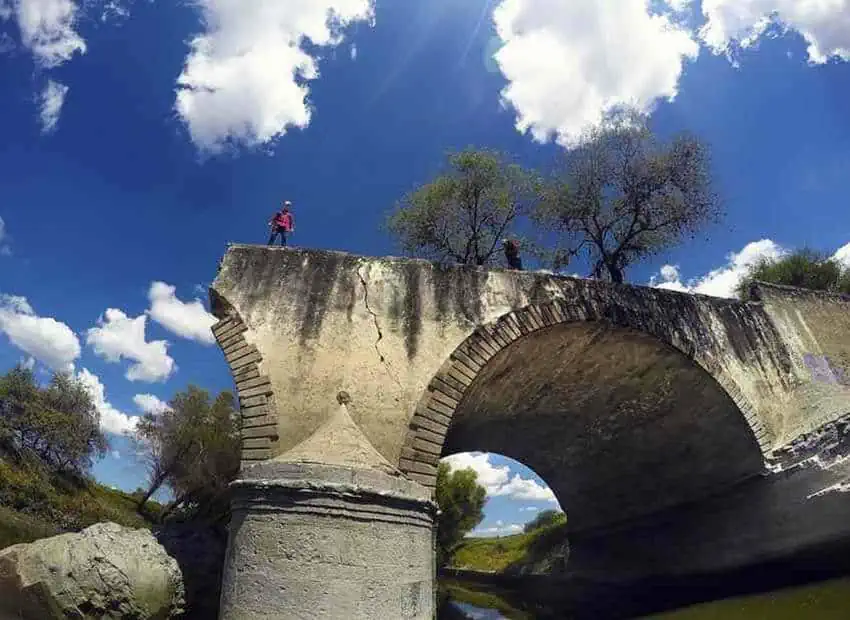
#Bridge of San Rafael
in
#San Miguel de Allende
at
A La Cieneguita
See above.
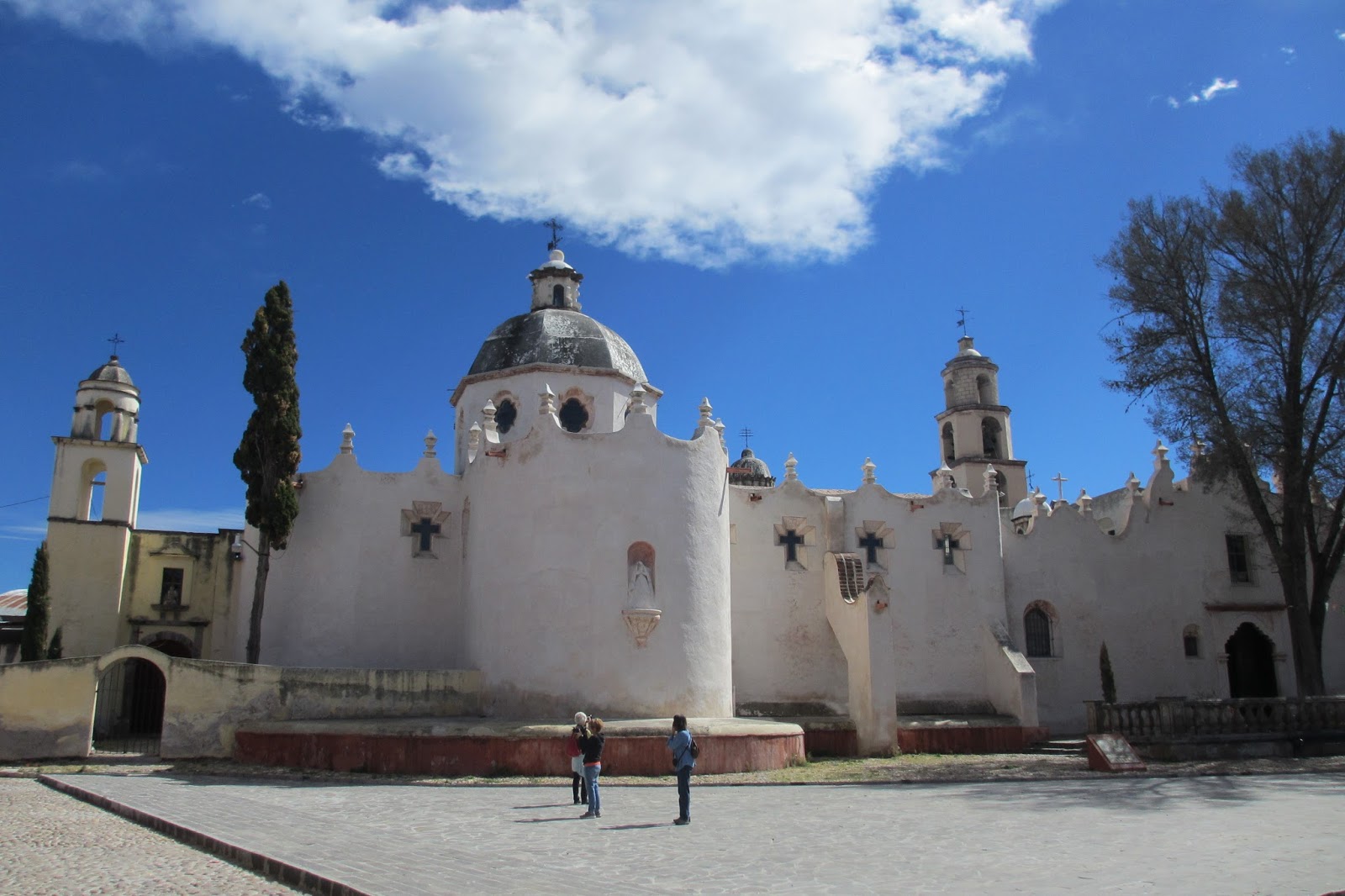
#Sanctuary of Jesus Nazareno
in
#Atotonilco
on
#
Calle Principal
#
The main feature of the complex is the rich Mexican Baroque mural work that adorns the main nave and chapels. This was chiefly the work of Antonio Martínez de Pocasangre over a period of thirty years. The mural work has led the complex to be dubbed the "Sistine Chapel of Mexico."
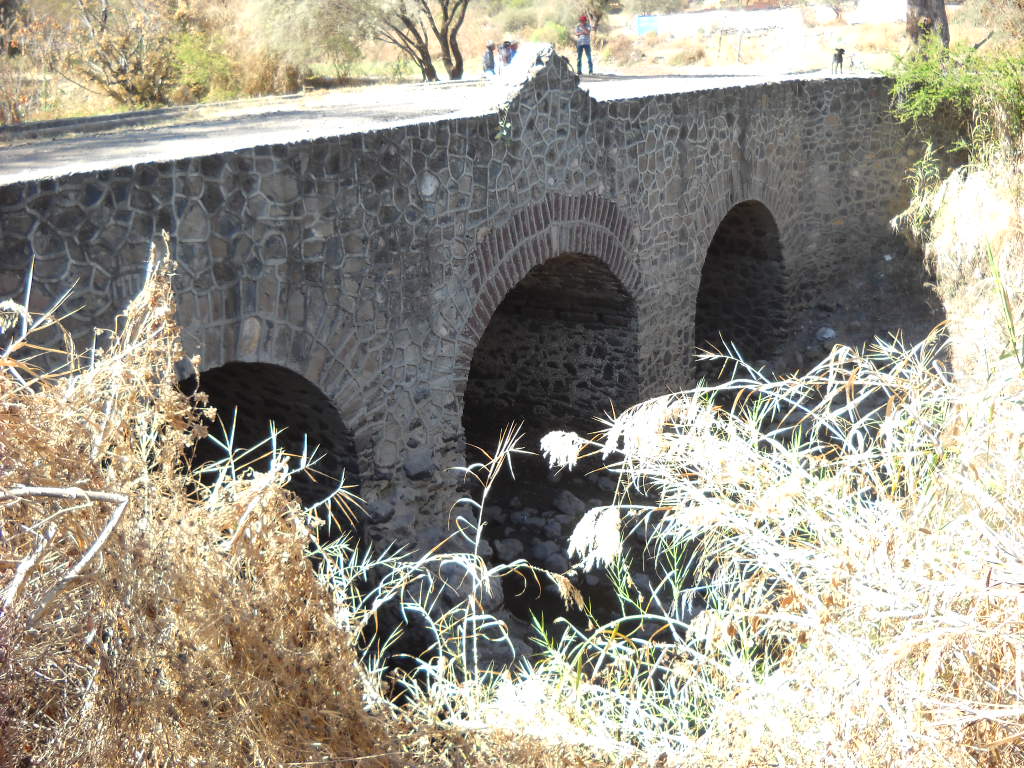
#Bridge La Quemada
in
#San Felipe
on
Mexico 51
See Camino Real de Tierra Adentro above.
#Hidalgo state [capital = Pachuca]
#Aqueduct of Padre Tembleque
in
#Tepeyahualco
at
#
N19 50 7 W98 39 45.24
#
The hydraulic system is an outstanding example of water conduction in the Americas and integrates along its 48 kilometres’ extent impressive architectural structures, such as the main arcaded aqueduct at Tepeyahualco, which reaches a total height of 39.65m, with its central arch of 33.84m height. The system was built by Franciscan friars with support from the local communities and as a result is a unique representation of the ingenious fusion of Mesoamerican and European construction traditions, combining the mestizo tradition with the tradition of Roman hydraulics. As an ensemble of canals and auxiliary structures, the system is exceptionally well-preserved and one branch remains operational up until today.
#Former convent of San Francisco
in
#Tepeji del Rio de Ocampo
at
Hidalgo 6, San Mateo 2da
#
The old cemetery is surrounded by reinforced walls, and inside are three pleasant, decorated burial chapels. The facade of the architectural complex is simple and austere, characteristic of most constructions by the Franciscan order in New Spain.
#Stretch of the Camino Real
from
bridge of La Colmena to Former hacienda of La Canada
Stretch of the Camino Real.
#Jalisco state # [capital = Guadelajara]
#Tuapurie Wixárika Route site
in
#Santa Catarina Cuescomatitlán
at
Supermanzana Túapurie
#
The route supports rituals tied to ancestral deities, agriculture, and community well-being. Known as “Tatehuarí Huajuyé” or the Path of Our Grandfather Fire, it embodies deep spiritual and environmental significance.
#Historic ensemble
in
#Ojuelos
#
Ojuelos has a significant value in Colonial history in Mexico and North America, since its fortification is the only one which has survived to present day keeping its main structure as originally built in 1569.
#Former hacienda of Cienega de Mata
in
#Lagos de Moreno
at
#
Alvarez del Castillo
#
The church on the hacienda is larger than that seen in many mid-sized cities in Mexico. The owners were deeply tied to both the Church, as well as to politics.
#Cemetery
in
#Encarnacion de Diaz
at
Concordia 96, Santa Fe
#
The Senor de la Misericordia Cemetery is the oldest in the Los Altos region. Its construction was begun in 1826 as a patio surrounded by four corridors lined with crypts. In the center, there is a large chapel made of white sandstone. The fassade of this chapel has three arches and decorated with vegetative motifs and some animal figures. The interior contains a mural of a crucified Christ with Byzantine influence, called the Señor de la Misericordia (Lord of Mercy).
#Historic centre
of
#Lagos de Moreno
#
The city's modern history started on 31 March 1563, when it was founded as Villa de Santa María de los Lagos, by Captain Don Hernando Martel and Captain Don Pedro de Anda, along with 72 Spanish noble families, servants, and slaves. The city was renamed Lagos de Moreno in memory of insurgent General Pedro Moreno (1775-1817), a founding father of Mexico, who led forces against Spain in the War of Mexican Independence.
#Hospicio Cabanas
in
#Guadalajara
at
#
Calle Paseo Hospicio 8, San Juan de Dios
#
The Hospicio Cabanas was built at the beginning of the 19th century to provide care and shelter for the disadvantaged – orphans, old people, the handicapped and chronic invalids. This remarkable complex, which incorporates several unusual features designed specifically to meet the needs of its occupants, was unique for its time. It is also notable for the harmonious relationship between the open and built spaces, the simplicity of its design, and its size.
#Agave Landscape and Ancient Industrial Facilities
in
#Teuchitlan + El Arenal + Amatitan + Tequila
#
The area encloses a living, working landscape of blue agave fields and the urban settlements of Tequila, Arenal, and Amatitan with large distilleries where the agave ‘pineapple' is fermented and distilled. The property is also a testimony to the Teuchitlan cultures which shaped the Tequila area from AD 200-900, notably through the creation of terraces for agriculture, housing, temples, ceremonial mounds and ball courts.
#Mexico state # [capital = Mexico City]
#Floating Gardens
of
#Xochimilco
#
Xochimilco lies 28 km south of Mexico City. With its network of canals and artificial islands, it testifies to the efforts of the Aztec people to build a habitat in the midst of an unfavourable environment. Its characteristic urban and rural structures, built since the 16th century and during the colonial period; have been preserved in an exceptional manner.
#Historic Centre
of
#Mexico City
see
#detail
#
Built in the 16th century by the Spanish on the ruins of Tenochtitlan, the old Aztec capital, Mexico City is now one of the world's largest and most densely populated cities. It has five Aztec temples, the ruins of which have been identified, a cathedral (the largest on the continent) and some fine 19th- and 20th-century public buildings such as the Palacio de las Bellas Artes.
#Central University City Campus
in
#Mexico City
at
#Avenida Universidad 3000
#
The urbanism and architecture of the Central University City Campus of UNAM constitute an outstanding example of the application of the principles of 20th Century modernism merged with features stemming from pre-Hispanic Mexican tradition. The ensemble became one of the most significant icons of modern urbanism and architecture in Latin America, recognized at universal level.
#Luis Barragan House
in
#Mexico City
at
#Ampliacion Daniel Garza
#
Built in 1948, the House and Studio of architect Luis Barragán in the suburbs of Mexico City represents an outstanding example of the architect’s creative work in the post-Second World War period. The concrete building, totalling 1,161 m2, consists of a ground floor and two upper storeys, as well as a small private garden. Barragán’s work integrated modern and traditional artistic and vernacular currents and elements into a new synthesis, which has been greatly influential, especially in the contemporary design of gardens, plazas and landscapes.
#Pre-Hispanic City
of
#San Juan Teotihuacan de Arista
at
#N19 41 30.012 W98 50 30.012
#
Built between the 1st and 7th centuries A.D., it is characterized by the vast size of its monuments – in particular, the Temple of Quetzalcoatl and the Pyramids of the Sun and the Moon, laid out on geometric and symbolic principles. As one of the most powerful cultural centres in Mesoamerica, Teotihuacan extended its cultural and artistic influence throughout the region, and even beyond.
#Temple of San Francisco Javier
in
#Tepotzotlan
at
#Insurgentes 99, San Martin
#
The church of the ex-Convento of San Francisco Javier, is a prime example of the Churrigueresque architectural style in Mexico, also called Ultra-Baroque or Estipite Baroque, referring to the kind of columns used. This style was the culmination of the Baroque and was characterized by unrestrained ornamentation that simply overwhelms the viewer.
#Bridge of Atongo
in
#Soyaniquilpan
Bridge on the Camino Real de Tierra Adentro.
#Town
of
#Aculco
#
Aculco is home to numerous historic sites, including the San Jeronimo and the "Garrido Varela" (a bullring), as well as the former residence of Miguel Hidalgo y Costilla.
#Stretch of Camino Real
from
#Aculco to San Juan del Rio
See Camino Real de Tierra Adentro above.
#Michoacan state [capital = Morelia]
#Historic Centre
of
#Morelia
#
The central part of the Historic Centre of Morelia includes 249 monuments of prime importance, of which 21 churches and 20 civil constructions, which crystallize the architectural history of the city. The sobriety of the urban townscape is enhanced by many Baroque facades characteristic of the religious foundations, including the cathedral and the churches of Santa Rosa, de las Monjas and Guadelupe.
#Monarch Butterfly Biosphere Reserve
in
#Contepec + Chincua + El Campanario + Chivati + Huacal + Cerro Pelon
#
The overwintering concentration of butterflies in the property is a superlative natural phenomenon. The millions of monarch butterflies that return to the property every year bend tree branches by their weight, fill the sky when they take flight, and make a sound like light rain with the beating of their wings. Witnessing this unique phenomenon is an exceptional experience of nature.
#Morelos state # [capital = Cuernavaca]
#Archaeological Monuments
in
#Miacatlan
at
#Zone of Xochicalco
#
Xochicalco is an exceptionally well-preserved example of a fortified political, religious and commercial centre from the troubled period of 650–900 that followed the break-up of the great Mesoamerican states such as Teotihuacan, Monte Albán, Palenque and Tikal.
#Cathedral
in
#Cuernavaca
at
#corner of Hidalgo and Morelos Street
#
The overall form of this, which used to be only the inner sanctum of the monastery and its lands, was purposefully built away from the population center to give a sense of isolation to both the monks and those visiting.
#Ancient Convent of the Nativity
in
#Tepoztlan
at
#corner of Ignacio Zaragoza & Arq. Pablo Gonzalez
#
The Ex Convento houses the Historical Museum of Tepoztlan, which also has a Historical Documentation Center. Admire at the main entrance its beautiful seed arch.
#Former convent of Santo Domingo de Guzman
in
#Oaxtepec
at
#Emperador 1
#
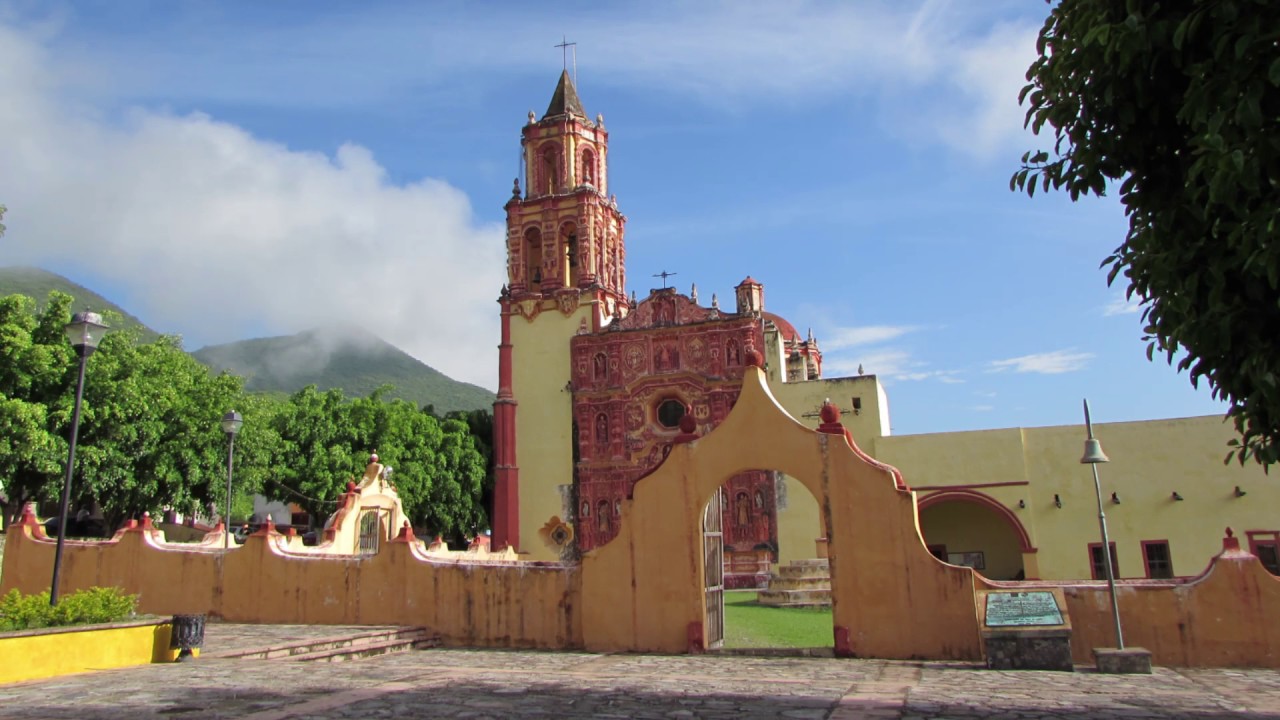
Earliest 16th-Century Monastery on the Slopes of Popocatepetl.
#Temple and Former Convent of Saint John the Baptist
in
#Tlayacapan
at
#
2 de Abril 18, Barrio de Texcalpan
#
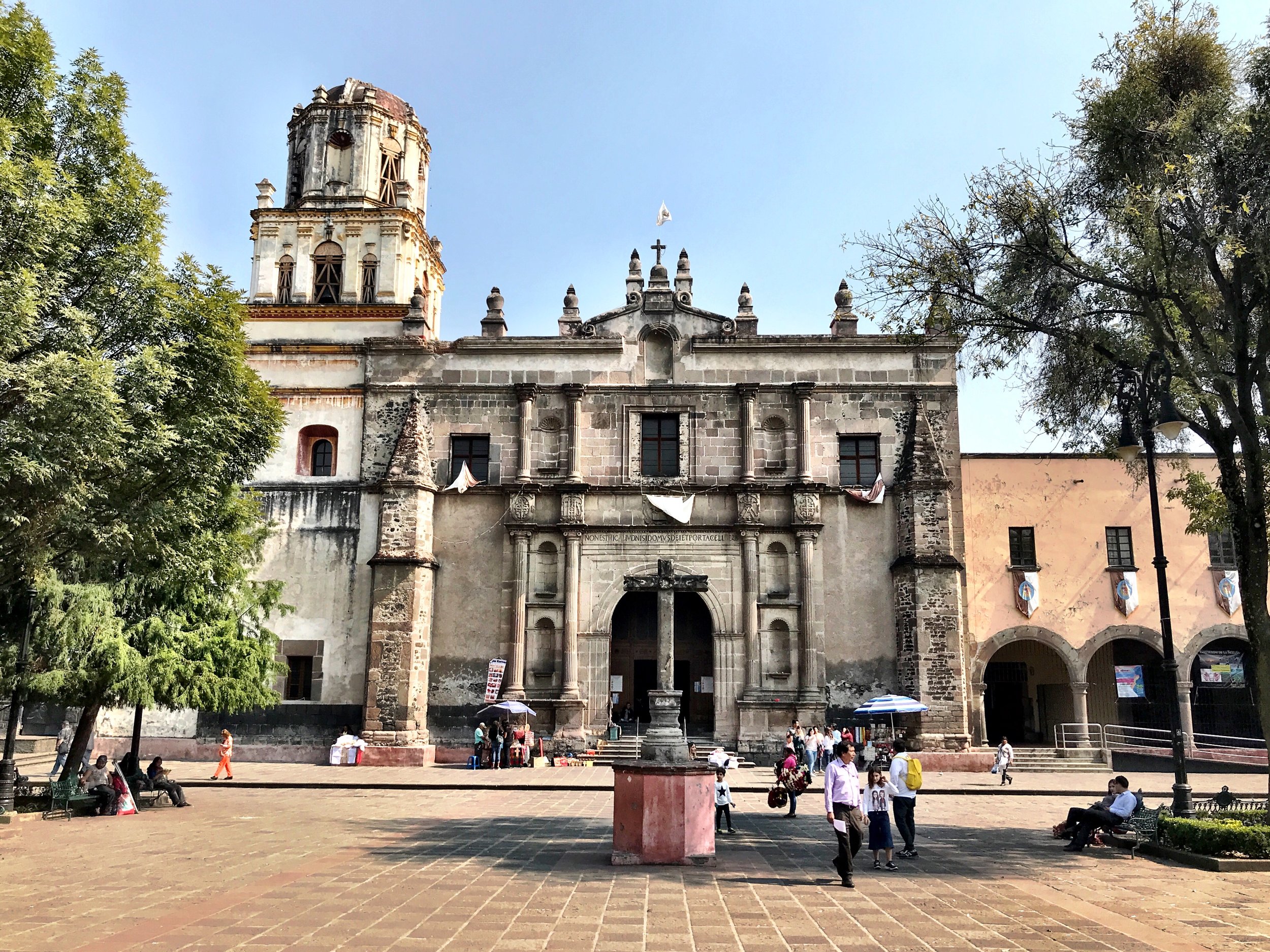
The main landmark is the former monastery of San Juan Bautista, which towers over all the other structures. It was built beginning the 1530s, along with 26 chapels scattered around the original town as part of the "spiritual conquest" of the area.
#Temple and Former Convent of Saint William
in
#Totolapan
at
#
Mariano Escobedo 21, San Agustin
#
The native population was evangelized by the Augustinians and the Monastery of San Guillermo was built in 1545, becoming one of the first colonial monasteries in Mexico.
#Former Augustinian Convent of Apostel San Mateo
in
#Atlatlahucan
at
#
Del Convento, San Mateo
#
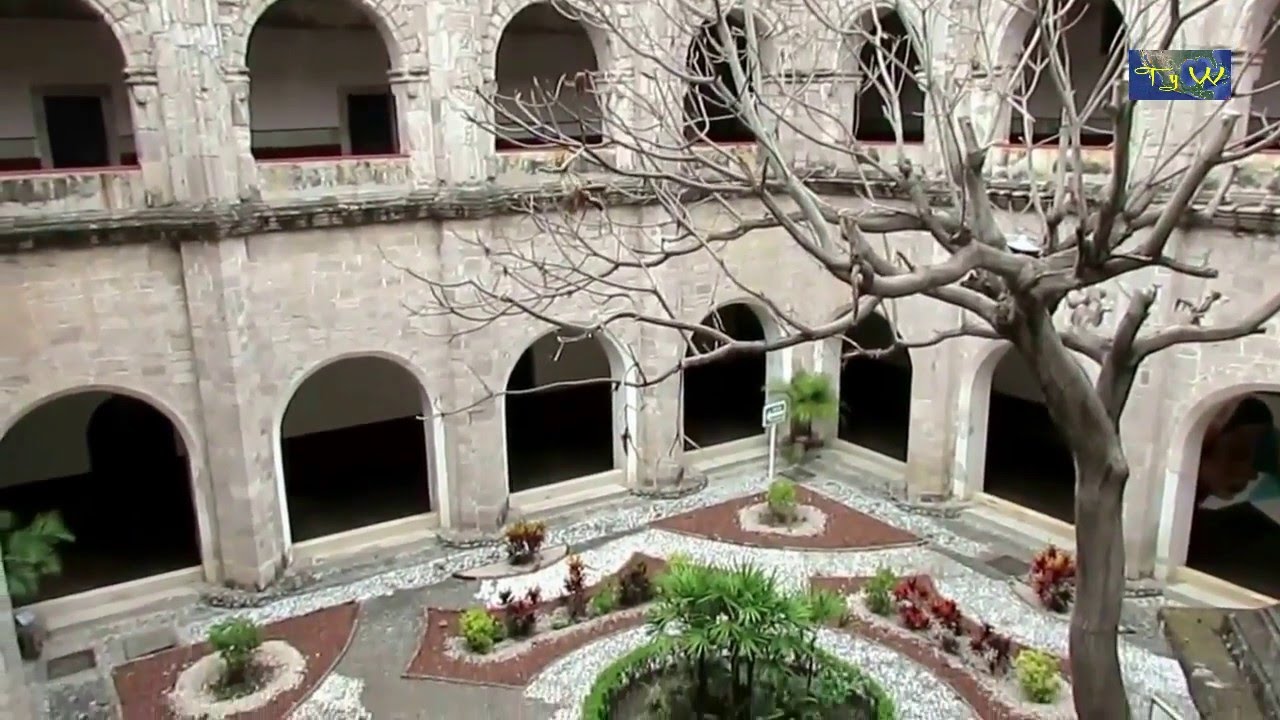
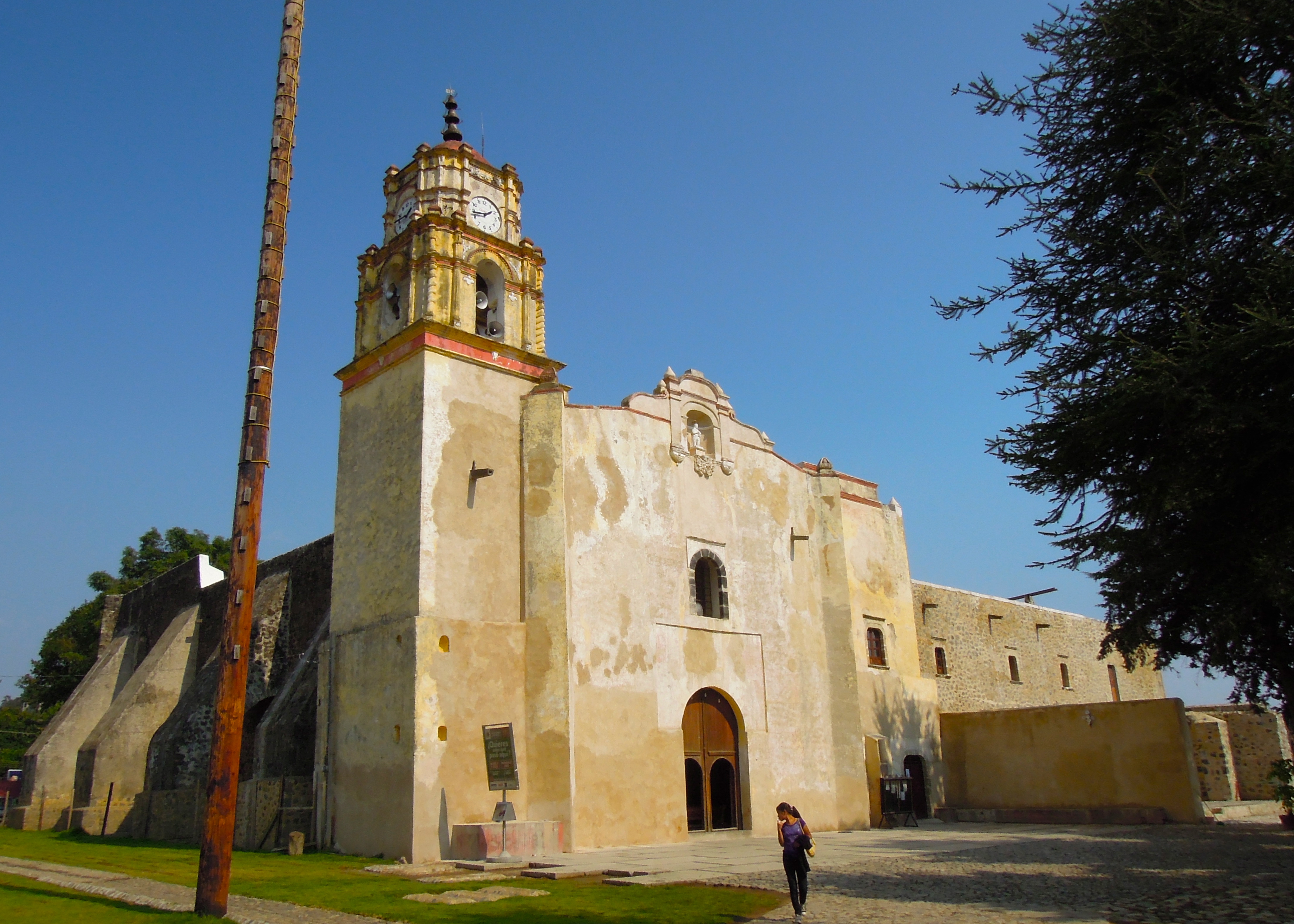
With delimited atrium, temple, two level cloisters, porter and an open chapel, the building looks grand as ever, especially with the tall bell tower, bulrush façade and the Porfirian Clock.
#Temple and Former Convent of Saint John the Baptist
in
#Yecapixtla
on
#Calle Sufragio Efectivo
#
The site of the church and former monastery of San Juan Bautista was a teocalli, or sacred precinct, dedicated to a god of commerce called Yacapitzauac. This teocalli was destroyed by the Spanish under Gonzalo de Sandoval when he captured and sacked the settlement in 1521. This teocalli and god were the center of the pre-Hispanic community. The Franciscans were the first to arrive in the 1520s to evangelize the local population and they built a small church on the site. However, this church was destroyed in a fire. The Augustinians took over evangelization in the 1530s and formally established the monastery, dedicated to John the Baptist.
#Temple and Former Convent of Saint James the Apostle
in
#Ocuituco
at
#Ocuituco 103, Los Alacranes
#
Earliest 16th-Century Monastery on the Slopes of Popocatepetl.
#Temple and Former Convent of Saint John the Baptist
in
#Tetela del Volcan
at
#
Lopez Avelar 7, San Bartolo
#
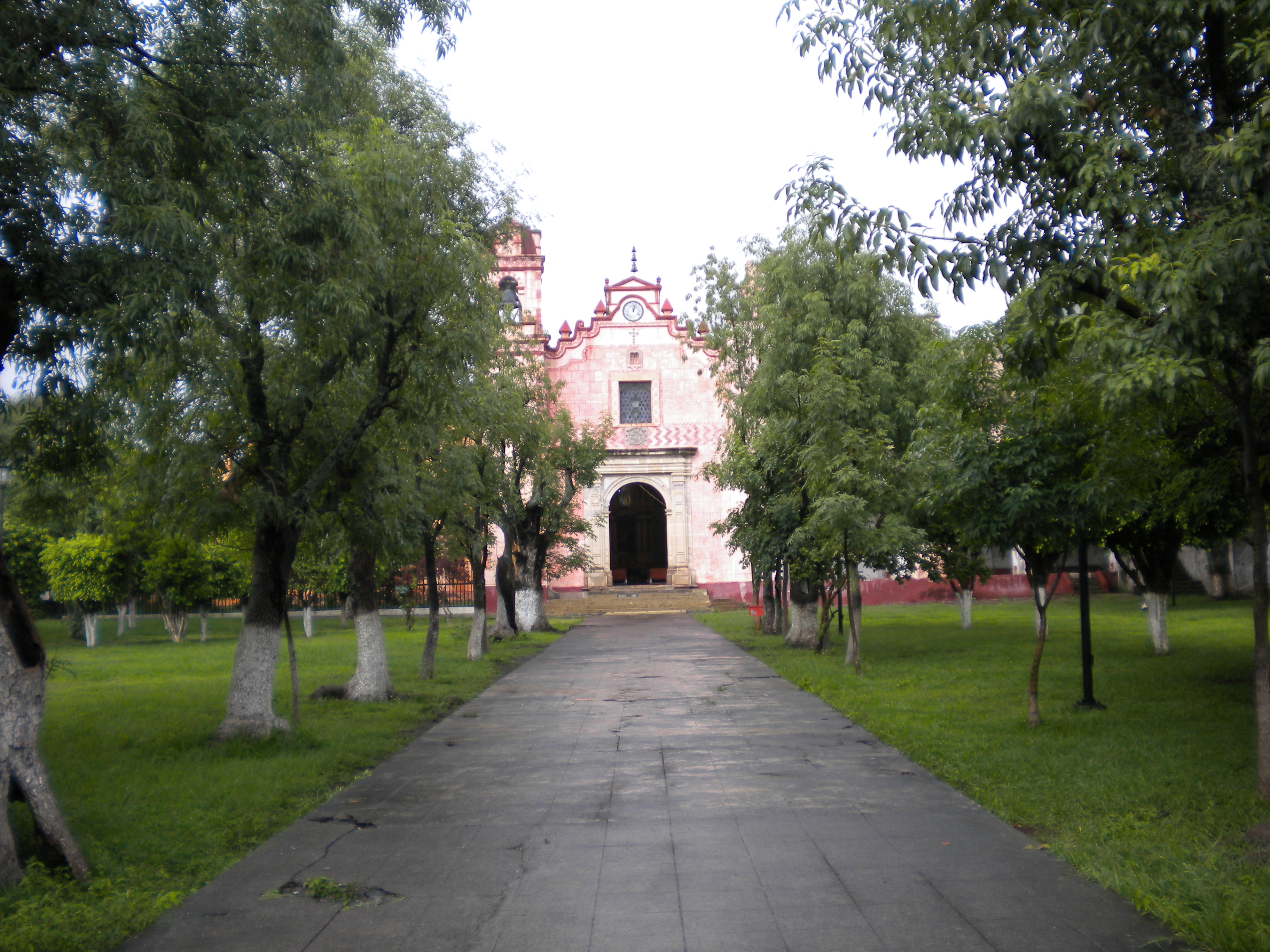
The exterior has arcades that surround the complex but are partially hidden by trees. The upper parts of the walls around the complex are covered in paint, the lower floor of the cloister has figures depicted in the arches and walls. In the vaults over the walkways, there are numerous cherubs defeating evil spirits and some even fighting with each other.
#Temple and Former Convent of Saint Dominic de Guzman
in
#Hueyapan
at
#
Morelos 16, San Miguel
#
The monastery of Santo Domingo de Guzman It is one of the monasteries closest to the volcano. It was founded by the Dominicans but its cloister was built of adobe and wood with a tile roof instead of stone. It disintegrated relatively quickly due to the elements and was abandoned. It remains mostly closed to this day. Only the atrium area is open to visitors and this closes by 1pm each day. The austere facade of the main church survives and it has a notable Barorque niche.
#Temple and Former Convent of the Immaculate Conception
in
#Zacualpan de Amilpas
at
#
Galeana 14
#
Earliest 16th-Century Monastery on the Slopes of Popocatepetl.
#Nayarit state [capital = Tepic]
#Isabel island
via
#San Blas
at
#N21 51 0.00 W105 52 60.00
#
There are numerous factors that make Isla Isabel such a diverse and phenomenal wildlife destination. Firstly, several ocean currents meet in the waters surrounding the volcanic outcrop. These nutrient-rich currents provide sustenance for a variety of marine-life, including the many thousand of seabirds that call this place home. Secondly, the mainland holds one of the largest and most biologically important mangrove stands on the central American coastline. These mangroves function as a sanctuary for fish and other animals that then make their way as adults across the channel to the coral reefs that surround the island. Coral reefs are rare in this part of the world and this makes for exceptional snorkeling and diving. Lastly, due to its previous inaccessibility to humans and the absence of natural predators, the wildlife is bizarrely unafraid of humans, allowing for a truly unforgettable experience.
#Marias Islands
via
#San Blas
at
#N21 34 60 W106 31 60
#
Because of its isolation for over eight million years, Islas Marías' importance as an ecosystem is manifest in its function as a reservoir to Mexico of endemic species. Fifty-four species of land and marine fauna are protected under some risk category and of these, 19 are endemic. Regarding the flora, 11 endemic or restricted distribution taxa have been recorded, together with six species (one endemic) that are included in a risk category according to NOM-059-SEMARNAT-2001. Furthermore, the reserve is an important refuge, nesting and feeding site for large colonies of sea birds. The marine environment is highly productive, reflected in the great diversity of organisms to be found, such as coral reefs, reef-fish, sharks, rays, turtles and marine mammals.
#Marietas islands
via
#Puerto Vallarta
at
#N20 41 53.05 W105 35 10.85
#
Many species of seabirds use the location as feeding and breeding grounds, these include blue-footed boobies as well as the red-billed tropicbirds. It also has many different varieties of coral, which, in turn, is home to a large variety of reef fish species. The island ecosystem is also home to dolphins, Manta Rays and a number of tropical fish. Eels and many species of sea turtles are also found in the reefs and the many caves that dot the site. During the winter months humpback whales arrive at the islands and can be observed all through winter.
#Tatei Jaramara Wixárika Route site
in
#San Blas
at
#N21 32 15.14 W105 17 59.91
#
The route supports rituals tied to ancestral deities, agriculture, and community well-being. Known as “Tatehuarí Huajuyé” or the Path of Our Grandfather Fire, it embodies deep spiritual and environmental significance.
#Oaxaca state [capital = Oaxaca]
#Archaeological Site of Monte Alban
in
#San Pedro Ixtlahuaca
at
#Ignacio Bernal
#
The grand Zapotec capital flourished for thirteen centuries, from the year 500 B.C to 850 A.D. when, for reasons that have not been established, its eventual abandonment began. The archaeological site is known for its unique dimensions which exhibit the basic chronology and artistic style of the region and for the remains of magnificent temples, ball court, tombs and bas-reliefs with hieroglyphic inscriptions.
#Historic Centre
of
#Oaxaca
#
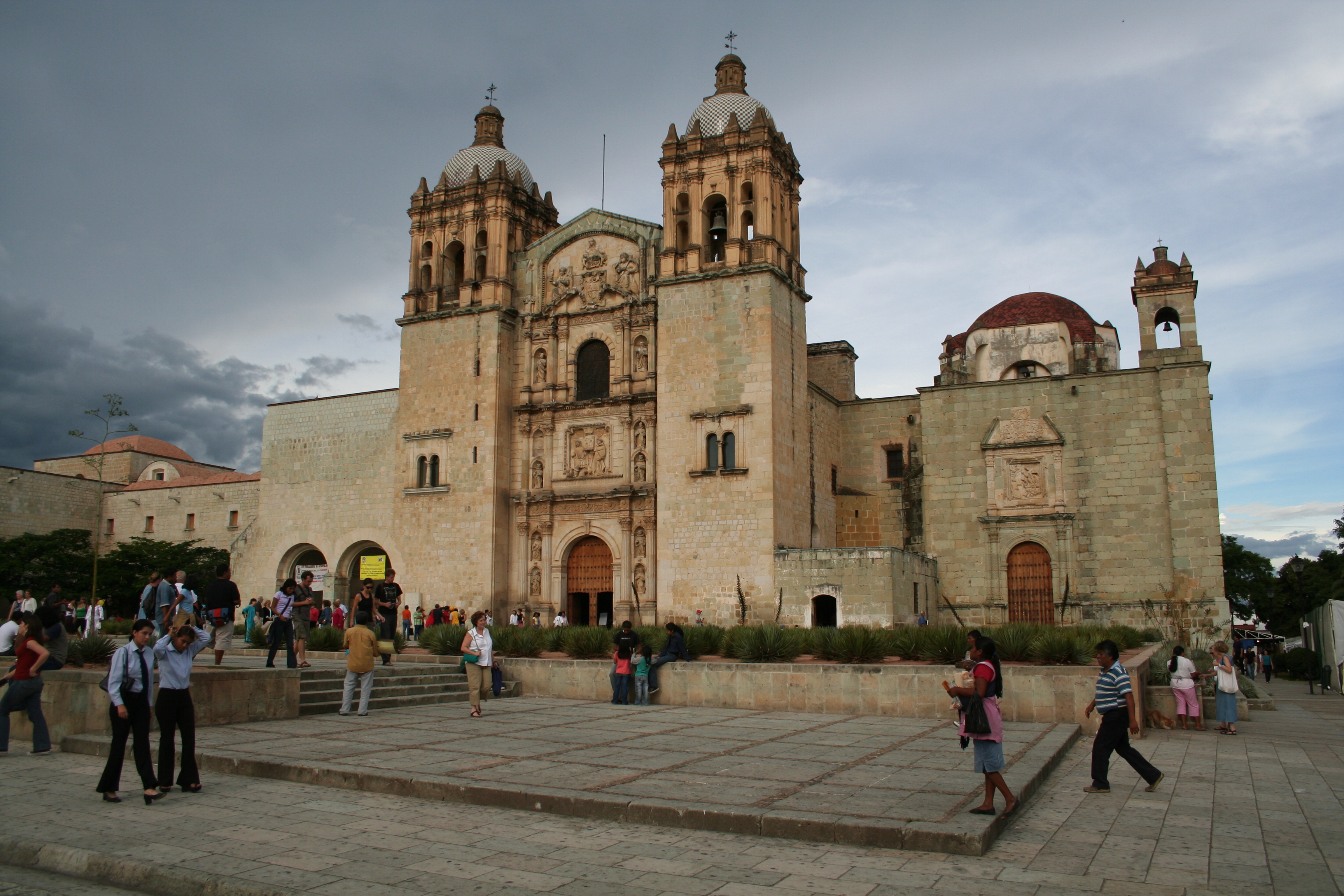
A total of 1,200 historic monuments has been inventoried and listed. The major religious monuments, the superb patrician town houses and whole streets lined with other dwellings combine to create a harmonious cityscape, and reconstitute the image of a former colonial city whose monumental aspect has been kept intact.
#Prehistoric Caves
in
#Yagul + Mitla
#
Some of these shelters provide archaeological and rock-art evidence for the progress of nomadic hunter-gathers to incipient farmers. Ten thousand-year-old Cucurbitaceae seeds in one cave, Guilá Naquitz, are considered to be the earliest known evidence of domesticated plants in the continent, while corn cob fragments from the same cave are said to be the earliest documented evidence for the domestication of maize.
#Puebla state # [capital = Puebla]
#Temple and Former Convent of the Assumption of Our Lady
in
#Tochimilco
at
#Plaza Principal 10
#
In the municipal seat of Tochimilco there is a very beautiful Temple and a former Franciscan convent of the Assumption of Our Lady was founded by Fray Diego de Olarte and built in 1560.
#Temple and Former Convent of Saint Andrew
in
#San Andres Calpan
at
#Benito Juarez 206
This convent is considered a jewel of Novohispanic architecture, especially for its plateresque facade and the set of four chapels located at the ends of the atrium.
#Temple and Former Convent of Saint Michael the Archangel
in
#Huejotzingo
at
#
Av Cuauhtemoc 86, Primero, Primer Barrio
#
The third and current complex was begun in 1544 and completed in 1570, and built under the direction of Juan de Alameda. Construction ended when Alameda died, and he was buried in the monastery. In the colonial era, it was described as being as luxurious as the church of San Juan de los Reyes in Toledo and one of the most beautiful in Mexico.
#Historic Centre
of
#Puebla
#
It has preserved its great religious structures such as the 16th–17th-century cathedral and fine buildings like the old archbishop's palace, as well as a host of houses with walls covered in tiles (azulejos). The new aesthetic concepts resulting from the fusion of European and American styles were adopted locally and are peculiar to the Baroque district of Puebla.
#Tehuacan-Cuicatlan Valley
from
#San Juan Raya to Purron
#
The valley harbours the densest forests of columnar cacti in the world, shaping a unique landscape that also includes agaves, yuccas and oaks. Archaeological remains demonstrate technological developments and the early domestication of crops. The valley presents an exceptional water management system of canals, wells, aqueducts and dams, the oldest in the continent, which has allowed for the emergence of agricultural settlements.
#Queretaro state # [capital = Queretaro]
#Chapel of the former hacienda
in
#Buenavista
at
#
Santa Rosa Jauregui
#
An ensemble of sites along the southern part of the Camino Real de Tierra Adentro, including examples of buildings, architectural and technological ensembles, illustrate a significant stage in human history - the Spanish colonial exploitation of silver and the transformation of associated rural and urban landscapes.
#Former Hacienda
in
#Chichimequillas
at
#Jardines de la Hacienda
The beautiful estancia is located in the municipality of El Marques, Queretaro. It was founded by the Spanish monks of the Discalced Carmelites to evangelize the indigenous people. At the moment it continues dedicated to the agricultural and cattle production, mainly to the agricultural activity.
#Historic Monuments Zone
of
#Queretaro
#
The old colonial town of Queretaro is unusual in having retained the geometric street plan of the Spanish conquerors side by side with the twisting alleys of the Indian quarters. The Otomi, the Tarasco, the Chichimeca and the Spanish lived together peacefully in the town, which is notable for the many ornate civil and religious Baroque monuments from its golden age in the 17th and 18th centuries.
#Historic centre
of
#San Juan del Rio
#
It was founded as villa in 1531 with the goal of establishing, together with the villa of Santiago, a frontier to safeguard Spaniards during their battles against Chichimeca groups.
#Franciscan Mission Parroquia de Santiago Apostol
in
#Jalpan de Serra
at
#
Benito Juarez, Independencia
#
This complex is situated in the center of the modern town in front of the main plaza and formed by an atrium, cloister, pilgrim portal and church, with a chapel annex on the left side. The original atrium wall was lost, but reconstructed in the same style, with three portals and inverted arches. The main features of the ornate portal on the facade are Our Lady of the Pillar and the Virgin of Guadalupe, both with Mesoamerican connections, as well as a double headed eagle, meant to symbolize the blending of the two cultures.
#Franciscan Mission Conca
in
#San Juan
on
#
Guerrero Street
#
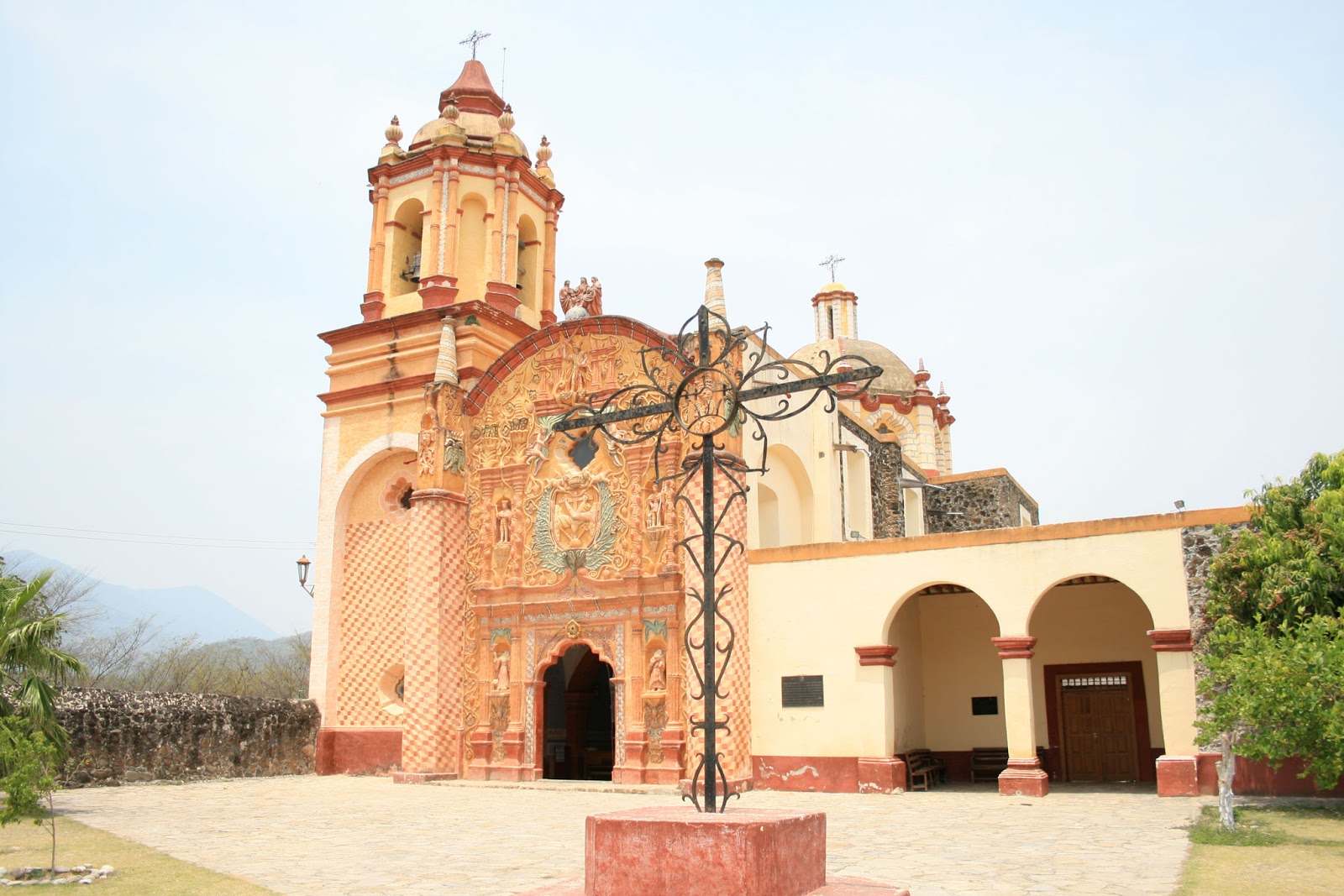
San Miguel Concá is the furthest north and the smallest of the missions. The decoration features large flowers, foliage and coarse figures in indigenous style. It is distinguished by an image of the Holy Trinity at the crest along with a rabbit (a Pame symbol) and double-headed eagle.
#Franciscan Mission Santa Maria
in
#Landa de Matamoros
at
#
San Esteban
#
The mission was built between 1760 and 1768 by Miguel de la Campa is dedicated to Our Lady of the Immaculate Conception, which gives rise to part of the community’s name. It was the last of the missions to be built. The atrium is bordered by a wall and centered by a cross, and paved in stone. It is noted for its equilibrium in composition and very narrow bell tower, which is integrated into the facade. The sculpture of this facade is considered to be the best of the five according to Arqueología Mexicana magazine. The faces of the mermaids at Landa have indigenous features.
#Franciscan Mission
in
#Tilaco
#
21°09′40″N 99°11′34″W
#
Tilaco is the best conserved of the five missions and has the most subtle ornamentation on its fassade. Its fassades are composed of three horizontal and three vertical partitions, with the Franciscan coat of arms prominent over the main entrance. In Tilaco, the fassade has small angels, ears of corn and a strange large jar over which is an image of Francis of Assisi. One distinctive decorative element is four mermaids with indigenous features.
#Franciscan Mission Nuestra Senora de la Luz
in
#Tancoyol
#
Main Plaza
#
The structure is similar to those in Jalpan and Landa. It has a church with a Latin cross layout and choir area, a sacristy, atrium with cross and chapels in the corners of the atrium called "capillas posas". There is also a pilgrims' gate, a cloister and quarters for the priest. The interior has a number of sculptures including one of “Our Lady of Light.” The facade is marked by a rhomboid window surrounded by a representation of the cord Franciscans use to tie their habits.
#Quintana Roo state [capital = Chetumal]
#Sian Ka'an
in
#Felipe Carrillo Puerto
at
#N19 22 59.988 W87 47 30.012
#
The property boasts diverse tropical forests, palm savannah, one of the most pristine wetlands in the region, lagoons, extensive mangrove stands, as well as sandy beaches and dunes. The 120,000 hectares of marine area protect a valuable part of the Mesoamerican Barrier Reef and seagrass beds in the shallow bays. The lush green of the forests and the many shades of blue of the lagoons and the Caribbean Sea under a wide sky offer fascinating visual impressions.
#San Luis Potosi state [capital = San Luis Potosi]
#Historic centre
of
#San Luis Potosi
see
#detail
#
Standing at 2,000 meters (6,000 feet), it's often regarded as the highest metropolis in the country. The city is also famous for its silver mining roots and the significant revolutions that took place. You can revisit the eventful history through the many colonial buildings and museums.
#Huahuatsari Wixárika Route site
in
Villa de Ramos
at
Cerro Zamora
#
The route supports rituals tied to ancestral deities, agriculture, and community well-being. Known as “Tatehuarí Huajuyé” or the Path of Our Grandfather Fire, it embodies deep spiritual and environmental significance.
#Cuhixu Uheni Wixárika Route site
in
Villa de Ramos
at
N22 50 6.28 W101 53 16.69
See above.
#Tatei Matiniere Wixárika Route site
in
Villa de Ramos
at
N22 53 54.15 W101 41 4.71
See above.
#Nihuetaritsié Wixárika Route site
in
Villa de Ramos
at
N22 50 58.21 W101 37 24.12
See above.
#Natsitacua Wixárika Route site
in
Salinas
at
Laguna Cornejo
See above.
#Uxa Tequipa Wixárika Route site
in
Salinas
at
N23 4 46.51 W101 27 15.76
See above.
#Tuy Mayau Wixárika Route site
in
Charcas
at
N23 7 50.62 W101 22 25.19
See above.
#Huacuri Quitenie Wixárika Route site
in
Charcas
at
N23 19 7.55 W101 11 17.09
See above.
#Huirjcuta Raunax Wixárika Route site
in
Charcas
at
N23 39 47.26 W100 54 21.62
See above.
#Huirjcuta Raunax Wixárika Route site
in
Catorce
at
N23 30 23.99 W100 52 40.52
See above.
#Sonora state [capital = Hermosillo]
#Colorado River Delta
in
#El Golfo de Santa Clara
at
Reserva de la Biosfera Alto Golfo de California y Delta del Río Colorado
#
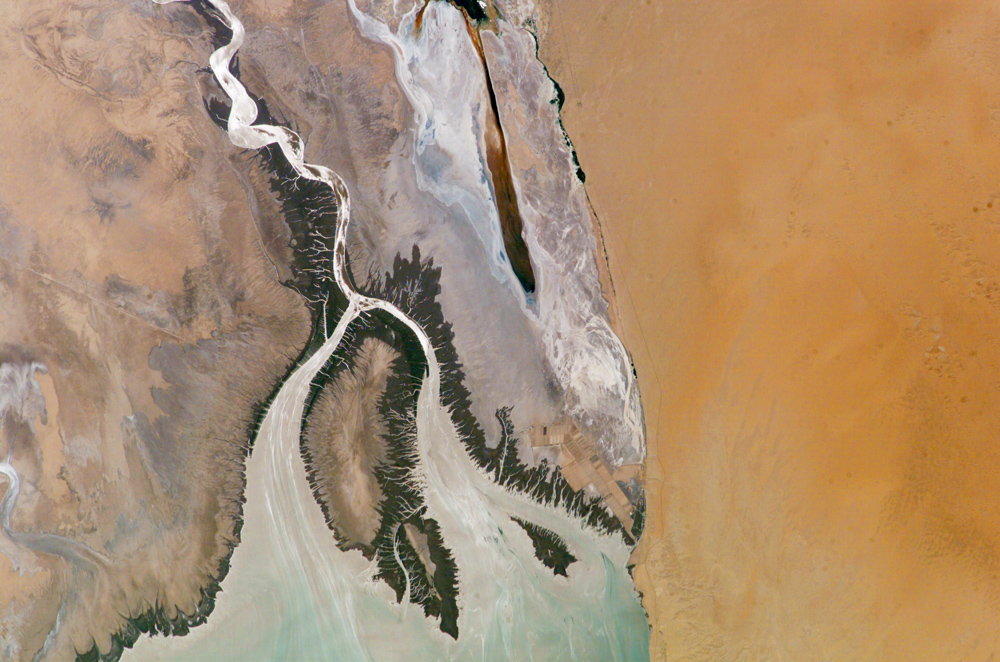
Energized by some of the greatest tides in the world, this area includes the expansive delta of the once mighty Colorado River and numerous wetlands and estuaries, which serve as nursery grounds for marine species and resting places for resident and migratory birds. The area is known for its many endemic species, as well as commercially important populations of shrimp, blue crabs and clams. It is home to four highly endangered species including the endemic Gulf of California harbor porpoise or vaquita and the totoaba.
#El Pinacate and Gran Desierto de Altar Biosphere Reserve
in
#Puerto Penasco
at
#N32 0 0 W113 55 0
#
The volcanic shield in the property boasts a wide array of volcanic phenomena and geological formations, including a small shield-type volcano. The most visually striking feature is the concentration of a total of 10 enormous, deep and almost perfectly circular Maar (steam blast) craters, believed to originate from a combination of eruptions and collapses. The property is visually outstanding through the stark contrast of a dark-coloured area comprised of a volcanic shield and spectacular craters and lava flows within an immense sea of dunes. The dunes can reach 200 meters in height and contain linear dunes, star dunes and dome dunes, displaying enormous and constantly changing contrasts in terms of form and color. In addition to these predominant features there are several arid granite massifs emerging like islands from the sandy desert flats, ranging between 300 and 650m high. The combination of all these features results in a highly diverse and visually stunning desert landscape.
#Tiburon + San Pedro Martir Islands
via
#Punta Chueca
at
#N28 22 30.00 W112 20 15.00
The Tiburon island is uninhabited (except for Mexican military encampments on the eastern and southern shores of the island) and is administered as an ecological preserve by the Seri tribal government in conjunction with the federal government. San Pedro Martir is seldom visited, having near vertical sides leaving only questionable fair weather anchorages in two locations.
#Veracruz state [capital = Xalapa]
#Historic Monuments
in
#Tlacotalpan
#
Tlacotalpan, a Spanish colonial river port on the Gulf coast of Mexico, was founded in the mid-16th century. It has preserved its original urban fabric to a remarkable degree, with wide streets, colonnaded houses in a profusion of styles and colours, and many mature trees in the public open spaces and private gardens.
#Pre-Hispanic City
in
#Papantla
#
Its architecture, which is unique in Mesoamerica, is characterized by elaborate carved reliefs on the columns and frieze. The 'Pyramid of the Niches', a masterpiece of ancient Mexican and American architecture, reveals the astronomical and symbolic significance of the buildings. El Tajin has survived as an outstanding example of the grandeur and importance of the pre-Hispanic cultures of Mexico.
#Yucatan state # [capital = Merida]
#Pre-Hispanic City of Chichen-Itza
in
#Tinum
at
#N20 40 57.86 W88 34 7.154
#
This sacred site was one of the greatest Mayan centres of the Yucatan peninsula. Throughout its nearly 1,000-year history, different peoples have left their mark on the city. The Maya and Toltec vision of the world and the universe is revealed in their stone monuments and artistic works. The fusion of Mayan construction techniques with new elements from central Mexico make Chichen-Itza one of the most important examples of the Mayan-Toltec civilization in Yucatán. Several buildings have survived, such as the Warriors’ Temple, El Castillo and the circular observatory known as El Caracol.
#Pre-Hispanic Town
in
#Uxmal
on
#Carretera Federal No. 261
#
Even before the restoration work, Uxmal was in better condition than many other Maya sites. Much was built with well-cut stones set into a core of concrete not relying on plaster to hold the building together. The Maya architecture here is considered matched only by that of Palenque in elegance and beauty. The Puuc style of Maya architecture predominates. Thanks to its good state of preservation, it is one of the few Maya cities where the casual visitor can get a good idea of how the entire ceremonial center looked in ancient times.
#Pre-Hispanic Town
of
#Kabah
#
The most famous structure at Kabah is the "Palace of the Masks", the fassade decorated with hundreds of stone masks of the long-nosed rain god Chaac; it is also known as the Codz Poop, meaning "Rolled Matting", from the pattern of the stone mosaics. This massive repetition of a single set of elements is unusual in Maya art, and here is used to unique effect.
#Pre-Hispanic Town
of
#Sayil
#
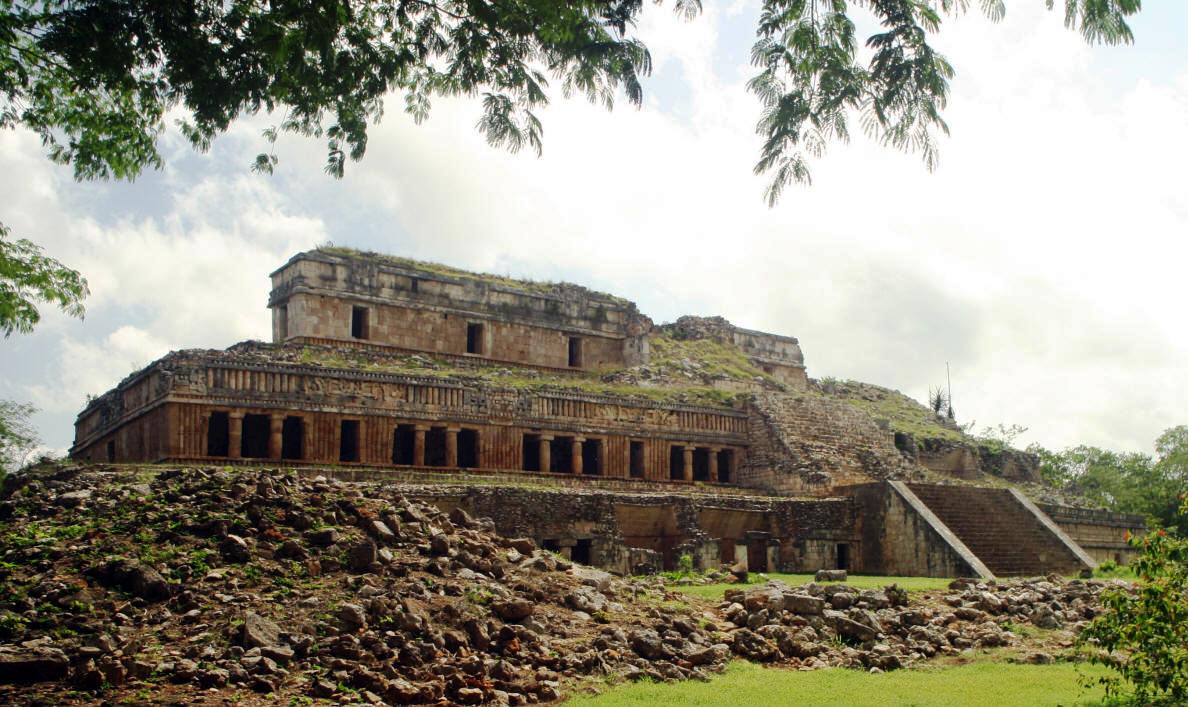
The Great Palace has an 85-meter-long facade and is built upon a two-terraced platform, giving the impression of three stories. Various rooms are arranged around the four sides of each terrace. The uppermost terrace supports a long structure with a single range of rooms. The palace was built in various phases through an unknown period of time in the Terminal Classic; wings were added and platforms were designed, which were filled with stones and mortar to increase stability. The palace has a central stairway on the south side, giving access to the upper levels of the building.
#Pre-Hispanic Town
in
#Labna
at
Carretera Uman - Hopelchen km 101
#
The site is a comparatively small and compact one. Among its notable structures is a large two-storey 'palace' ("El Palacio"), which is one of the longest contiguous structures in the Puuc region at approximately 120 m (393.7 ft) in length. From the palace, a ceremonial road (sacbe) extends to an elaborately decorated gateway arch ("El Arco"). This structure is 3 m (9.8 ft) wide and 6 m high, with well-reserved bas-reliefs. The arch is not an entrance to the city, but rather is a passageway between public areas. Next to this gateway stands "El Mirador", a pyramid-like structure surmounted by a temple. Also on the site is the Temple of the Columns.
#Zacatecas state north # [capital = Zacatecas]
#Former college of Nuestra Senora de Guadalupe of Propaganda Fide
in
#Guadalupe
on
#
Calle Luis Moya
#
From this College, many missionaries departed to evangelize the northern provinces of New Spain along the Camino Real de Tierra Adentro and its transversal branches.
#Historic centre
of
#Zacatecas
see
#detail
#
Today, the colonial part of the city is a World Heritage Site, due to the Baroque and other structures built during its mining days
#Macuipa Wixárika Route site
in
#Zacatecas
at
Zona A, La Encantada
#
The route supports rituals tied to ancestral deities, agriculture, and community well-being. Known as “Tatehuarí Huajuyé” or the Path of Our Grandfather Fire, it embodies deep spiritual and environmental significance.
#Sanctuary of the Nino de Atocha
in
#Plateros
on
#
Calle Hidalgo
#
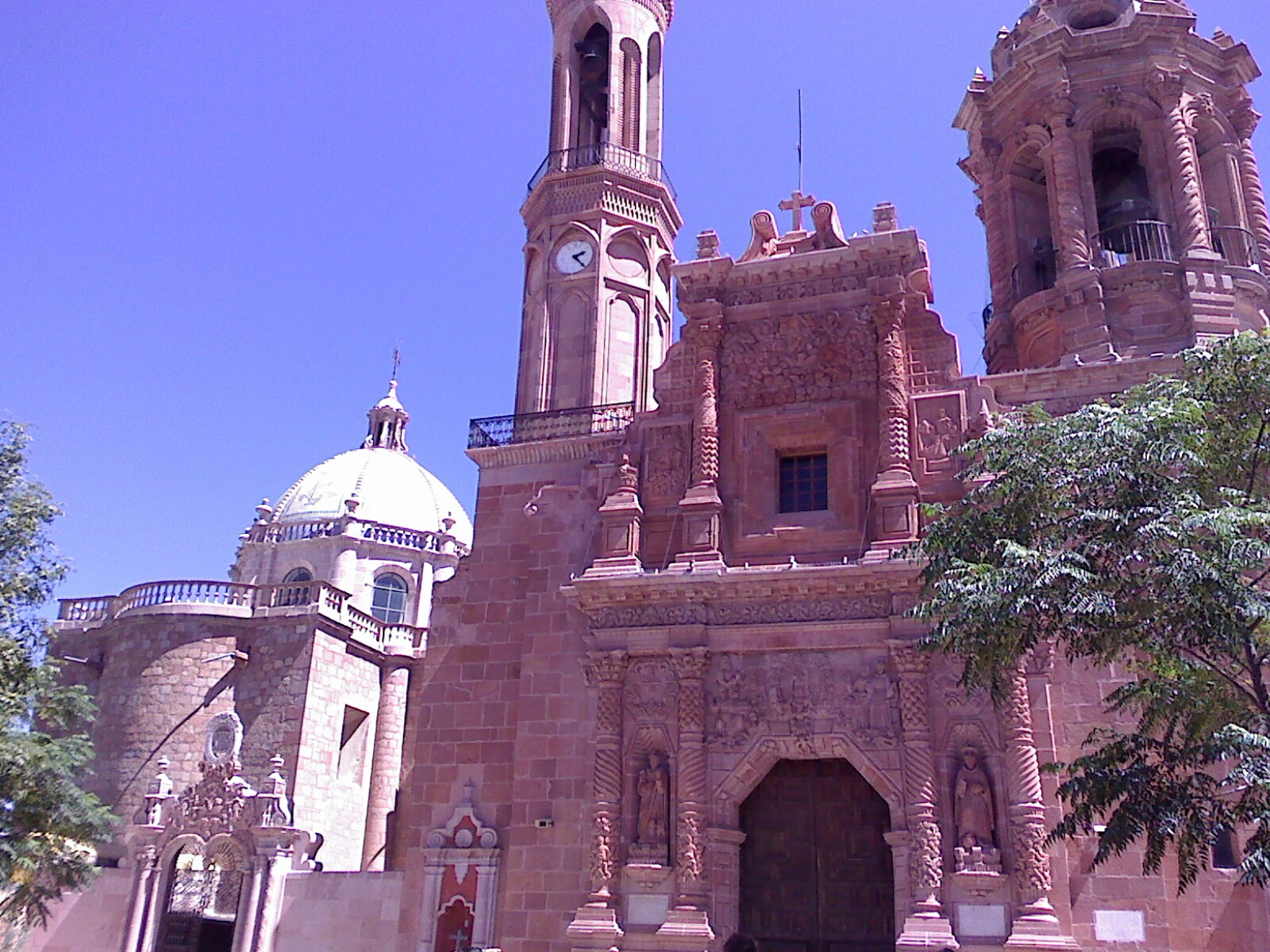
It is a beautiful temple that was completed over two hundred years ago, with a beautifully crafted pink quarry stone facade in a Baroque style.
#Historic ensemble
in
#Sombrerete
see
#detail
#
The town of Sombrerete maintains its colonial era layout with wide streets that connect small streets and alleys dotted with plazas.
#Temple of San Pantaleon Martir
in
#Sombrerete
at
#
La Noria de San Pantaleo
#
An ensemble of sites along the southern part of the Camino Real de Tierra Adentro, including examples of buildings, architectural and technological ensembles, illustrate a significant stage in human history - the Spanish colonial exploitation of silver and the transformation of associated rural and urban landscapes.
#Mountain Range of Organos
in
#Villa Insurgentes
#
The park is known for its diverse aridland ecosystem and towering rock formations of the Sierra Madre Occidental, which are reminiscent of organ pipe cactuses or the pipes of the musical instrument, from which the park takes its name
#Architectonic ensemble
in
#Chalchihuites
#
The archaeologist Manuel Gamio referred to Chalchihuites as a “culture of transition” between the Mesoamerican civilizations and the so-called Chichimeca hunter-gatherers who lived in the arid plateau of central Mexico. Chalchihuites and La Quemada were both outposts of Mesoamerican settlement in an ecological and cultural frontier area. However, in this transition zone, climatic changes caused continual shifts in the available resource base, discouraging most attempts at creating permanent settlements.
#Zacatecas state south # [capital = Zacatecas]
#Chapel of San Nicolas Tolentino of the former hacienda of San Nicolas de Quijas
in
#Villa Garcia
on
Mexico 107
#
An ensemble of sites along the southern part of the Camino Real de Tierra Adentro, including examples of buildings, architectural and technological ensembles, illustrate a significant stage in human history - the Spanish colonial exploitation of silver and the transformation of associated rural and urban landscapes.
#Town
of
#Pinos
See above.
#Tatei Nihuetucame Wixárika Route site
in
#Pinos
at
#
N22 46 36.77 W102 33 36.71
#
The route supports rituals tied to ancestral deities, agriculture, and community well-being. Known as “Tatehuarí Huajuyé” or the Path of Our Grandfather Fire, it embodies deep spiritual and environmental significance.
#Temple of Nuestra Senora de los Angeles
in
#Noria de Angeles
on
#
Ninos Heroes
#
An ensemble of sites along the southern part of the Camino Real de Tierra Adentro, including examples of buildings, architectural and technological ensembles, illustrate a significant stage in human history - the Spanish colonial exploitation of silver and the transformation of associated rural and urban landscapes.
#Cave of Avalos
in
#Ojocaliente
See above.
#Stretch of the Camino Real
from
Ojocaliente to Zacatecas
See above.
#Cacai Mutijé Wixárika Route site
in
Jerez de García Salinas
at
N22 42 22.82 W102 46 50.71
#
The route supports rituals tied to ancestral deities, agriculture, and community well-being. Known as “Tatehuarí Huajuyé” or the Path of Our Grandfather Fire, it embodies deep spiritual and environmental significance.
#Cupuri Mutiu Wixárika Route site
in
Jerez de García Salinas
at
Chula Vista
See above.
#Cuyetsarie Wixárika Route site
on
Monte Escobedo
at
N22 23 37.8 W103 35 37.7
See above.
#Xurahue Muyaca Wixárika Route site
on
Monte Escobedo
at
N22 35 52.31 W103 16 48.55
See above.