#South Africa # UNESCO #world heritage sites
#Eastern Cape province [capital = Bisho]
#Baviaanskloof Nature Reserve
in
#Humansdorp
#
The Baviaans is the ultimate destination to experience the best nature has to offer in its purest form and life as it was intended to be lived.
#University of Fort Hare
in
#Dikeni
at
Ring Road
#
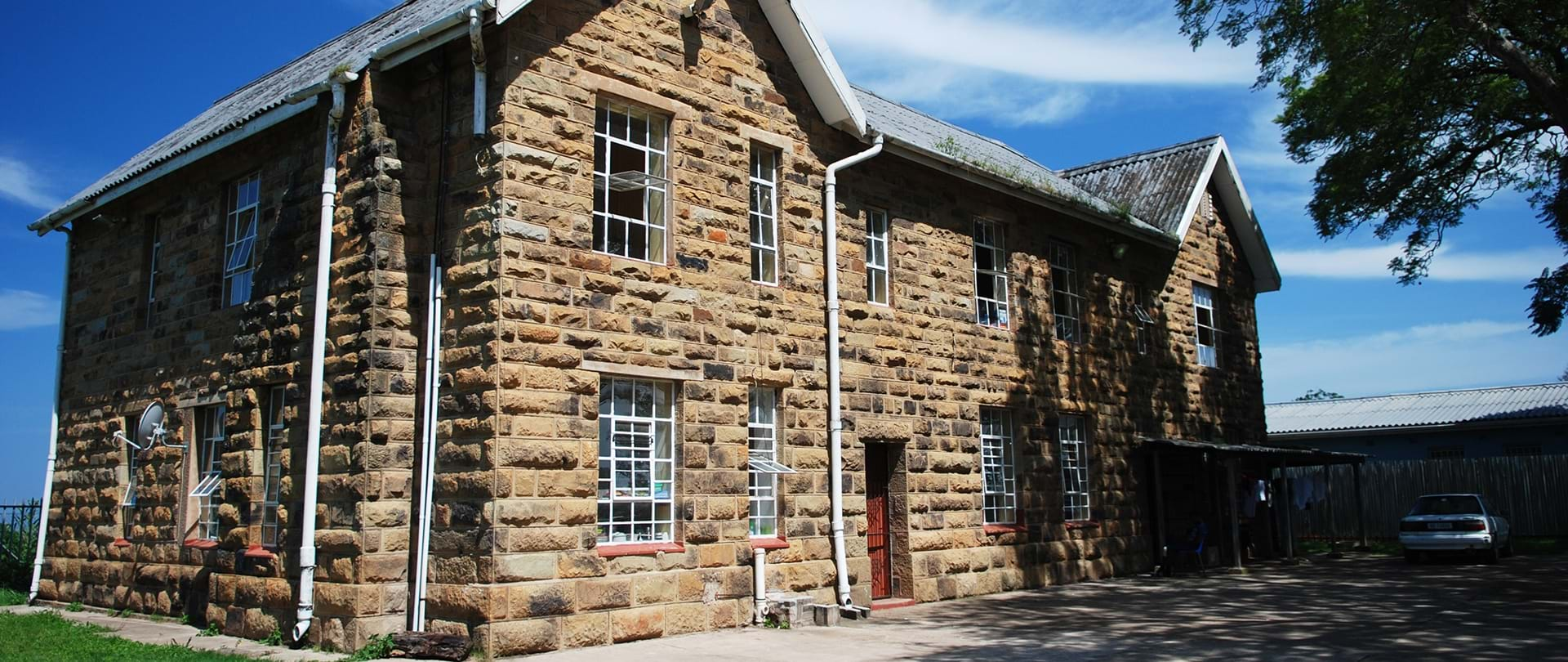
It is the alma mater of well-known people including Nelson Mandela, Desmond Tutu, Robert Sobukwe, Oliver Tambo, and others.
#Mandela's upbringing home
in
#Mqhekezweni
at
The Great Place
#
Mandela was raised by Jongintaba and his wife Noengland alongside their son Justice and daughter Nomafuis at the Great Place
#Free State province [capital = Bloemfontein]
#Vredefort Dome core area
in
#Parys
at
#Schoenmandrift Road
#
The Vredefort crater is the largest verified impact crater on Earth, more than 300 kilometres (190 mi) across when it was formed. What remains of it is located in the present-day Free State province of South Africa and named after the town of Vredefort, which is situated near its centre. Although the crater itself has long since eroded away, the remaining geological structures at its centre are known as the Vredefort Dome or Vredefort impact structure. The crater is estimated to be 2.023 billion years old (± 4 million years), with impact being in the Paleoproterozoic Era. It is the second-oldest-known crater on Earth.
#Waaihoek Wesleyan Church
in
#Bloemfontein
at
#7 Johan Brits St
#
The Wesleyan Church in Waaihoek, Bloemfontein is the birth place of the South African Native National Congress (SANNC) which was formed in 1912. Later, in 1923 the SANNC became the African National Congress (ANC). The ANC became the largest liberation organizations in the struggle for freedom and justice in South Africa.
#Gauteng province [capital = Johannesburg]
#Nelson Mandela Amphitheatre
in
#Pretoria
at
#Union Buildings, Meintjeskop
#
This 9-meter tall statue of Mandela is the country's tallest, strategically positioned to symbolically unite the two wings of the Union buildings with his outstretched hands. It offers visitors a powerful moment for reflection on Mandela's significant role in South Africa's history.
#Liliesleaf Liberation Centre
in
#Rivonia, Sandton
at
#7 George Ave
#
Liliesleaf is home to various exhibitions, largely covering the period from 1956, when the Freedom Charter was signed, to 1994, when South Africa became a free and democratic society.
#Sterkfontein Fossil Hominid Sites
in
#Krugersdorp
at
#
4 Kromdraai Road
#
The Sterkfontein Caves were the site of the discovery of a 2.3-million-year-old fossil Australopithecus africanus (nicknamed "Mrs. Ples"), found in 1947 by Robert Broom and John T. Robinson.
#Constitution Hill Human Rights Precinct
in
#Braamfontein
at
#11 Kotze St
#
Constitution Hill is a living museum that tells the story of South Africa’s journey to democracy. The site is a former prison and military fort that bears testament to South Africa’s turbulent past and, today, is home to the country’s Constitutional Court, which endorses the rights of all citizens.
#Annals of Orlando West Streets Soweto
in
#Soweto
at
7817 Xorile St
#
The homes of Walter Sisulu, Bishop Desmond Tutu and former President Nelson Mandela are celebrated in this historic suburb, and the 1976 Soweto uprising is very much present in the memories of residents and visitors alike.
#Walter Sisulu Square
in
#Soweto
at
#Cnr Klipspruit Valley Road & Union Road Kliptown
#
It allows you to immerse yourself in history, glimpse the future, and experience the classic living of “ekasi” all in one visit, without a doubt. Walter Sisulu Square in Kliptown will captivate, enchant, and inspire you, shining as a beacon of light that dispels diversity and prejudice, preserving and reinforcing the principles for which others sacrificed their lives.
#Saps Sharpeville Police Station
in
#Sharpeville
at
#
3880 Zwane St
#
Sharpeville massacre, (March 21, 1960), incident in the Black township of Sharpeville, near Vereeniging, South Africa, in which police fired on a crowd of Black people, killing or wounding some 250 of them. It was one of the first and most violent demonstrations against apartheid in South Africa.
#Sharpeville Memorial
in
#Sharpeville
at
#3847 Seeiso St
#
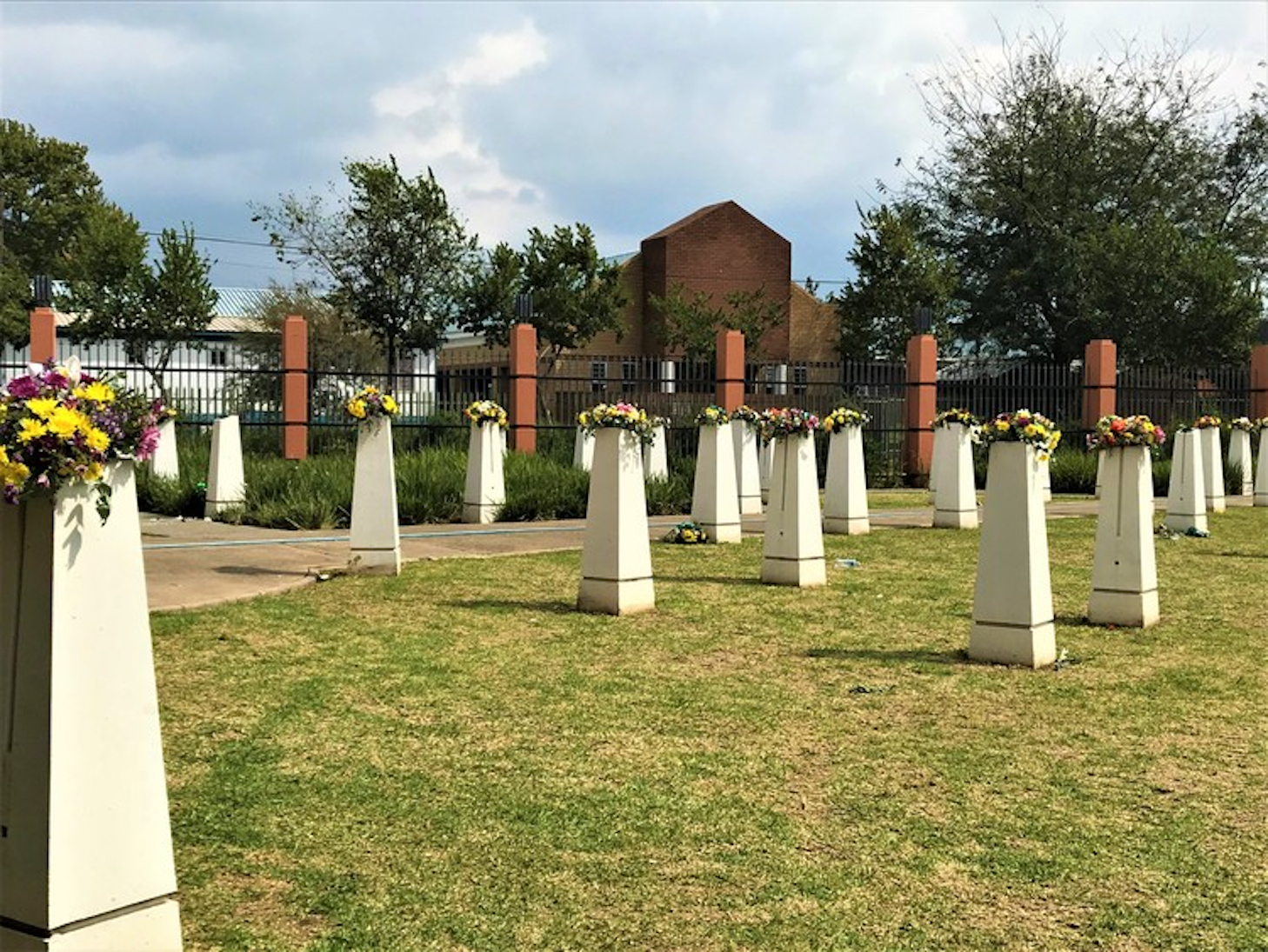
It is very symbolic, blocks of stones representing each fatality spread over the complex, a fountain with thin jets of water representing bleeding wounds and a channel carrying the water through the centre representing blood flowing in the Street.
#Phelindaba Cemetery
in
#Sharpeville
at
Theunis Kruger St
#
The row of graves of the 69 people killed by police during an anti-pass protest at the Sharpeville Police Station on 21 March 1960.
#Kwazulu Natal province [capital = Ulundi]
#iSimangaliso Wetland Park
in
#St Lucia
at
#S27 50 20.004 E32 32 60
#
The interplay of the park's environmental heterogeneity with major floods and coastal storms and a transitional geographic location between subtropical and tropical Africa has resulted in exceptional species diversity and ongoing speciation. The mosaic of landforms and habitat types creates breathtaking scenic vistas.
#Sibhudu Cave
in
#KwaDukuza
on
#R614
#
The Area is significant because it shows evidence of some of the earliest examples of modern human Technology, possessing a large collection of well-dated middle Stone Age deposits that are well preserved.
#Ohlange heritage institute
in
#Inanda
at
#Ngubane Rd
#
On April 27 1994 Nelson Mandela cast his vote at the Ohlange Institute, a school founded by John Langalibalele Mafukuzela Dube - the first president of the ANC.
#Maloti-Drakensberg Park
in
#Drakensberg
at
#Mkhomazi Wilderness area
#
The site has exceptional natural beauty in its soaring basaltic buttresses, incisive dramatic cutbacks, and golden sandstone ramparts as well as visually spectacular sculptured arches, caves, cliffs, pillars and rock pools.
#Mpumalanga province [capital = Nelspruit/Mbombela]
#Makhonjwa Mountains
in
#Barberton
on
#
R40 Bulembu pass
#
The property represents the best-preserved succession of volcanic and sedimentary rock dating back 3.6 to 3.25 billion years and forms a diverse repository of information on surface conditions, meteorite impacts, volcanism, continent-building processes and the environment of early life.
#Northern/Limpopo province [capital = Pietersburg/Polokwane]
#Makapan Valley Fossil Hominid Sites
in
#Mokopane
at
#
S24 9 31.00 E29 10 37.00
#
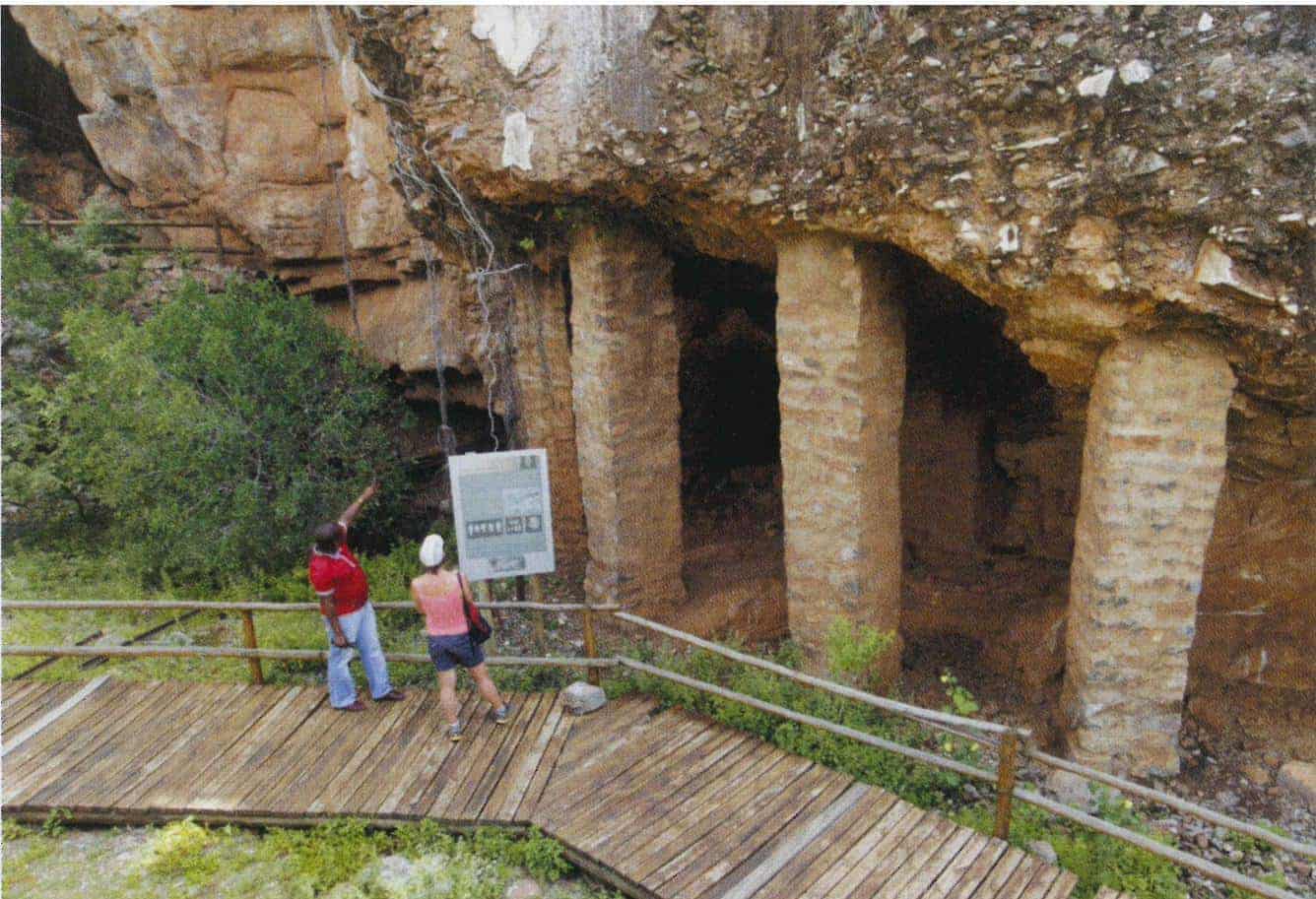
Makapansgat limeworks + Cave of Hearths + Buffalo Cave + Ficus Cave + Peppercorn's Cave + Rainbow Cave + Historic Cave + Cold Air Cave + Gutentight Cave + Murzel's Cave + Katzenjammer Cave are important palaeontological sites with the local limeworks containing Australopithecus-bearing deposits dating to between 3.0 and 2.6 million years BP.
#Mapungubwe Cultural Landscape
in
#Musina
at
S22 11 33 E29 14 20.004
#
Mapungubwe developed into the largest kingdom in the sub-continent before it was abandoned in the 14th century. What survives are the almost untouched remains of the palace sites and also the entire settlement area dependent upon them, as well as two earlier capital sites, the whole presenting an unrivalled picture of the development of social and political structures over some 400 years.
#Northern Cape province [capital = Kimberley]
#Khomani Cultural Landscape
in
#Upington
at
Kgalagadi Transfrontier Park
#
The landscape includes landmarks of the history, migration, livelihoods, memory and resources of the ǂKhomani and related San people and other communities, past and present, and attests to their adaptive responses and interaction to survive in a desert environment. The ǂKhomani and related San people are formerly nomadic populations and among the last indigenous communities in South Africa. They developed subsistence strategies to cope with the extreme conditions of the environment and developed a specific ethnobotanical and veld knowledge as well as cultural practices and a worldview where geographical features embody symbolic links between humans, wildlife and the land.
#Richtersveld Cultural and Botanical Landscape
in
#Port Nolloth
at
S28 36 0 E17 12 14
#
This site sustains the semi-nomadic pastoral livelihood of the Nama people, reflecting seasonal patterns that may have persisted for as much as two millennia in southern Africa. It is the only area where the Nama still construct portable rush-mat houses (haru om ) and includes seasonal migrations and grazing grounds, together with stock posts. The pastoralists collect medicinal and other plants and have a strong oral tradition associated with different places and attributes of the landscape.
#Northwest province [capital = Mahikeng]
#The chocolate tablet breccia site
in
Scandinavia Drift
at
#
S26 55 12.00 E27 7 60.00
#
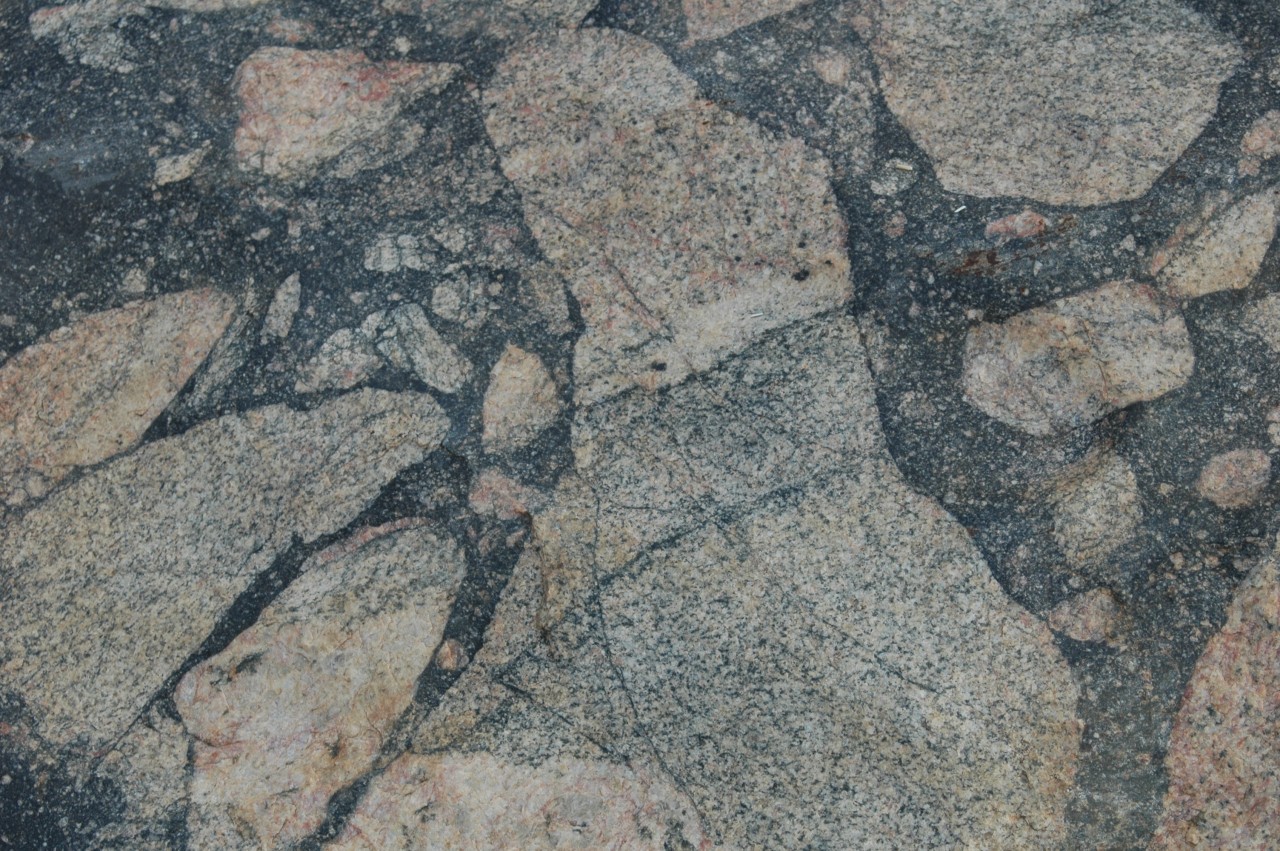
At the Vredefort Dome, the eroded central uplift of the largest and oldest known terrestrial impact structure, pseudotachylitic breccia is well-exposed, with many massive occurrences of tens of meters width and many hundreds of meters extent.
#The stromatolite/basal fault plane site
in
Rooipoort
at
#
S26 46 25.00 E27 16 12.00
#
The serial nomination is considered to be a representative sample of a complex meteorite impact structure. A comprehensive comparative analysis with other complex meteorite impact structures demonstrated that it is the only example on earth providing a full geological profile of an astrobleme below the crater floor, thereby enabling research into the genesis and development of an astrobleme immediately post impact.
#The pseudotachylite site
in
#Riastuine AH
at
#
S26 53 46.00 E27 24 30.00
#
Some geochemical studies report pseudotachylite matrices in the Vredefort Dome to be similar in chemical composition to that of their immediate wall rocks, in particular where pseudotachylite is hosted by granitoid rocks.
#Taung Skull Fossil Hominid Site
in
#Taung
at
#
S27 37 10.00 E24 37 59.00
#
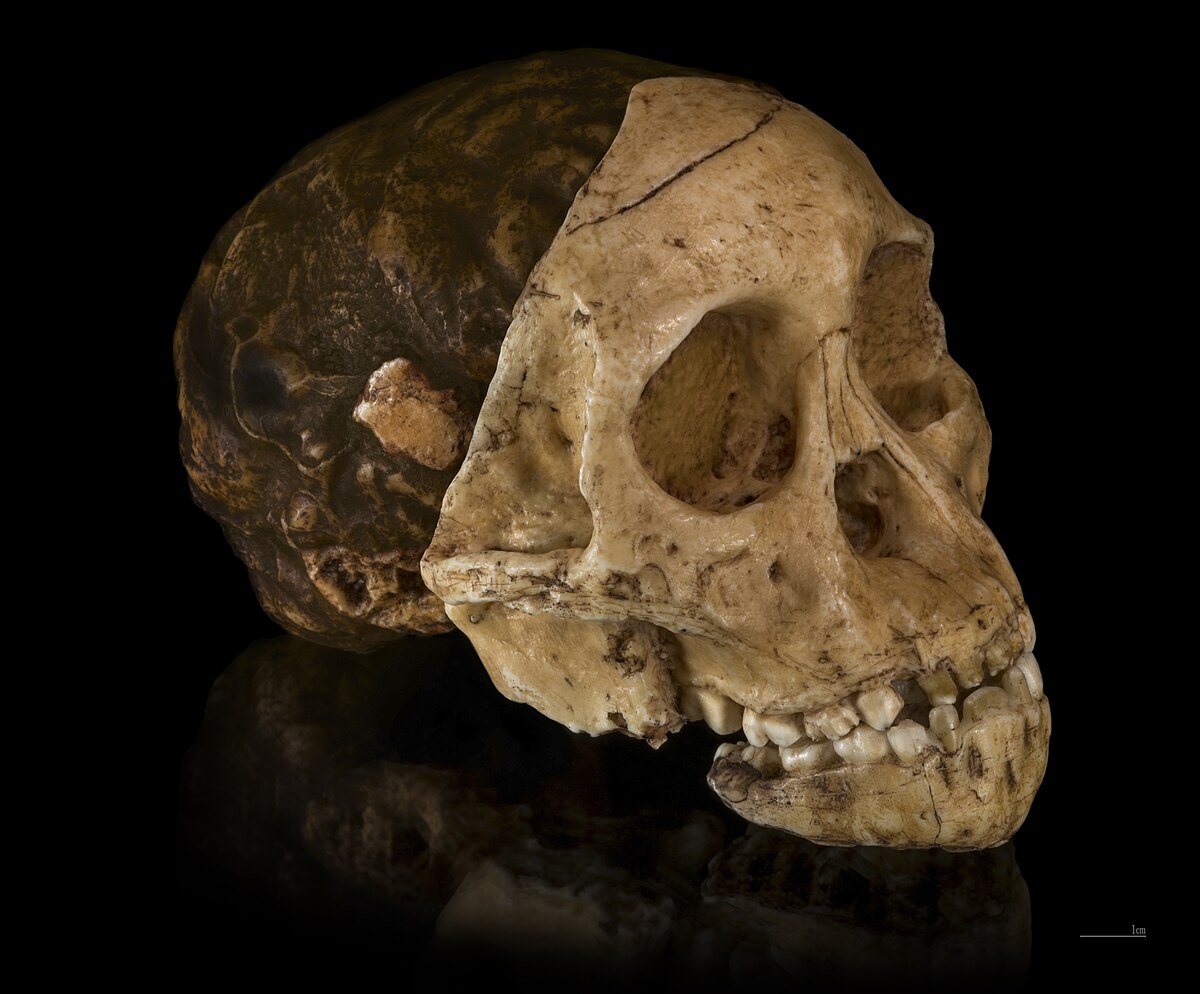
The Taung skull, also known as the Taung Child, was the first hominid to be discovered on the entire continent. Later named Australopithecus africanus, the significance of this fossilised skull remains unchanged since its discovery in 1924 in Taung, a small town in the North West Province.
#Western Cape province >[capital = Cape Town]
#Diepkloof Rock Shelter
in
#Clanwilliam
#
#
Excavated for over 40 years, this site contains one of the most complete and continuous Middle Stone Age archaeological sequences in Southern Africa. This extremely well-preserved record has allowed scientists to reconstruct in detail the lives of our ancestors, the environment in which they thrived, and their adaptation over the course of the millennia to an evolving environment. In addition to the Middle and Later Stone Age deposits, the site also contains rock art dating back to San hunter-gatherers, Khoe pastoralists and the colonial period. The sequence of these rock paintings, at times overlapping, shows the long period during which the cave was occupied and used.
#Cederberg Wilderness Area
in
#Citrusdal
#
As a wilderness area, the primary activity is eco-tourism, including camping, rock climbing and hiking.
#Winterhoek Mountain Catchment Area
in
#Citrusdal
#
The Groot Winterhoek showcases an enormous array of fynbos species, which adorn its slopes with their colourful flowers and unique greenery.
#Boosmansbos Wilderness Area / Langeberg -Oos/East Mountain Catchment Area
in
#Breede River DC
#
Boosmansbos was proclaimed a wilderness area in 1978 to protect the area’s indigenous forest, including yellowwood, stinkwood, white and red alder, beech and candlewood. It is also a World Heritage Site, as it falls within the Cape Floral Kingdom and is home to several rare erica species, such as erica blenna, erica langebergensis and erica barrydalensis.
#Limietberg Nature Reserve
in
#Esterville, Paarl
at
#267 Main Street
#
Limietberg offers a number of beautiful hikes through steep kloofs and deep valleys. Du Toits Peak, at 1 996m, is the highest point within the reserve. Visitors can also visit the many historical sites along the trails, including ancient rock art, a disused manganese mine and the graves of convicts who helped build the Bainskloof Pass.
#Prison
in
#Cape Town
on
#Robben Island
#
The symbolic value of Robben Island lies in its somber history, as a prison and a hospital for unfortunates who were sequestered as being socially undesirable. This came to an end in the 1990s when the inhuman Apartheid regime was rejected by the South African people and the political prisoners who had been incarcerated on the Island received their freedom after many years.
#Table Mountain National Park
in
#Cape Town
on
#
Tafelberg Road
#
This natural world heritage site, and Natural New 7 Wonder of the World, is a haven of magnificent mountains plunging into crystal seas fringed with bleached white sands of the Cape Peninsula.
#Cape Peninsula
in
#Cape Town
#
#
The Peninsula's vegetation types form part of the Cape Floral Region protected areas. These protected areas are a World Heritage Site, and an estimated 2,200 species of plants are confined to Table Mountain range - which are at least as many as occur in the whole of the United Kingdom.
#Jonkershoek Nature Reserve
in
#Stellenbosch
on
#Jonkershoek Road
#
The Jonkershoek mountains are home to Leopards, Caracals, Klipspringer, Baboons, Honey Badgers and Mongooses, however, all but the baboons are very secretive. Birdlife includes kingfishers, black eagles, fish eagles, spotted eagle owls, sugarbirds, orange-breasted sunbirds and protea seed eaters.
#Hottentots Holland Nature Reserve
in
#Grabouw
at
#Suicide Gorge
#
This area and the other ranges to the south are considered the hub of the Cape floristic region with the most biodiversity in the entire fynbos biome.
#Kogelberg Nature Reserve
in
#Grabouw
at
#Highlands
#
Located in the Kogelberg Mountains, along the mountainous coast on the eastern edge of Cape Town, this 3,000-hectare (7,400-acre) nature reserve protects a significant portion of Kogelberg Sandstone Fynbos. Among the enormous range of plants in this local vegetation type are hundreds of species of Erica, a wide range of Protea species and a great many plant families which are endemic. The Kogelberg mountains are known as the heart of the Fynbos, and have a floral diversity per unit area that is greater than anywhere else in the world.
#De Hoop Nature Reserve
in
#Overberg
at
#-34.43567050284843, 19.761467656233087
#
The vegetation De Hoop Nature Reserve is part of the world's smallest and most threatened plant kingdom, known as the Cape Floral Kingdom. The reserve also contains one of the largest areas of the rare lowland fynbos.
#Pinnacle Point
in
#Mossel Bay
at
#
21st Avenue
#
Unlike other sites that can be remote, dry and downright inhospitable, the archaeological findings here are set against a stunning backdrop of seaside caves so cosy that generations of families sought shelter in them.
#Groot Swartberg Nature Reserve
in
#Oudtshoorn
#
#
The reserve is most famous for the trail of the same name, the three-day hiking route that takes hikers into the heart of unspoilt mountain fynbos via caves filled with San rock art with overnight huts at Ou Tol and Bothashoek and views of the Cape fold mountains.
#Towerkop Nature Reserve
in
#Ladismith
#
#
Its importance is not only the year-round rainfall that supplies clean water to towns close by, but also the mountain fynbos species, particularly the endemic protea, the Protea aristata. There is also a one-of-a-kind sub-alpine plant community that lies between the Towerkop and Seweweekspoort peaks that requires conservation. The reserve is also fantastic for bird spotting.
#Gamkapoort Nature Reserve
in
#Laingsburg
at
#
S 33 15 29.6, E 21 37 56.6
#
The Gamkaberg Nature Reserve, now a World Heritage Site, was established in 1974 to conserve a small, remnant herd of endangered Cape mountain zebra. They numbered just five in 1976 but, fortunately, focused conservation initiatives, involving resettling of animals into private and national nature reserves, helped their numbers increase.