#Syria # UNESCO #world heritage sites
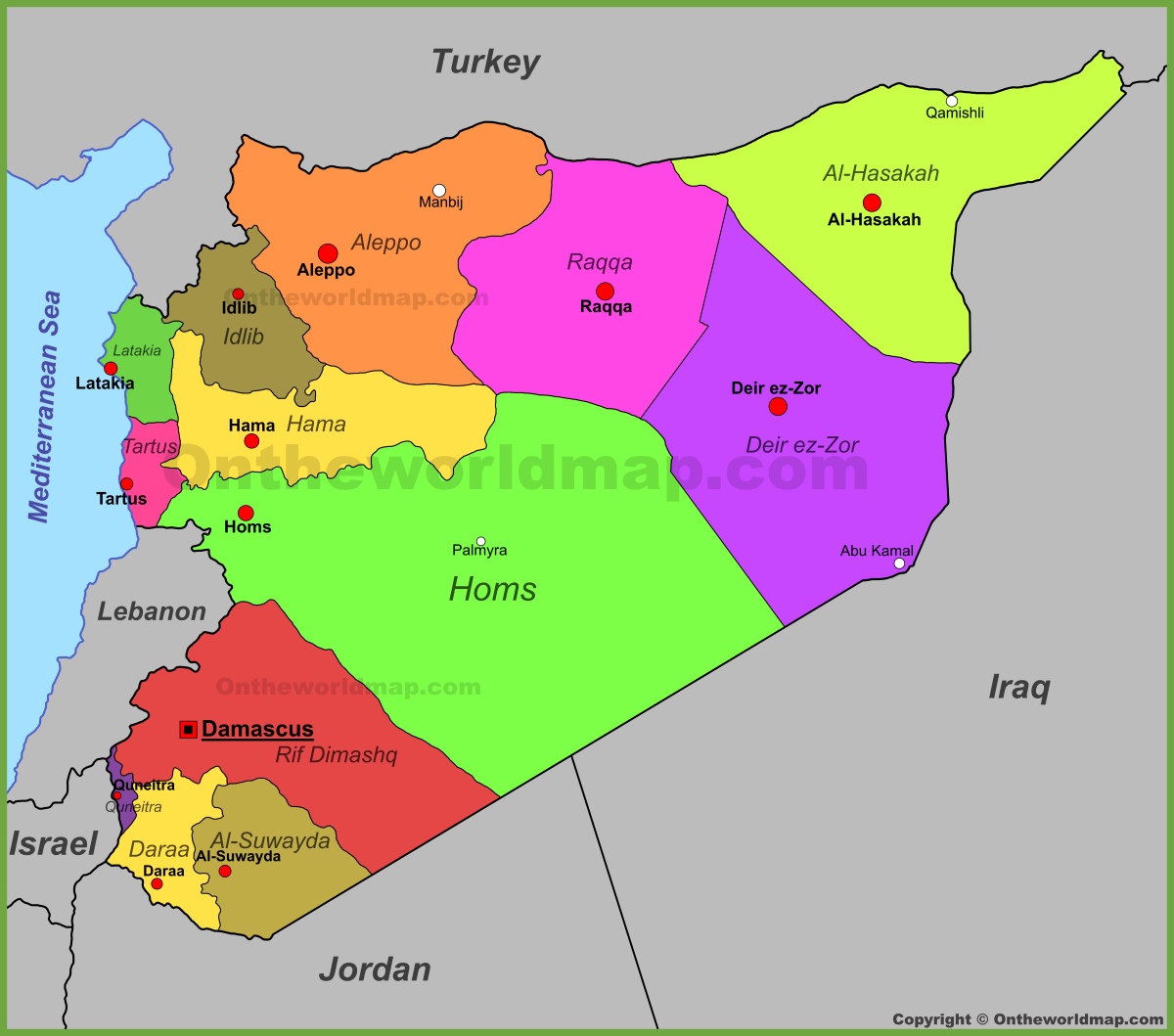
#Aleppo district [capital = Aleppo]
#Ancient City
of
#Aleppo
#
The Citadel, the 12th-century Great Mosque and various 16th and 17th-centuries madrasas, residences, khans and public baths, all form part of the city's cohesive, unique urban fabric.
#Historic settlement
of
#Sinkhar
#
Its Basilica is among the oldest churches in Syria and dates back to the fourth century, while the nearby chapel is sixth century.
#Kafr Nabw
in
#Barad
#
An ancient settlement, located 32 km (20 mi) west of Aleppo, has many old basilicas; for example, the Saint Julianus Maronite monastery (399-402 AD) where the shrine of Saint Maron is located, and a basilica at the northern part of the village built in 561.
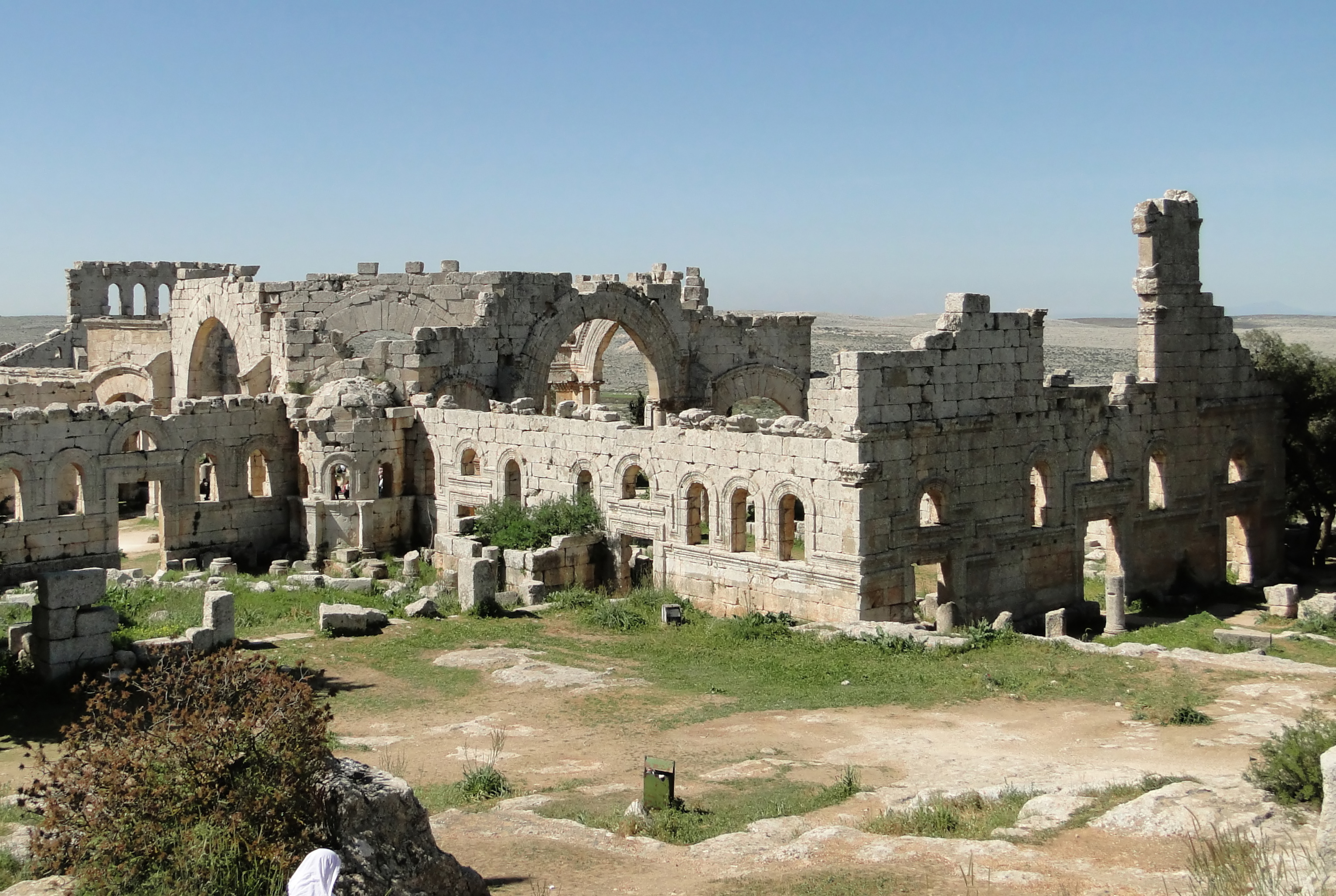
#The Cathedral of St. Simeon Stylite
in
#Afrin
#
One of the most celebrated ecclesiastical monuments in Syria and among the oldest standing Christian churches in the world.
#Damascus district [capital = Damascus]
#Ancient City
of
#Damascus
#
The earliest visible physical evidence dates to the Roman period - the extensive remains of the Temple of Jupiter, the remains of various gates and an impressive section of the Roman city walls. The city was the capital of the Umayyad Caliphate. However, apart from the incomparable Great Mosque, built on the site of a Roman temple and over-laying a Christian basilica, there is little visible dating from this important era of the city's history. The present city walls, the Citadel, some mosques and tombs survive from the Middle Ages, but the greatest part of the built heritage of the city dates from after the Ottoman conquest of the early 16th century.
#Daraa district [capital = Daraa]
#Ancient City
of
#Bosra
#
Bosra, once the capital of the Roman province of Arabia, was an important stopover on the ancient caravan route to Mecca. A magnificent 2nd-century Roman theatre, early Christian ruins and several mosques are found within its great walls.
#Homs district [capital = Homs]
#Castle of the Knights
in
#Qala'at al-Hosn
at
#N34 45 24 E36 17 40
#
Krak des Chevaliers, (French-Arabic: “Castle of the Knights”) greatest fortress built by European crusaders in Syria and Palestine, one of the most notable surviving examples of medieval military architecture.
#Ruins
in
#Palmyra
#
The ruins at Palmyra clearly reveal the network plan of the ancient city. Along the principal east-west street, named the Grand Colonnade by archaeologists, a double portico is ornamented with three nymphaea. To the south are the agora, the Senate House, and the theatre. Other ruins include a vast complex called Diocletian’s Camp and the chief Palmyrene sanctuary, dedicated to Bel, Yarhibol, and Aglibol; a number of significant ancient Christian churches have also been uncovered. In architecture the Corinthian order marks almost all the monuments, but the influence of Mesopotamia and Iran is also clearly evident. In addition, art found on monuments and tombs reflects the influences of the surrounding Roman and Persian empires.
#Idlib district [capital = Idlib]
#Ancient Village
of
#Deiroune (Barisha)
at
N36 12 38.00 E36 39 35.00
#
Specific archaeological components include a well preserved monastic chapel of rare decorative quality.
#Ancient Village
of
#Qalb Loze (Sarden)
at
N36 10 9.00 E36 34 51.00
#
The church at Qalb Lozeh dates back to the 460s AD and is one of the best-preserved churches of this period in the region.
#Ancient Village
of
KafrAqareb (Haj Nayef)
at
N36 2 3.00 E36 26 26.00
#
The Ancient Villages of Northern Syria and their relict landscapes provide exceptional testimony to the architecture of the rural house and civilian and religious community buildings at the end of the Classical era and in the Byzantine Period.
#Ancient Village
of
#Ruweiha
#
Ruweiha is characterized by an interesting combination of Roman and Byzantine remains that include numerous tombs of varying architectural styles, two large churches, and several villas built on a very large scale.
#Ancient Village
of
#Al-Bara
at
N35 40 11.00 E36 34 7.00
#
Ruins are the most extensive of all Dead Cities and are scattered among fields, olive groves and orchards. Among many others, one can distinguish remains of at least five churches, three monasteries, several villas, two pyramidal tombs and one underground tomb.
#Latakia district [capital = Latakia]
#Qal’at Salah El-Din
in
#Al Haffah
#
On the right of the entrance is a tower, a bastion built by the Crusaders. There is another a few meters further. There is a cistern for water storage and some stables just next to a massive keep that overlooks the ditch. This keep has walls of 5 m thick and it covers an area of nearly 24 m². Further on to the north is the gate where the drawbridge used to be. Also evident are the Byzantine citadel, located at the center of the fortress, another large cistern, the Crusader tea house, and a Crusader church adjoining one of two Byzantine chapels. As for the Arab additions to the fortress, they include a mosque, which dates back to Qalawun's reign, and a palace, which includes baths with courtyards and iwans.