#Uzbekistan # UNESCO
#world heritage sites
#Bukhara region [capital = Bukhara]
#Settlement
in
#Paikend
at
#
N39 35 7.74 E64 0 40.9
#
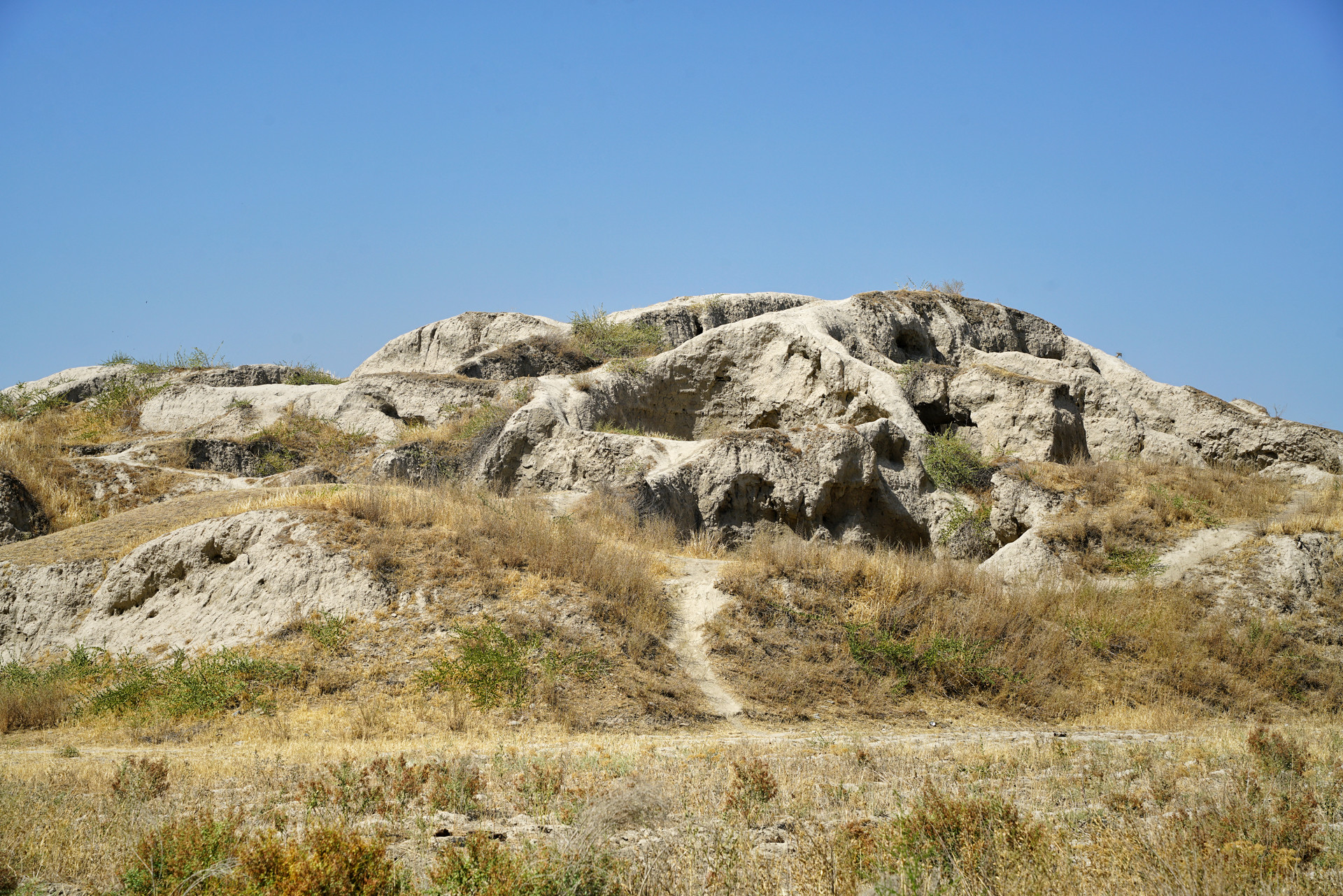
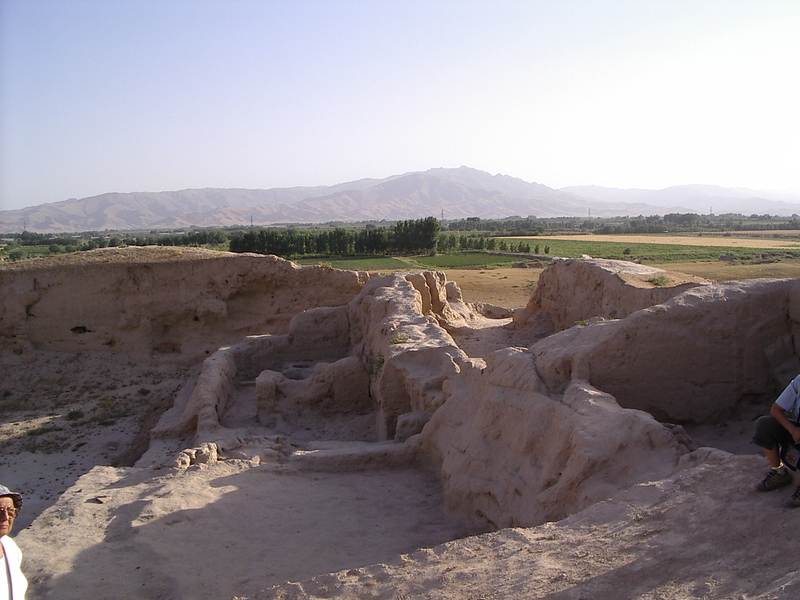
The Paykend historical museum built near the site in 2003 shows the unique artifacts discovered at the site: tableware, ceramics, Chinese and Japanese porcelains, jewelry and coins dating from the 2nd - 9th c.
#Settlement
in
#Varakhsha
at
N39 51 48.34 E64 4 23.17
#
The remains of the East Hall bear traces of a monumental painting of a figure seated on a throne supported by winged camels, all against a deep blue ground. In the left-hand portion of this painting are the remnants of drawings of several figures kneeling at an elaborate, free-standing altar, with the first one tending its flame. Better preserved is the Red Hall, so named because of the vivid background color, on which a number of animal-and-human combat groups are arranged in a long, horizontal frieze.
#Chor Bakh Necropolis
in
#Kalaya
at
#
N39 46 28.2 E64 20 4.86
#
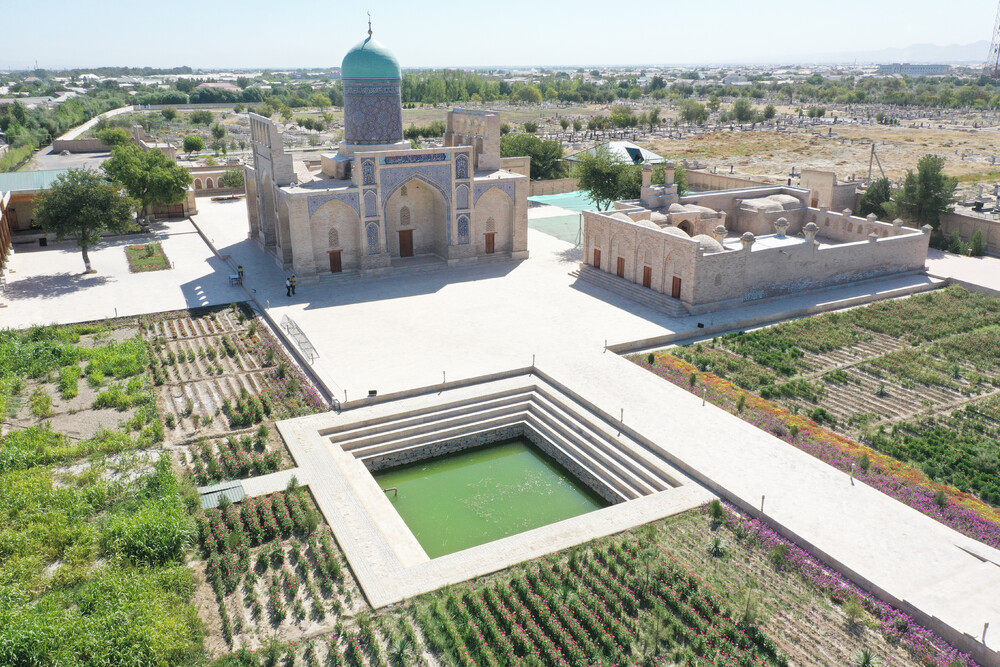
The building, resembling an upside-down chair thrust deep into the ground, is merely the darvazakhana gatehouse of a madrassah (90 by 40 metres) built by the rich Turkmen merchant Khalif Niyazkul. If you view the building from the south you are standing in the madrassah courtyard with its former summer mosque to your left and hauz to your right.
#Historic Centre
of
#Bukhara
see
#detail
#
It is one of the best examples of well preserved Islamic cities of Central Asia of the 10th to 17th centuries, with an urban fabric that has remained largely intact.
#Chasma-i Ayub Khazira
in
#Bukhara
on
#
Muxtor Ashrafiy street
#
The construction layout of the portal is in a traditional pattern, made up in the form of two pylons, forming the niche overlapped by the semi vault.
#Bahouddin Naqshband Architectural Complex
in
#Bogoudin
at
#
N39 48 8.57 E64 32 14.02
#
The complex is a Muslim shrine where pilgrims from all the parts of the Islamic world come.
#Minaret
in
#Vobkent
on
#
N40 1 10.89 E64 31 4.74
#
Embellished by wide bands with high relief carving and crowned by a lantern at the top.
#Vardanze Settlement
in
#Safircon
on
N40 9 30.36 E64 26 1.48
#
The center of the reserve is the high clay hill - the ruins of a fortified castle.
#Dzhizak region [capital = Jizzakh]
#Jartepa II Temple
in
#Chubot
at
#
N39 31 57.05 E67 20 27.77
#
The site features a central sanctuary chamber decorated with wall paintings depicting these spiritual motifs.
#Karakalpakistan region [capital = Nukus]
#Saigachy reserve
near
#Beleuli
at
N45 9 2 E57 43 45 + N44 33 47 E57 13 9 + N45 20 6 E58 27 5 + N44 58 0 E58 15 4 + N42 4 53 E56 39 53
#
The saiga is a symbol of the steppe for the nomadic people it shares its habitat with, and has been an important source of food and inspiration for centuries.
#Kashkadarya region [capital = Qarshi]
#Historic Centre
of
#Shakhrisyabz
see
#detail
#
Construction of elements continued in Shakhrisyabz throughout different time periods, lending a unique character to the place by the succession of different architectural styles. Despite the inroads of time, the remaining vestiges are still impressive in the harmony and strength of styles, an enriching addition to the architectural heritage of Central Asia and the Islamic world.
#Khorezm region [capital = Urgench]
#Itchan Kala
in
#Khiva
see
#detail
#
The property is the site of 51 ancient monumental structures and 250 dwellings and displays remarkable types of architectural ensembles such as Djuma Mosque, Oq Mosque, madrasahs of Alla-Kulli-Khan, Muhammad Aminkhon, Muhammad Rakhimkhon, Mausoleums of Pahlavon Mahmoud, Sayid Allavuddin, Shergozikhon as well as caravanserais and markets.
#Navoi region [capital = Navoi]
#Kasim Sheikh Architectural Complex
in
#Karmana
at
#
N40 7 59.91 E65 22 2.67
#
Its three sides (north, south, and west) are beautifully built and decorated.
#Mir Sayid Bakhrom Mausoleum
in
#Karmana
at
#
N40 8 34.4 E65 21 40.52
#
This structure is the smallest mausoleum in Uzbekistan.
#Rabati Malik Caravanserai
in
#Malikrabot
at
#
N40 7 23.08 E65 8 53.37
#
The portal of the caravanserai – which is one of the most ancient places among the Central Asia portals – peshtak with the central lancet arch of the niche in which there is a rectangular doorway. The arch concludes with a П-shaped frame, executed from carved terracotta in the form of eight final stars connected with each other, limited by intertwining tapes. The ring is decorated by Arabic inscriptions. On overhanging walls, under the layers of repair plaster, the remains of ancient ganched plasters with figures of vegetative characters are traced.
#Rabati Malik Sardoba
in
#Malikrabot
at
#
N40 7 16.56 E65 8 49.03
#
This is a 13-m storage with a reservoir was built in the XI century specially to supply Rabat-i-Malik with water.
#Deggaron Mosque
in
#Hazora
at
#
N40 9 18.14 E65 0 41.25
#
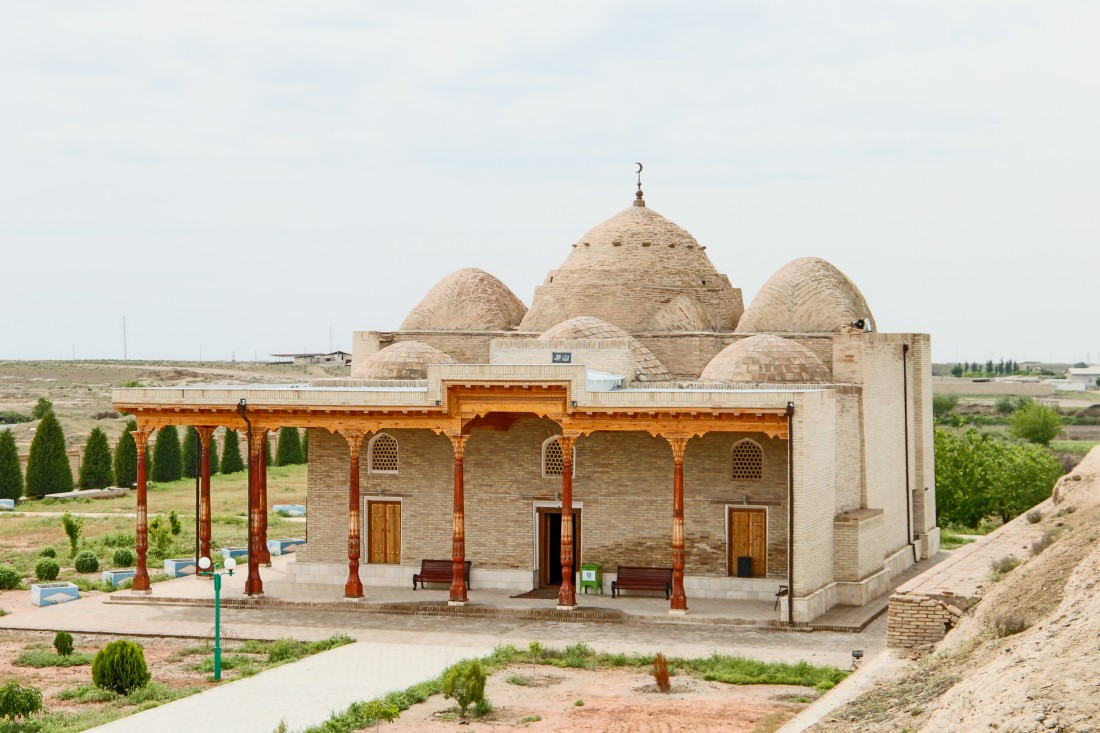
According to its architectural style, the mosque is considered unique in its kind. This style of construction was not characteristic of Islamic architecture, it is more typical of buildings of the pre-Islamic period, during the time of Zoroastrian culture, it is also possible that a Buddhist temple was located here earlier. In addition, similar structures were also characteristic of early Christian churches, with a domed system in the center and supported by four supporting pillars.
#Samarkand region [capital = Samarkand]
#Fortress of Dabusiya
in
#Ziadin
at
#
N40 1 29.57 E65 46 0.75
#
People travelled, settled, conquered, or were defeated here, making it a melting pot of ethnicities, cultures, religions, sciences, and technologies.
#Crossroad of Cultures
in
#Samarkand
see
#detail
#
Evidence of settlements in the region goes back to 1500 BC, with Samarkand having its most significant development in the Temurid period, from the 14th to the 15th centuries, when it was capital of the powerful Temurid realm.
#Fortress
in
#Kafirkala
at
#
N39 34 19.67 E67 1 14.47
#
It consists in a central citadel built in mud-bricks and measuring 75 × 75 meters at its base has six towers and is surrounded by a moat, still visible today.
#Suleimantepa
in
#Urgut
at
#
N39 22 50.2 E67 14 31.11
#
In those remote times, when this Christian monastery existed, the land of Urgut was famous for its religious tolerance and pluralism. Followers of various religious views lived together peacefully here. Buddhism, Zoroastrianism, Islam, Christianity - all these religions were to some extent present in the life of Sogdians.
#Tashkent region [capital = Tashkent]
#State Museum of Arts
in
#Tashkent
at
#
16 Amir Temur Avenue
#
Three Soviet architects I.Abdulov, A. Nikiforov and S. Rosenblum designed an unusual for that time building in the form of a huge cube, with its facades divided into squares by metal structures, lined with aluminum sheets on the outside.
#Zhemchug Residential Building
in
#Tashkent
at
#
N41 18 9.66 E69 16 2
#
The uniqueness of “Zhemchug” lies in its internal terraces that unite three floors at a time and connect the building’s two wings. These terraces were conceived as a prototype of a mahalla — a communal space for socializing and social functions, meant to compensate for people being detached from their usual “ground-level” life.
#Kosmonavtlar metro station
in
#Tashkent
at
#
Afrosiab Street
#
It stands as a prominent stop on the Oʻzbekiston (Blue) Line of the Tashkent Metro, often referred to as an "underground museum" due to the artistic grandeur of its stations.
#Central Exhibition Hall of the Academy of Arts
in
#Tashkent
at
#
Sharaf Rashidov Avenue 40
#
The building itself is as interesting as its exposition: the facade is beset with a national décor, the interior space is filled with light coming through the windows in the ceiling, while massive columns and marble finishing emphasize the monumentality of the Central Exhibition Hall of the Academy of Arts.
#State Museum of the History of Uzbekistan
in
#Tashkent
at
#
Sharaf Rashidov Avenue 3
#
The museum building itself is one of the finest examples of Tashkent modernist architecture. Its cubic form is softened by decorative sun-shading screens inspired by traditional Uzbek panjara latticework.
#Friendship of the Nations Palace
in
#Tashkent
at
#
Furkat Street 3
#
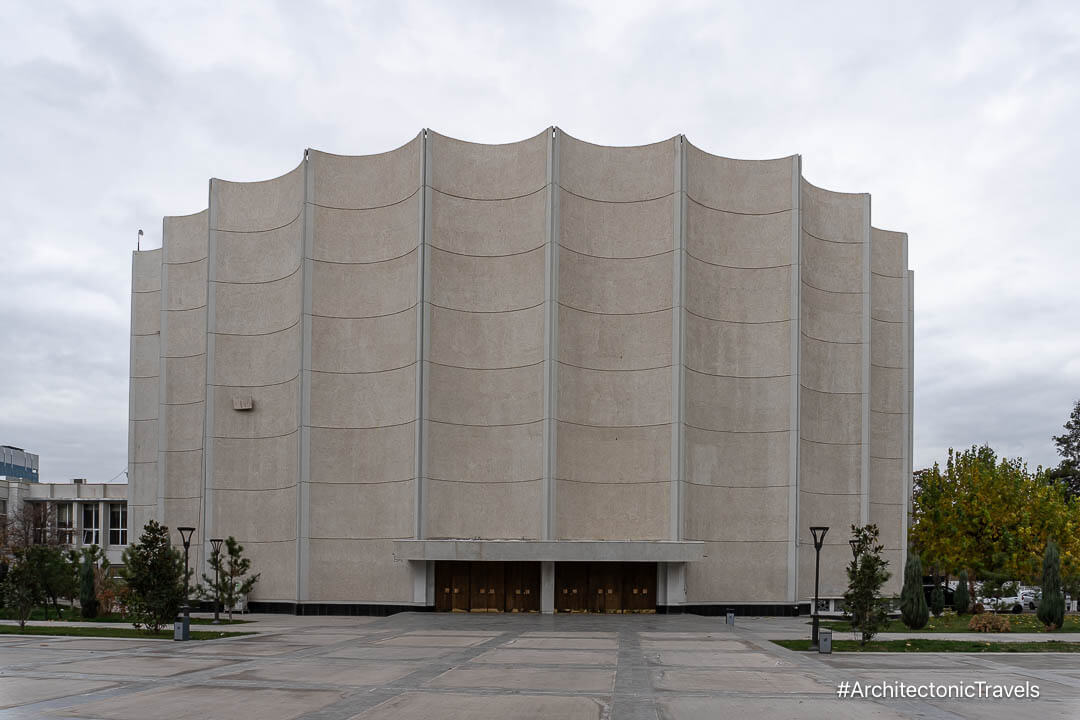
The building's façade and decorations draw inspiration from national ornamental patterns, reminiscent of muqarnas elements found in local architecture.
#Cinema Palace
in
#Tashkent
at
#
Navoi Avenue 15
#
The cinema's exterior is adorned with beautiful mosaics and ornate carvings, reflecting the rich cultural heritage of Uzbekistan. Inside, the spacious halls and elegant decor create a luxurious ambiance that adds to the overall cinematic experience.
#Tashkent Circus
in
#Tashkent
at
#
Zarkaynar Street 1
#
The circus is decorated with a lattice (panjara); the interior is in intricate patterns on bright stained glass windows, ceramic mosaic.
#Chorsu Bozor Bazaar
in
#Tashkent
at
#
Tafakkur ko'chasi 57
#
The heart of Chorsu Bazaar is a massive dome covering a spacious two-floor trading hall. The dome rests on concrete pillars connected by panoramic glass arches, and its exterior is adorned with blue and green mosaic patterns reminiscent of traditional designs.
#The Sun Solar Furnace & Heliocomplex
in
#Changikhisarak
at
#
N41 18 46.678 E69 44 23.296
#
Known far beyond Uzbekistan, this research facility uses concentrated sunlight to generate temperatures of more than 3,000°C within seconds. It is also remarkable for its distinctive futuristic design.
#Nature Reserve and National Park
in
#Sukok + Pskem
at
#
N41 18 5 E70 15 18 + N41 12 36 E69 56 03
#
It features diverse landscapes, which are home to exceptionally rich biodiversity. It is of global importance as a centre of origin for a number of cultivated fruit crops and is home to a great diversity of forest types and unique plant community associations.