#Vietnam # UNESCO #world heritage sites
#Bac Giang province [capital = Bac Giang]
#Vinh Nghiem Pagoda
in
#Yên Dũng
at
#Trí Yên
#
It is the quintessential Vietnamese Buddhist temple, earning the reputation as a "great ancient temple."
#Bo Da Pagoda
in
#Việt Yên
at
#Đ. Vành Đai 4
#
Bo Da has unique architecture that is different from the traditional pagoda in the North of Vietnam. The pagoda contains 18 temples, nearly 100 ancient rooms with harmonious architectural layout, special materials: unique soil, bricks…
#Hai Duong province [capital = Hai Duong]
#Kiep Bac temple
in
#Hưng Đạo
at
#Côn Sơn-Kiếp Bạc
#
Kiep Bac Temple lies in a small valley of Dragon mountain of Hai Dương province surrounded by splendid scenery.
#Con Son Pagoda
in
#Chí Linh
at
#Cộng Hòa
#
Con Son Mountain looks like a resting lion. With a shrine on the top, its 238m northern ridge adjoins Ngu Nhac Mountain. Con Son borders U Bo Mountain and a valley with bamboo hedges to the west. Next to it is the 72-peak Phuong Hoang (phoenix) mountain range with its vast pine forests, sparkling streams, rugged cliffs and ancient towers and pagodas.
#Thanh Mai Pagoda
in
#
Chí Linh
at
#
Hoàng Hoa Thám
#
The pagoda has been partially restored on the foundation of the old buildings, modeled after the architecture of the Tran Dynasty.
#Nham Duong Pagoda
in
#
Kinh Môn
at
#
Duy Tân
#
Apart from Nham Duong temple, the relic complex also has grandiose mountains and dozens of enchanting caves.
#King Chu Cavern
in
#
Kinh Môn
at
#
Phạm Mệnh
#
Nearby, Nham Duong in Duy Tan commune is a scenic spot with grandiose mountains, uneven cliffs, and dozens of enchanting caves.
#Hanoi province [capital = Hanoi]
#Central Sector of the Imperial Citadel of Thang Long
in
#Hanoi
at
#Hoang Dieu, Quan Thanh, Ba Dinh
#
The buildings of the Imperial Citadel and the remains in the 18 Hoang Dieu Archaeological Site reflect a unique South-East Asian culture specific to the lower Red River Valley, at the crossroads of influences coming from China in the north and the ancient Kingdom of Champa in the south.
#Lang Pagoda
of
#Hanoi
at
#Văn Uyên, Thanh Trì
#
With a large architectural complex in an open space, Lang Pagoda, one of the most popular pagodas in Hanoi, was considered the most beautiful pagoda in the midst of exuberant greenery in the west of ancient Thang Long Imperial City.
#Ninh Binh province [capital = Ninh Binh]
#Ancient Capital
in
#Hoa Lu
at
Truong Yen
#
Today, the ancient citadel no longer exists, and few vestiges of the 10th century remain. Visitors can see temples built in honor of the emperors Dinh Tien Hoang and Le Dai Hanh, their sons, and Queen Duơng Van Nga, who was married first to Dinh Tien Hoang and then to Le Dai Hanh. The tomb of Dinh Tien Hoang is located on nearby Ma Yen mountain, while the tomb of Le Dai Hanh lies at the foot of the mountain.
#Trang An Scenic Landscape Complex
in
#Hoa Lu
at
So 6 Trang An, Ninh Xuan
#
Trang An is a scenic area near Ninh Binh, Vietnam renowned for its boat cave tours.
#Bich Dong Pagoda
of
#Hoa Lu
at
#Ninh Hai
#
The blend of towering mountains draped in natural rain forest, with large internal basins and narrow cave passages containing quietly flowing waters, creates an extraordinarily beautiful and tranquil landscape.
#Quang Binh province [capital = Dong Hoi]
#Ke Bang National Park
in
#Phong Nha
at
#N36 19 14.016 E5 44 12.012
#
The Park's landscape is formed by limestone plateaux and tropical forests. It features great geological diversity and offers spectacular phenomena, including a large number of caves and underground rivers.
#Quang Nam province [capital = Tam Ky]
#Ancient Town
of
#Hoi An
#
Hoi An Ancient Town is an exceptionally well-preserved example of a South-East Asian trading port dating from the 15th to the 19th century. Its buildings and its street plan reflect the influences, both indigenous and foreign, that have combined to produce this unique heritage site.
#My Son Sanctuary
in
#Duy Xuyen
at
#Duy Phu
#
Between the 4th and 13th centuries a unique culture which owed its spiritual origins to Indian Hinduism developed on the coast of contemporary Viet Nam. This is graphically illustrated by the remains of a series of impressive tower-temples located in a dramatic site that was the religious and political capital of the Champa Kingdom for most of its existence.
#Quang Ninh province [capital = Ha Long]
#Bay of Ha Long
in
#Hong Hai
on
Tran Quoc Nghien
#
Ha Long Bay, in the Gulf of Tonkin, includes some 1,600 islands and islets, forming a spectacular seascape of limestone pillars. Because of their precipitous nature, most of the islands are uninhabited and unaffected by a human presence. The site's outstanding scenic beauty is complemented by its great biological interest.
#Yen Giang Stake-yard
in
#Quảng Ninh
on
#Quảng Yên
#
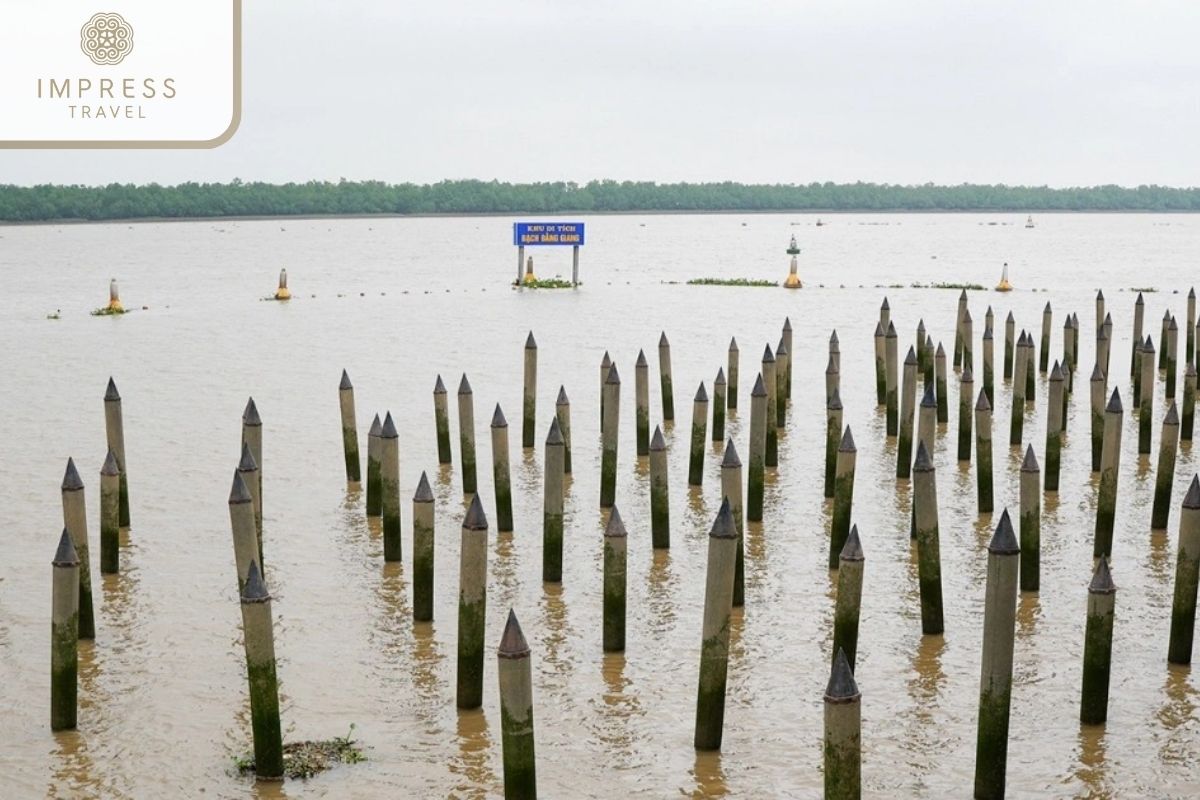
Bach Dang Victory in 1288 was a glorious victory, which marked in the Vietnamese history against the invaders, and the Stake - Yard in Yen Giang Lagoon was an evidence of the glorious feat of arms.
#Hoa Yen Pagoda
in
#Uông Bí
at
#Thượng Yên Công
#
Revered for its impressive architecture and serene ambiance, this ancient temple has captivated visitors for centuries. With roots tracing back to the Ly Dynasty, Hoa Yen offers a harmonious blend of history and nature, showcasing majestic ancient trees that have flourished for over 700 years.The pagoda is not only a place of worship but also a visual feast, providing breathtaking panoramic views of the surrounding historical sites.
#Ngoa Van temple
in
#Đông Triều
at
#
Thôn Trại Lốc
#
The pagoda is shaped like the letter “Nhi” and consists of two buildings, the Front Hall and the Back Hall, connected together. At the foot of the mountain, there are also many scenic relics that attract the attention of tourists such as Tan Long old forest, Am Tra palace, Do Kieu, Thong Dan, Da Chong, Ba Bac, etc. which are connected by a winding road that gradually runs up to the top of the mountain.
#Thai Mieu Imperial Ancestral Shrine
in
#An Sinh
#
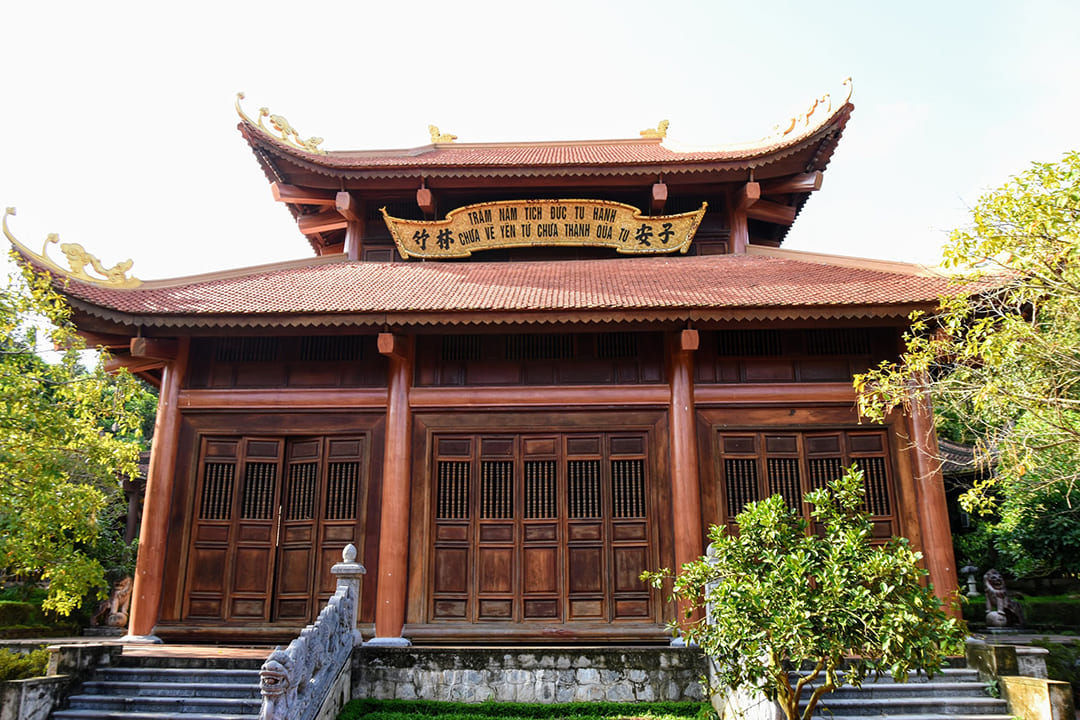
The Tran Dynasty historical relic site in Dong Trieu (Quang Ninh) was clearly shaped when Buddhist Emperor Tran Nhan Tong came to Yen Tu to practice Buddhism in 1299. At the end of the 14th century, the Tran Dynasty built more temples to worship the previous emperors, along with many religious architectural works to serve the practice and preaching of religion.
#Thanh Hoa province [capital = Thanh Hoa]
#Citadel of the Ho Dynasty
in
#Duong Thanh
at
#
Nam Giao Altar + Duong Thanh Citadel + La Thanh Outer Walled Section
#
The 14th -century Ho Dynasty citadel, built according to the feng shui principles, testifies to the flowering of neo-Confucianism in late 14th century Viet Nam and its spread to other parts of east Asia. According to these principles it was sited in a landscape of great scenic beauty on an axis joining the Tuong Son and Don Son mountains in a plain between the Ma and Buoi rivers. The citadel buildings represent an outstanding example of a new style of south-east Asian imperial city.
#Thua Thien Hue province [capital = Hue]
#Complex of Monuments
in
#Hue
see
#detail
#
Established as the capital of unified Viet Nam in 1802, Hué was not only the political but also the cultural and religious centre under the Nguyen dynasty until 1945. The Perfume River winds its way through the Capital City, the Imperial City, the Forbidden Purple City and the Inner City, giving this unique feudal capital a setting of great natural beauty.