#Japan UNESCO world heritage sites on #main land + #islands
#Amami-Oshima Island [capital = Amami]
#Subtropical rainforests
in
#Amami
at
#Sumiyocho Oaza Nishinakama
#
The mangroves are concentrated near the central east coast of the island, and tourists can explore them by kayak on guided tours. While best experienced in high tide when more of the smaller offshoots of the river are accessible, kayaking here is a worthwhile experience in low tide, too.
#Chubu region # [capital = Nagoya]
#Nirayama reverberatory furnace
in
#Izunokuni
at
#260-1 Naka
#
Historic Edo-period iron-smelting facility, built in 1857, with 15.7-m. brick-&-steel chimneys.
#Pine Tree Grove
in
#Miho no Matsubara
at
#Mihotodai dori
#
Miho no Matsubara is renowned as a seashore with green pine trees and sand spanning over seven kilometers. It has a great scenic view of Mount Fuji and the Izu Peninsula across Suruga Bay. Due to its natural environment, it is designated as one of New Three Views of Japan (Shin Nihon Sankei) along with its three pine groves.
#Fujisan (Mount Fiji) area
in
#Hitoana
see
#detail
#
The inscribed property consists of 25 sites which reflect the essence of Fujisan’s sacred and artistic landscape. In the 12th century, Fujisan became the centre of training for ascetic Buddhism, which included Shinto elements. On the upper 1,500-metre tier of the 3,776m mountain, pilgrim routes and crater shrines have been inscribed alongside sites around the base of the mountain including Sengen-jinja shrines, Oshi lodging houses, and natural volcanic features such as lava tree moulds, lakes, springs and waterfalls, which are revered as sacred.
#Historic Villages
of
#Ogimachi + Suganuma + Ainokura
#
The large houses with their steeply pitched thatched roofs are the only examples of their kind in Japan. Despite economic upheavals, the villages of Ogimachi, Ainokura and Suganuma are outstanding examples of a traditional way of life perfectly adapted to the environment and people's social and economic circumstances.
#Chugoku region # [capital = Hiroshima]
#Iwami Ginzan Silver Mine and its Cultural Landscape
in
#Oda
at
#Omoricho
#
The Iwami Ginzan Silver Mine in the south-west of Honshu Island is a cluster of mountains, rising to 600 m and interspersed by deep river valleys featuring the archaeological remains of large-scale mines, smelting and refining sites and mining settlements worked between the 16th and 20th centuries.
#Genbaku Dome-mae (Atomic Bomb Dome)
in
#Hiroshima
at
#Ote-machi 1-chome, Naka-ku
#
The Hiroshima Peace Memorial (Genbaku Dome) was the only structure left standing in the area where the first atomic bomb exploded on 6 August 1945.
#Itsukushima Shrine
in
#Hatsukaichi
at
#1-1 Miyajimacho
#
The present shrine dates from the 12th century and the harmoniously arranged buildings reveal great artistic and technical skill. The shrine plays on the contrasts in colour and form between mountains and sea and illustrates the Japanese concept of scenic beauty, which combines nature and human creativity.
#Former Castle Town
of
#Hagi
at
#Gofukumachi + Minamifuruhagimachi
#
Although only the ruins of Hagi Castle remain, some streets in the downtown area are beautifully preserved, lined by white walls from the feudal age, former samurai mansions and merchant quarters. Several of the mansions and other places of interest such as museums and temples are open to the public:
#Shokasonjuku Academy
in
#Hagi
at
#1573 Chinto
#
The Shoka Sonjuku academy was started in 1842 by Yoshida's uncle Bunnoshin Tamaki, and in 1859 Yoshida took it over at age 28 and taught his theory of National politics. He accepted students of all class based on his idea that all have an equal right to learn. Although he taught for only two and a half years, Yoshida mentored some very famous pupils that included such famous politicians as Hirofumi Ito, Genzui Kusaka, Shinsaku Takasugi and Aritomo Yamaguchi.
#Reverberatory furnace
in
#Hagi
at
#4897-7 Chinto
#
The Hagi Domain made efforts to introduce the reverberatory furnace, a smelting furnace necessary for casting iron cannons, as part of the reinforcement of coastal defenses. The ruins remaining today includes portion of the chimney, piled up with andesite to a height of 10.5m. As we can confirm that the reverberatory furnace operated temporarily in 1856 from the record of the Hagi Domain, the Hagi Reverberatory Furnace is considered to be constructed experimentally.
#Ebisugahana Shipyard
in
#Hagi
at
#5159-14 Chintou
#
In 1856, Ozaki Koemon, a master shipwright of the domain, and others decided to construct the shipyard at Ebisugahana in Obataura. In December of the same year, the first Western-style warship the “Heishin Maru” was launched, and in 1860, the “Kōshin Maru” was launched.
#Ohitayama Tatara Iron Works
in
#Hagi
at
#257-5 Shibuki
#
The remains of an iron works which produced iron by melting the raw material ironsand, with the heat produced by burning charcoal. In a traditional Japanese method of making iron, a bellows was used to feed air to the ironsand and charcoal in the furnace. This method of ironmaking is known as “tatara”.
#Hokkaido region # [capital = Sapporo]
#Ofune Site
in
#Hakodate
at
#Ichinohe, Ninohe District
#
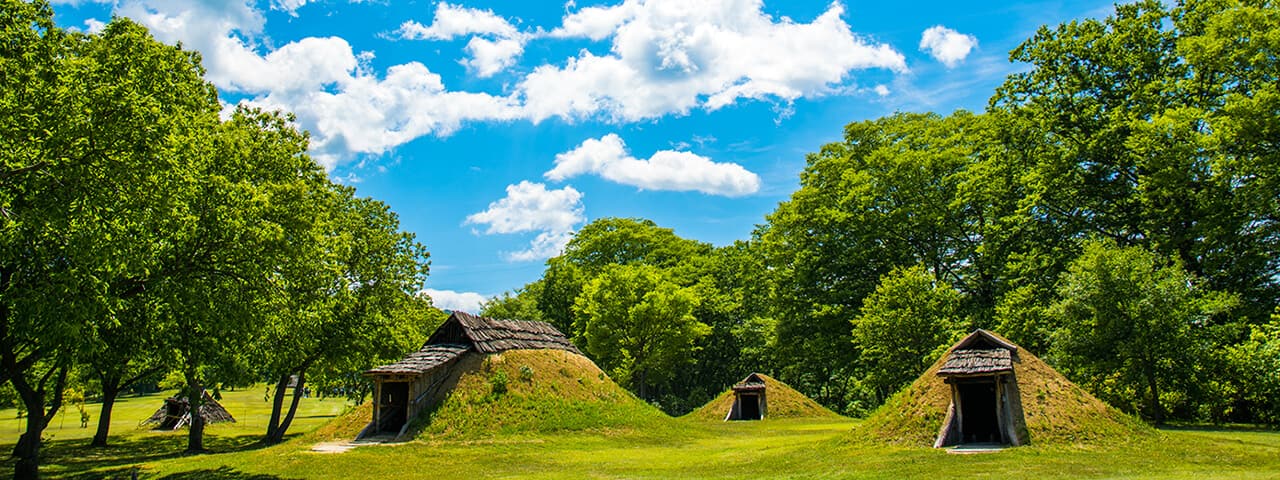
The settlement that continued for approximately 1,000 years extends like a belt on a plateau along the Ofune River, and has a common kind of settlement structure as seen in northern Tohoku as well. Most remains of pit dwellings that have been discovered have a large, deep structure, where the bones of whales and seals as well as chestnuts have been excavated.
#Irie Site
in
#Abuta-gun
at
#Takasago-cho 44
#
A display of around 200 excavated artifacts from the Irie-Tagasago shell mound. Ornamental accessories from the Jomon era and around Japan are also on show.
#Kakinoshima Ruins
in
#Hakodate
at
#551-1 Usujiricho
#
The world’s earliest lacquerware products were discovered from a pit grave in Kakinoshima Site B, a site from the first half of the Initial Jomon period (approx. 7,000 years ago), when people started settlements. Many artifacts of that time have been excavated, including 17 clay tablets with footprints as burial goods from pit graves of the latter half of the Initial Jomon period (5,000 BCE), a lacquered spouted vessel from the latter half of the Late Jomon period and censer-shaped pottery.
#Kitakogane Shell Mound
in
#Date
at
#Kitakoganecho
#
It is one of the largest shell mounds in Hokkaido, and the entire site is well preserved.
#Kiusu Earthwork Burial Circles
in
#Chitose
at
#Chuo
#
This site is the largest such burial ground from this period in Japan. Comprised of eight burial mounds in total, the mounds are characterized by a donut-shaped earthen embankment surrounding a sunken pit.
#Shiretoko National Park
in
#Rausu-cho
at
#N43 56 57.984 E144 57 56.988
#
The extraordinarily high productivity of the marine and terrestrial component of the property, produced and largely influenced by the formation of seasonal sea ice at the lowest latitude in the northern hemisphere, and the prominent interaction between the marine and terrestrial ecosystems are the key features of Shiretoko.
#Iriomote Island [capital = Sapporo]
#Subtropical rainforests
in
#Taketomi
at
#Iriomote Ishigaki National Park
#
The park is characterized by its natural landscape typical of the subtropical zone--a dynamic and abundant natural environment comprising near-primeval subtropical broad-leafed evergreen forest as well as Japan's largest mangrove forest, and coral reefs--and its human landscape imbued with a traditional Okinawa-ness that has been nurtured through everyday living within this environment. Another major characteristic is the numerous rare animal species unique to Yaeyama that can be found here, represented by the Iriomote wild cat and Sakishima grass lizard, which has evolved independently as the archipelago separated from and rejoined the continent repeatedly.
#Kanto region # [capital = Tokyo]
#National Museum of Western Art
in
#Tokyo
at
#7-7 Uenokoen, Taito-ku
#
The Main Building was designed by the Swiss architect Charles-Edouard Jeanneret-Gris (1887–1965), who is more popularly known as Le Corbusier. It is the only representative example of his work in the Far East; and the New York Times review of its opening suggested that the building itself presented an "artistic significance and beauty" which rivaled the paintings inside.
#Tajima Yahei Sericulture Farm
in
#Isesaki
at
#Sakaishimamura
#
This is the old residence and farmhouse of Yahei Tajima who perfected the modern sericulture technique called "Seiryo-iku", which focuses on ventilation. This is the first warmhouse for Seiryo-iku and the main characteristic of this two-story house is the "Yagura", window for ventilation on the roof.
#Takayama-sha Sericulture School
in
#Takayama
at
#236-1 Takenomoto
#
The site of the sericulture research and training institution that developed Japan’s modern methods
#Silk Mill
in
#Shimonita
at
#1-1 Tomioka
#
Tomioka Silk Mill is Japan's oldest modern model silk reeling factory, established in 1872 by the government to introduce modern machine silk reeling from France and spread its technology in Japan.
#Arafune Cold Storage
in
#Shimonita
at
#10690 Minaminomaki
#
The Arafune Cold Storage served as a natural refrigerator for the silk industry during the early 1900s. Silkworm eggs were chilled there to prevent them from hatching, allowing silk production to be carried out multiple times per year instead of just once.
#Futarasan jinja
in
#Nikko
at
#2307 Sannai
#
The shrine possesses two swords that are National treasures of Japan. Additionally, dozens of buildings and cultural artifacts are listed as Important Cultural Assets. The Sacred Bridge crossing the Daiya River belongs to the Futarasan Shrine. This beautiful vermilion lacquered structure is known as one of the three most beautiful bridges in Japan and is a perfect gateway for Nikko.
#Tosho-gu
in
#Nikko
at
#2301 Sannai
#
Five structures at Nikko Tosho-gu are categorized as National Treasures of Japan, and three more as Important Cultural Properties. Additionally, two swords in the possession of the shrine are National Treasures, and numerous other objects are Important Cultural Properties. Famous buildings at the Tosho-gu include the richly decorated Yomeimon, a gate that is also known as "higurashi-no-mon". The latter name means that one could look at it until sundown, and not tire of seeing it. Carvings in deep relief, painted in rich colors, decorate the surface of the structure. The next gate is the karamon decorated with white ornaments. Located nearby is a woodcarving of a sleepy cat, "Nemuri-neko", attributed to Hidari Jingoro.
#Nikkozan Rinnoji Temple
in
#Nikko
at
#2300 Sannai
#
Sanbutsudo Hall, is one of the largest wooden architectures in Nikkosan, and houses Buddhist statues respectively symbolizing honchibutsu (original Buddhist divinity),of the holy three mountains in Nikko.
#Kinki region # [capital = Osaka]
#Castle
in
#Himeji
at
#68 Honmachi
#
Himeji-jo is the finest surviving example of early 17th-century Japanese castle architecture, comprising 83 buildings with highly developed systems of defence and ingenious protection devices dating from the beginning of the Shogun period. It is a masterpiece of construction in wood, combining function with aesthetic appeal, both in its elegant appearance unified by the white plastered earthen walls and in the subtlety of the relationships between the building masses and the multiple roof layers.
#Historic Monuments
in
#Kyoto
see
#details
#
As the centre of Japanese culture for more than 1,000 years, Kyoto illustrates the development of Japanese wooden architecture, particularly religious architecture, and the art of Japanese gardens, which has influenced landscape gardening the world over.
#Historic Monuments
in
#Nara
see
#details
#
The city's historic monuments – Buddhist temples, Shinto shrines and the excavated remains of the great Imperial Palace – provide a vivid picture of life in the Japanese capital in the 8th century, a period of profound political and cultural change.
#Buddhist Monuments of the Horyu-ji Area
in
#Ikaruga
at
#1-1 Horyuji Sannai
#
The structures inscribed are some of the oldest extant wooden buildings in the world, dating from the 7th to 8th centuries. Many of the monuments are also National Treasures of Japan, and reflect an important age of Buddhist influence in Japan. The structures include 21 buildings in the Hōryū-ji East Temple, 9 in the West Temple, 17 monasteries and other buildings, and the pagoda in Hokki-ji.
#Mounded Tombs
in
#Fujiidera
see
#details
#
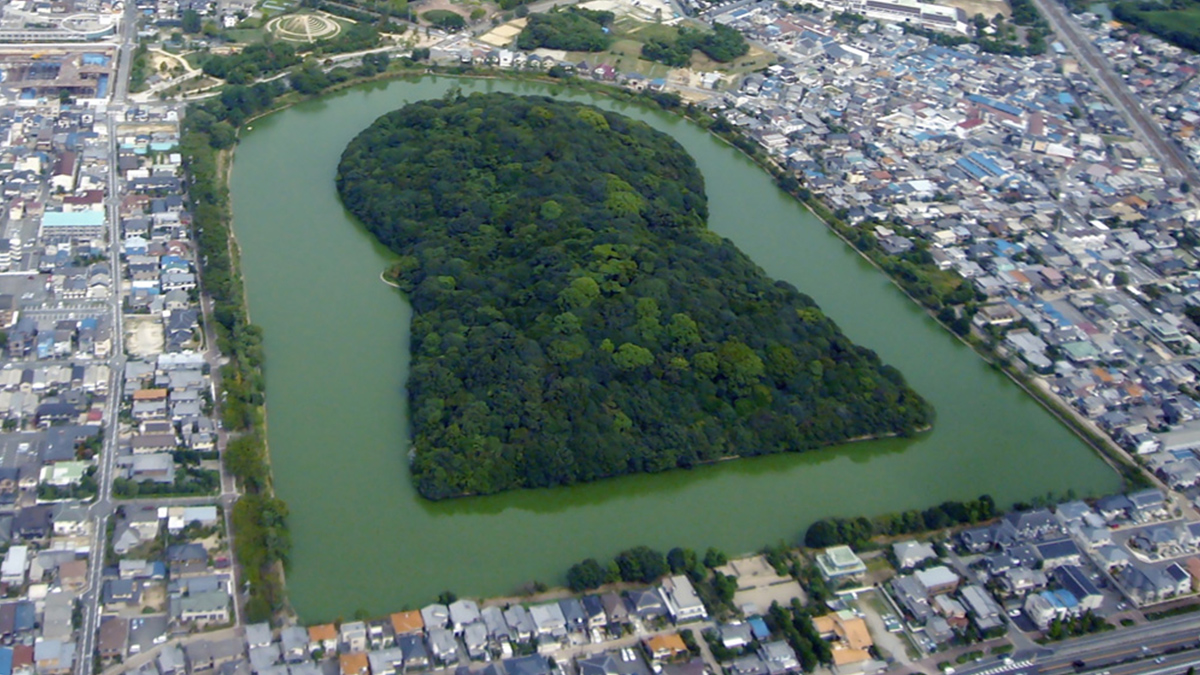
Burial mounds of various sizes, kofun can take the form of key holes, scallops, squares or circles. These tombs were for members of the elite, containing a range of funerary objects (such as weapons, armour and ornaments). They were decorated with clay figures, known as haniwa, which can take the form of cylinders or representations of houses, tools, weapons and human silhouettes.
#Mounded Tombs
in
#Sakai
see
#details
See above.
#Niutsuhime Shrine
in
#Katsuragi
at
#230 Kamiamano
#
Said to be founded more than 1700 years ago, Niutsuhime Jinja is one of the older shrines in Wakayama and a registered World Heritage venue. The deities enshrined here are the guardians of Koyasan, the Buddhist mountaintop temple complex founded by Kobo Daishi. Fans of shrine architecture will appreciate the four main shrine buildings: Japan's largest kasuga-style structures.
#Kinpusen-ji Temple
in
#Yoshino
at
#2498 Yoshinoyama
#
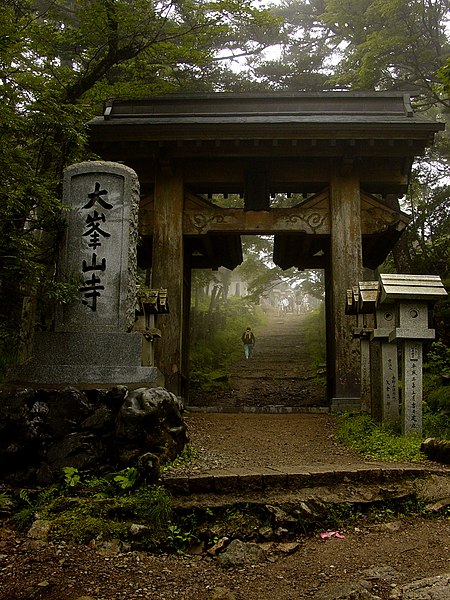
The main building of Kinpusenji Temple, the Zaodo, has been designated a National Treasure. It houses three huge statues of Zao Gongen (the principal object of worship for the Shugendo religion), which are only occasionally exhibited to the public. Visitors will find many other treasures within this impressive hall, the second-largest traditional wooden building in Japan after Todaiji Temple’s Great Buddha Hall in Nara.
#Yoshimizu Shrine
in
#Yoshino
at
#579 Yoshinoyama
#
Yoshimizu Shrine is a Shinto shrine located on Mount Yoshino in Yoshino district, Nara, Japan. It is dedicated to Emperor Go-Daigo, and the samurai Kusunoki Masashige.
#Yoshino Mikumari Shrine
in
#Yoshino
at
#1612 Yoshinoyama
#
The main hall (honden), an Important Cultural Property,is an unusual structure 9 ken long and 2 ken wide. Built in the nagare-zukuri style, it has however an independent 1x1 ken unit in the kasuga-zukuri style at the center. The three resulting edifices all lie under the same bark roof, which has three dormer gables.
#Kinpu Shrine
in
#Yoshino
at
# 1651 Yoshinoyama
#
Kimpu Shrine is a Shinto shrine located in Yoshino district, Nara Prefecture, Japan. The honden, or main hall, is constructed in the nagare-zukuri style.
#Ominesanji Temple
in
#Tenkawa
at
#703 Dorogawa
#
Because of its location near the summit of Omine Mountain, visitors can enjoy beautiful scenery in each of the four seasons.
#Jisonin Buddhist temple
in
#Kudoyama
at
#832 Jisonin
#
Jison-in is a Buddhist temple in the town of Kudoyama that marks the entrance to the pilgrimage route of Koyasan.
#Niukanshobu Shrine
in
#Kudoyama
at
#835 Jisonin
#
Niukanshofu Shrine or Niukanshōbu Shrine is a Shinto shrine in Ito district, Wakayama Prefecture, Japan.
#Kongobuji Temple
in
#Koya
at
#132 Koyasan
#
The temple’s modern Banryutei is Japan's largest (2340 square meters), with 140 granite stones arranged to suggest a pair of dragons emerging from clouds to protect the temple.
#Kumano Hongu Taisha Shrine
in
#Tanabe
at
#1156 Hongucho Hongu
#
In front of Oyu no Hara stands the biggest torii gate in the world, which, at 33 meters tall, dwarfs visitors passing under it.
#Kumano Hayatama Taisha Shrine
in
#Shingu
at
#1st Shingu
#
Kumano Hayatama Taisha is a Shinto shrine located in Shingu, Wakayama Prefecture, on the shores of the Kumanogawa in the Kii Peninsula of Japan.
#Fudarakusan-ji Temple
in
#Nachikatsuura
at
#348 Hamanomiya
#
Fudarakutokai is the faith of suicidal shipping out to the southern sea in search of Fudaraku Pure Land. Fudarakutokai were conducted twenty times between 9th Century and 18th Century.
#Nachi Primeval Forest
in
#Nachikatsuura
at
#Nachisan
#
This forest extends about 33.5ha to the east of Nachi no Otaki, and has been protected since ancient times as a sanctuary, and keeps its primeval nature along with the waterfall. It's main feature is a mixture of cool region and warm region road-leaf evergreen plants, which are the most typical in this region and keep character of a natural forest. There are many species in this forest and it has rich plant characteristics.
#Kumanonachi Taisha Shrine
in
#Nachikatsuura
at
#1 Nachisan
#
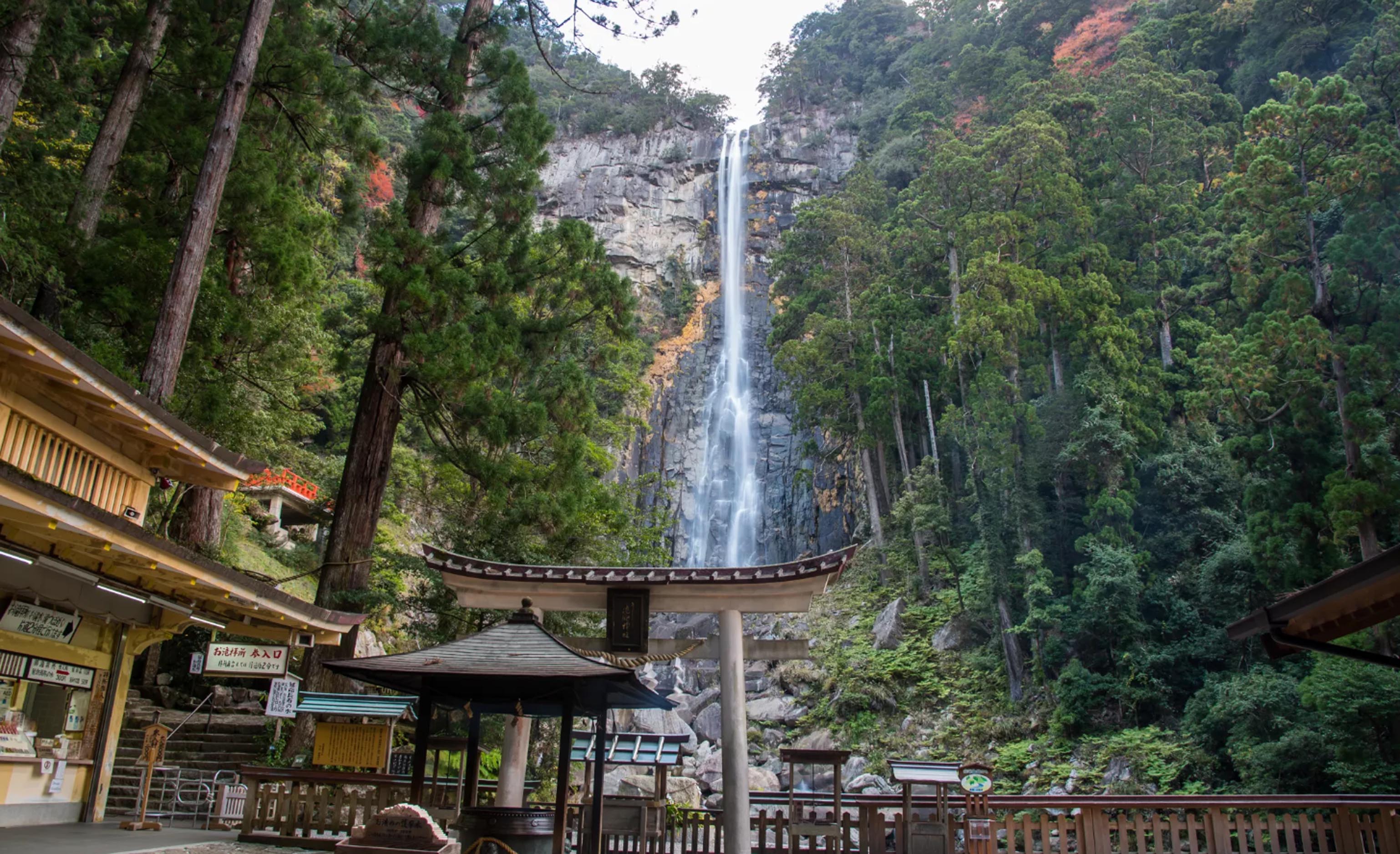
Kumano Nachi Taisha is an example of Buddhist and Shinto syncretism (Shinbutsu shugo) nestled in the Kii Mountains, near Kii Katsuura, Japan. Cedar forests surround the site. The Nachi Waterfall, worshiped at Hiryu Shrine near Kumano Nachi Taisha is believed to be inhabited by a kami called Hiryu Gongen. Also, there is a sacred tree at this site, Sacred Camphor Tree, which located between the Nachi Shrine (heiden) and Seigantoji Temple. It is 850 years old and is said to have been planted by Taira-no-Shigemori (1138-1179). The straw rope (shimenawa) and paper flags show that this tree has been sanctified as a kami. The tree is alive with moss and ferns and other small plants growing on its ancient limbs. It is possible to enter the tree where there is a small altar for making offerings – inside the tree you feel as though you actually hear the beating of its 800-year-old heart!
#Nachi Falls
in
#Nachikatsura
at
#2 Nachisan
#
With a drop of 133 meters (and 13 meters wide),[1] it is the country's tallest water fall with single uninterrupted drop.
#Seiganto-ji Temple
in
#Nachikatsuura
at
#8 capital Nachiyama
#
The temple was purposely built near Nachi Falls, where it may have previously been a site of nature worship.
#Kyushu region # [capital = Nagasaki]
#Rainforest of Yakushima
in
#Yaku Island
at
#2077-37 Miyanoura
#
Home to some 1,900 species and subspecies of flora, 16 mammal species and 150 bird species, it exhibits a rich biodiversity including the landscape of the Japanese cedar (Cryptomeria japonica), a primeval forest composed of trees called “Yakusugi”, which are over 1,000 years in age.
#Shoko Shuseikan
in
#Kagoshima
at
#Yoshinocho
#
This museum, adjacent to Sengan-en, once housed Japan's first factory, built in the 1850s. Exhibits relate to the Shimazu family – in fact most of the 10,000 items are precious heirlooms, including ancient scrolls, military goods and pottery.
#Sekiyoshi Sluice gate of Yoshino leat
in
#Kagoshima
at
#1263 Shimotacho
#
A flume extends approximately eight kilometers from this Sekiyoshi gate upstream on the Abeki River to Suzumegamiya. The flume was built by Shimazu Nariakira (lord of Satsuma Domain) to provide water for a water wheel which powered the Shuseikan blast furnace and a device for drilling gun holes.
#Terayama Charcoal Kiln
in
#Kagoshima
at
#10710-68 Yoshinocho
#
A traditional Japanese -style horseshoe-shaped, stone-built, charcoal kiln used to produce fuel and reducing agent for the industrial facilities at Shuseikan.
#Misumi West Port
in
#Uki-shi
at
#Misumimachi Misumiura
#
Its location along the Ariake Sea in Kumamoto Prefecture was chosen due to the naturally deep waters which could accommodate large ships. The port developed into a major shipping point for coal from the Miike Coal Mines as well as commodities like rice, wheat and flour.
#Sakitsu Church
in
#Amakusa
at
#539 Kawauramachisakitsu
#
The inside of the church is equipped with tatami flooring which is very rare even in Japan and Sakitsu village, where the church is located, is a cultural asset telling the Christian history in Japan.
#Remains of Hara Castle
in
#Minamishimabara
at
#2444 Kitaarimachobo
#
As a result of the Shimabara Rebellion in 1637, the Shogunate decided to expel the Portuguese from Japan. The Dutch, meanwhile, gained the trust of the authorities after they bombarded Hara Castle, where the insurgents had taken refuge, and thus gained a monopoly on European trade with Japan.
#City
of
#Nagasaki
see
#detail
#
Sites of Japan’s Meiji industrial revolution
#Shitsu Catholic Church
in
#Nagasaki
at
#2633 Nishishitsumachi
#
Shitsu Church is worth it not only for its rustic architecture more common in Europe than in Japan, but also for its scenic location.
#Ono Church
in
#Nagasaki
at
#Shimoonomachi
#
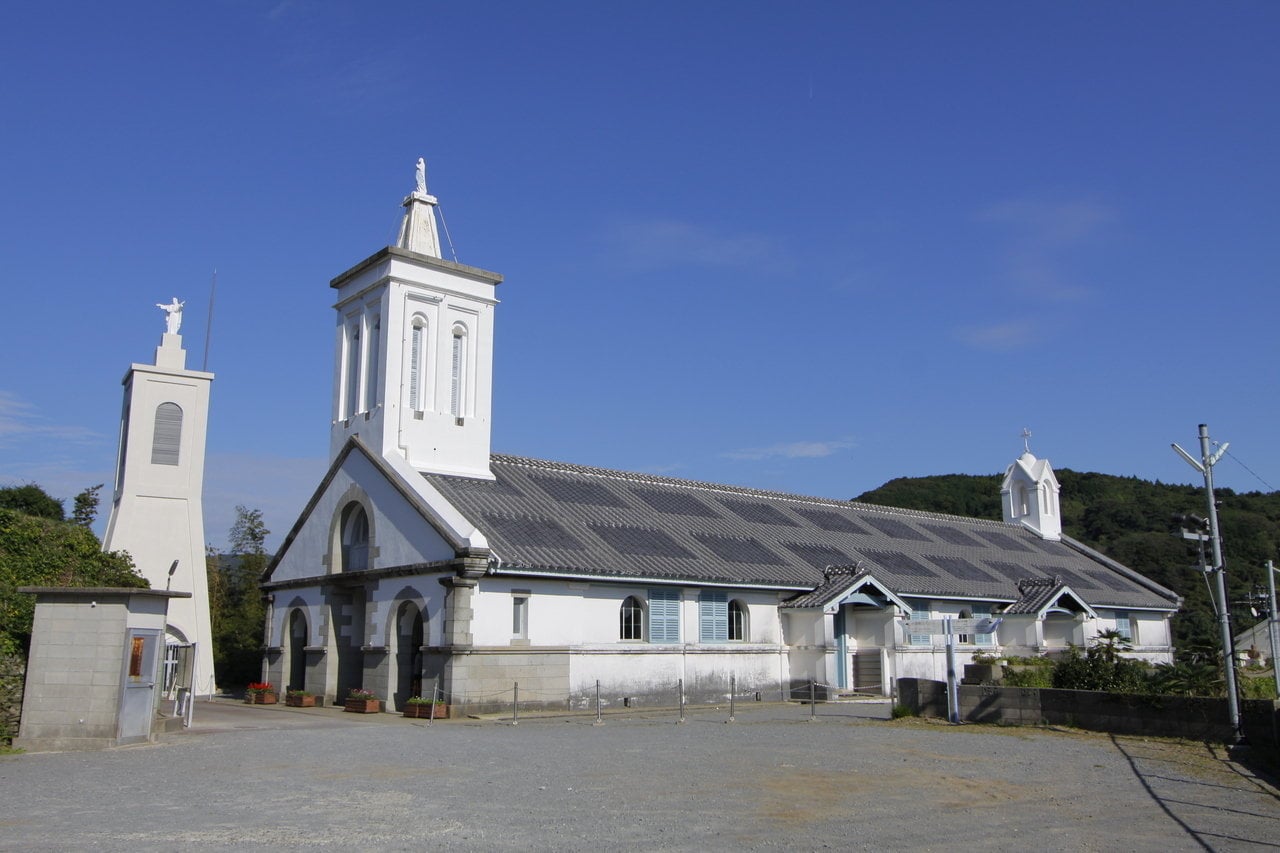
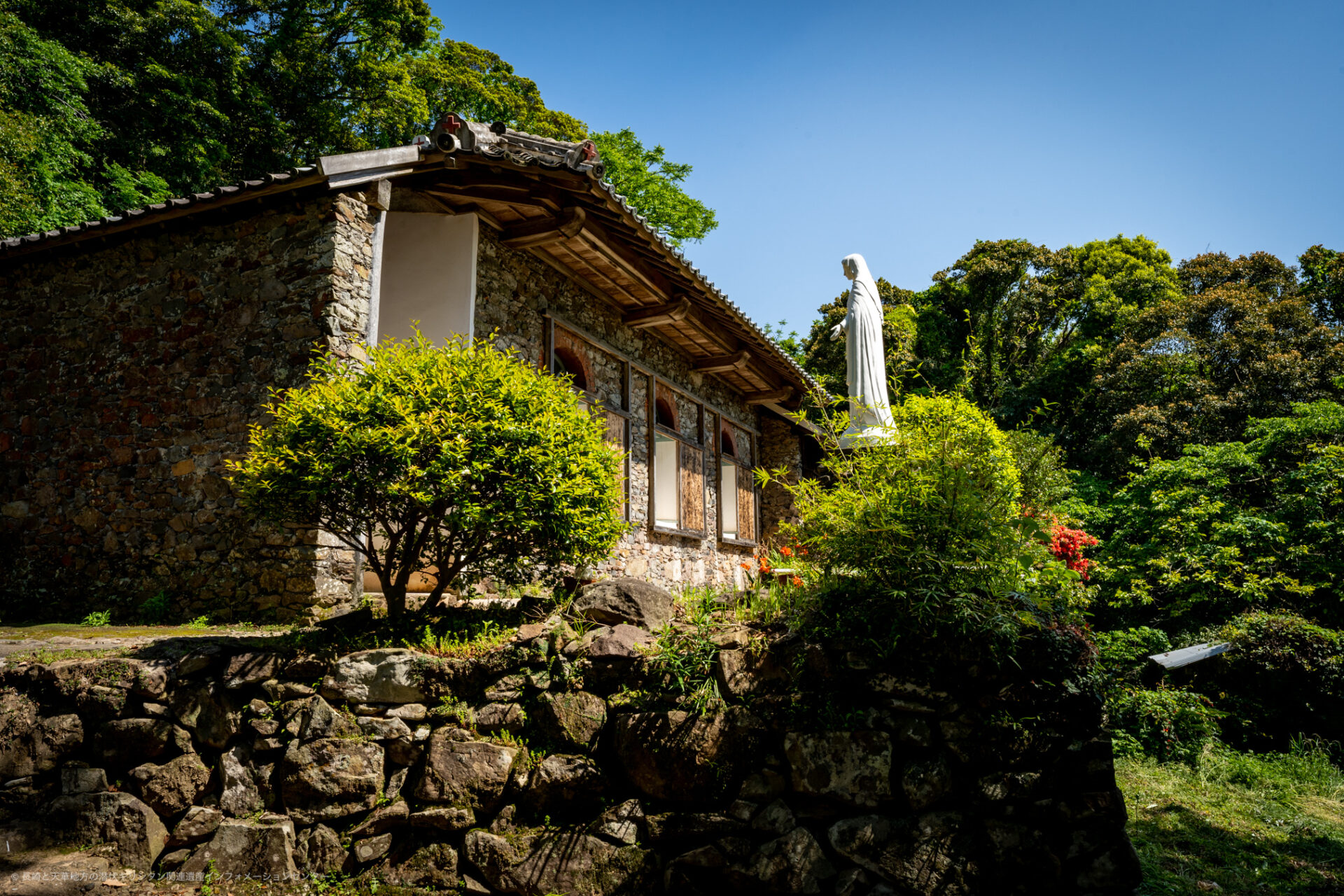
Built in the same basic way as houses in this area traditionally have been, Ono church is a church rich in local character. Its unusual architecture tells of the simplicity of the faith which took root here.
#Catholic Egami Church
in
#Goto
at
#Narumachi Okushi, 1131
#
The structure of the building is a structure with lovely colors such as white walls and blue windows, and a raised floor to avoid moisture. It was designated as an important cultural property of Japan in 2008 as a work with a high degree of perfection even in a wooden church in Japan.
#Former Gorin Church
in
#Goto
at
#993-11 Warabicho | Warabi-machi
#
This is located near a very small fishing port of Hisaka Island, and was originally built in 1881 and restored in 1931 at the present site. Masses are held in a new one next to this. This old wooden church looked like a traditional Japanese house, but indoors we felt it Western-church-designed like Rib Vault ceilings, two aisles, or a nave, and horizontal sliding windows look unique.
#Kashiragashima Church
in
#Shinkamigoto
at
#638 Tomosumigo Kashiragajima
#
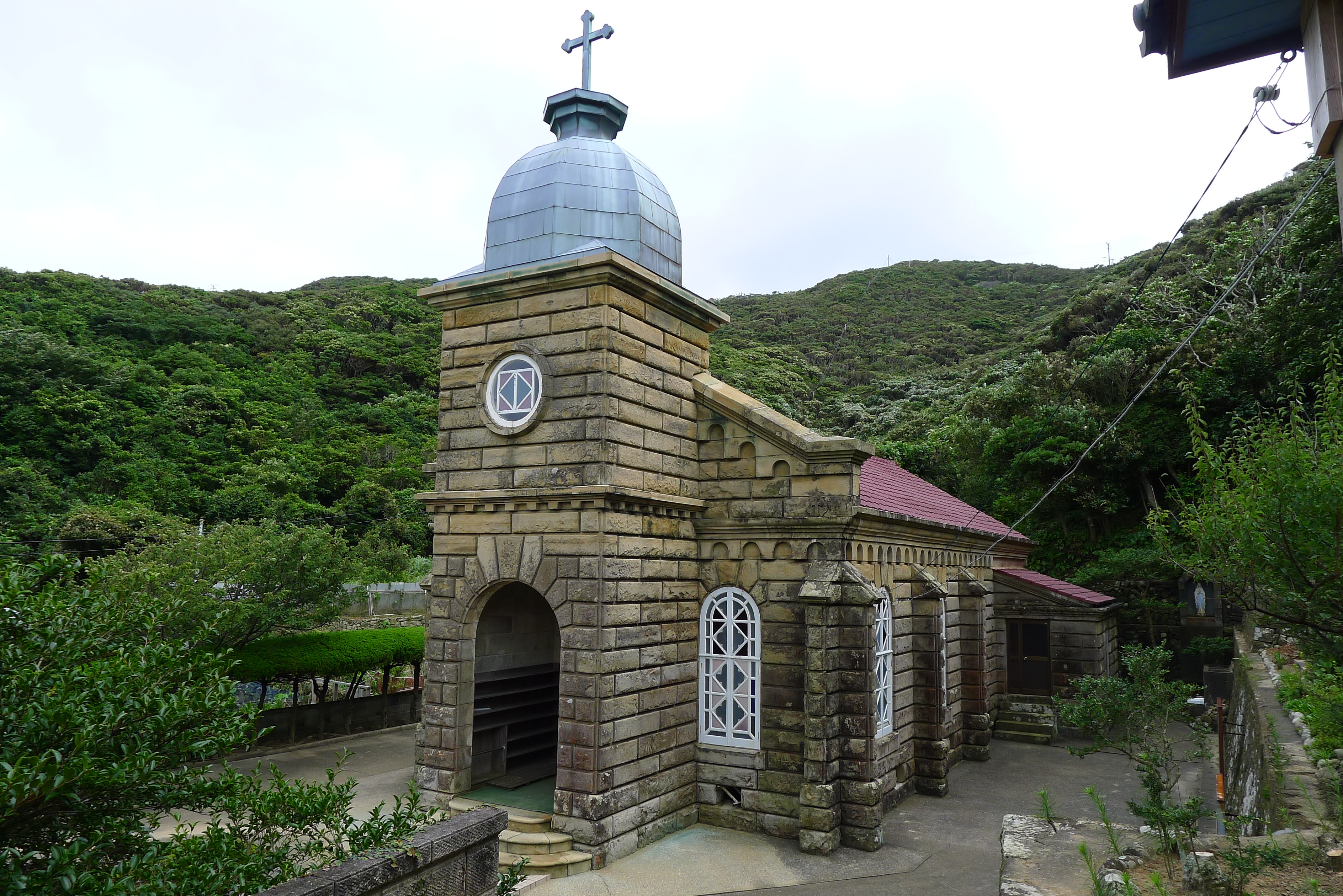
Kashiragashima Church, this sandstone church, a rare sight in Japan, was built by Christians returning to the islands after the period of persecution, from stones they quarried themselves.
#Nokubi Church
in
#Ojika
at
#664 Nozakigo
#
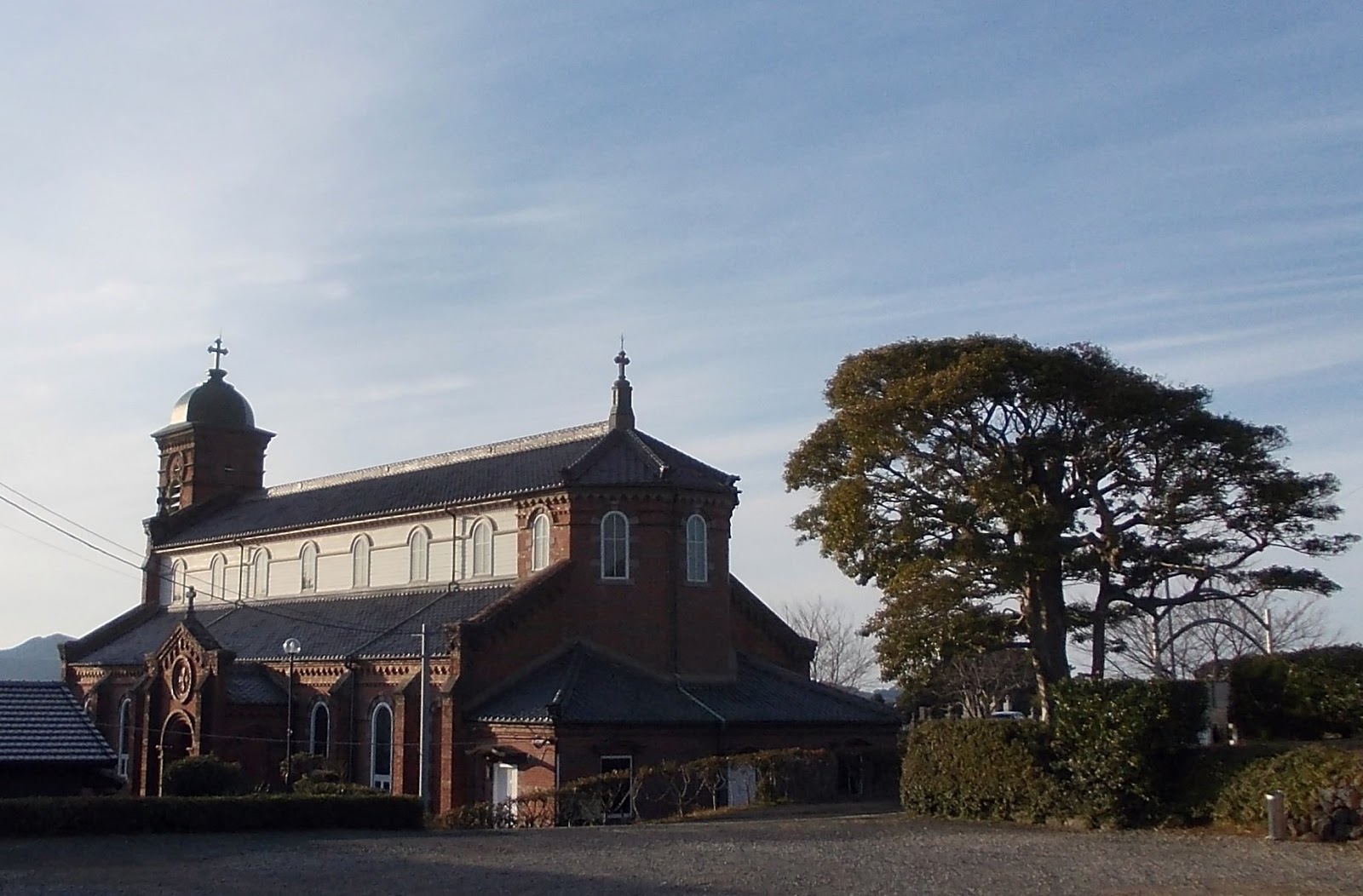
The sole remaining church on Nozaki island is located in the former Nokubi village. The small red brick church stands atop a hill, watching over the remains of the settlement. Together with Funamori in the south, Nokubi was once home to devout Christians. The parishioners, 17 families in all, willingly embraced hardships and came together to raise funds for the construction of the church that would carry their legacy for generations.
#Tabira Catholic Church
in
#Hirado
at
#19 Tabiracho Kotedamen
#
The church is located on a plateau overlooking Hiradoseto, with the parsonage, gatepost and brick wall still intact, and the historical environment of its surrounding cemetery and fields has been well preserved.
#Kasuga Village Cultural Landscape
in
#Hirado
at
#Yamanakacho
#
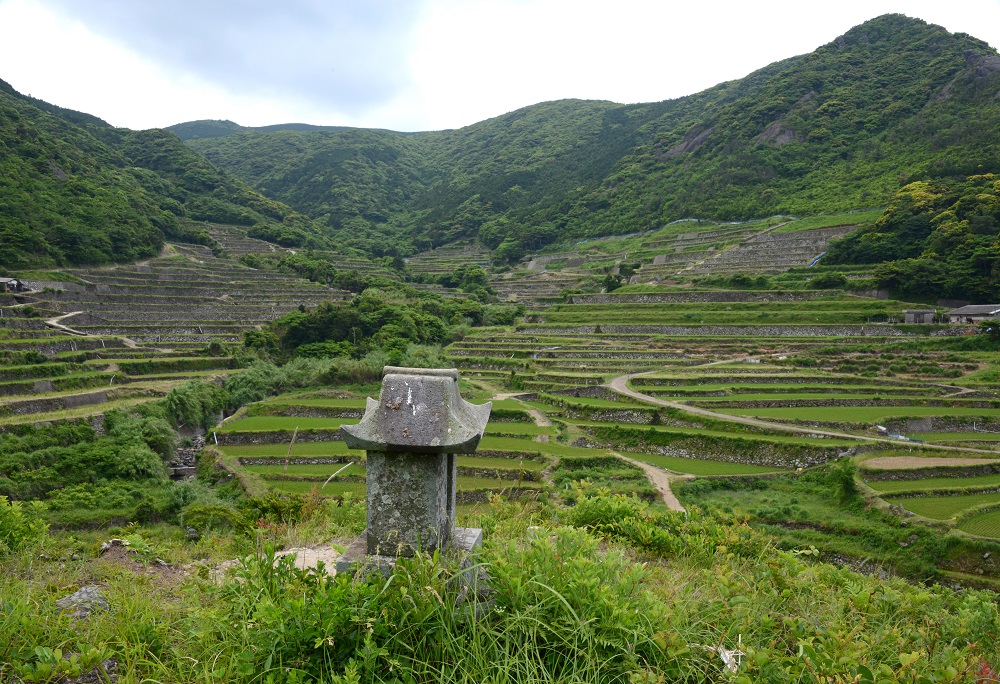
It is a precious place where you can find a unique landscape consisting of beautiful terraced rice fields, pastures, and residential areas.
#Catholic Kuroshima Church
in
#Sasebo
at
#3333 Kuroshimacho
#
A graceful romanesque church.
#Miejitsu Navy site
in
#Saga
at
#Kawasoemachi Oaza Hayatsuetsu, 446-1
#
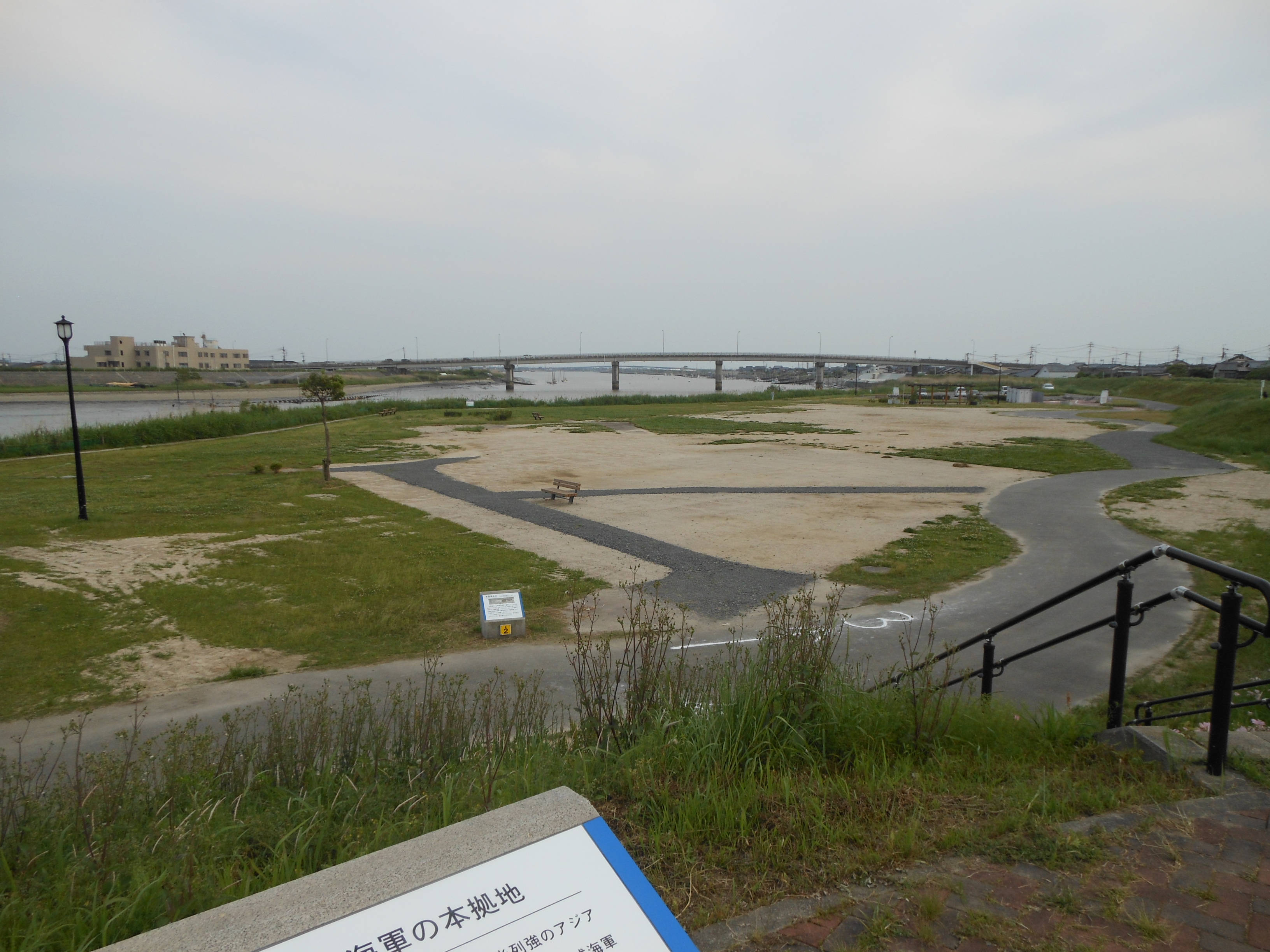
The naval dock served as a building and repair yard for ships of the Saga domain’s westernized navy at the end of the Tokugawa Period. The wooden remains of the dry-dock (that facilitated ship repairs) show a fused construction of both Japanese and Western influences, a rare feat of Japanese building-style that still remains today.
#Miike mine
in
#Omuta
at
#1 - chome Miyahara cho 86-3
#
The buildings are restored as they were at the time of the closure, quietly conveying the passion and dreams toward the modernization of Japan.
#Taisha Shrines
in
#Munakata
at
#Tajima 2331
#
Shinpo-kan, the shrine's treasure hall located on the grounds of Hetsu-gu, houses and displays the important cultural properties handed down in the Munakata Taisha shrine, including about 80,000 sacred treasures designated as National Treasures of Japan such as mirrors, curved beads and gold rings that were unearthed on Okinoshima. The first floor of the Shinpo-kan displays fine arts and crafts from the main shrine, the second floor has ritual objects from Okinoshima, and the third floor is the place for ancient documents related to Munakata and a local collection.
#Onga river Pumping Station
in
#Nakama-shi
at
#Dotenouchi, 1 Chome-3-1
#
Located about 10 kilometers from the mouth of the Onga River, this water pumping station is still in operation, actively supplying water to the Yawata Steel Works. It was constructed in 1910 to fulfill water insufficiency for the first expansion of the Yawata Steel Works undergoing at that time. Although the post has shifted its main source of power from steam to electric, it is still fully engaged in supplying the much needed water supply to their nearby steel maker.
#Nippon Steel Sumikin Yawata Works
in
#Kitakyushu-shi
at
#Yahatahigashi-ku, Ogura
#
It is positioned as a plate manufacturing site with production that is on one of the largest scales worldwide.
#Kyushu north west islands [capital = Nagasaki]
#Munakata Island Sites
in
#Okinoshima + Koya + Oshima
#
The archaeological sites that have been preserved on the island are virtually intact, and provide a chronological record of how the rituals performed there changed from the 4th to the 9th centuries AD. In these rituals, votive objects were deposited as offerings at different sites on the island. Many of them are of exquisite workmanship and had been brought from overseas, providing evidence of intense exchanges between the Japanese archipelago, the Korean Peninsula and the Asian continent. Integrated within the Grand Shrine of Munakata, the island of Okinoshima is considered sacred to this day.
#Nara region [capital = Nara]
#Asuka Palace Site
in
#Asuka
at
#Oaza Oka
#
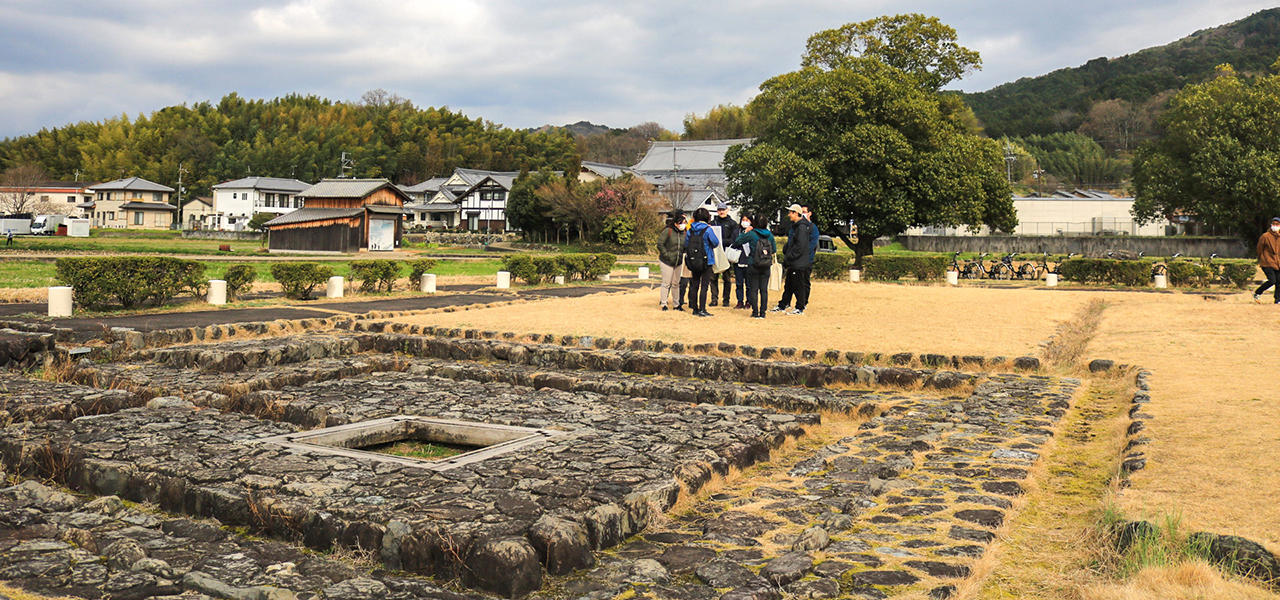
The site is unique because of the way the remains are layered up to 60cm underground.
Ogasawara Islands #north
+
#south
#Oceanic Island Ecosystems
in
#Mukojima + Chichijima + Hahajima island groups
#
#
The landscape is dominated by subtropical forest types and sclerophyllous shrublands surrounded by steep cliffs. There are more than 440 species of native vascular plants with exceptionally concentrated rates of endemism as high as 70% in woody plants. The islands are the habitat for more than 100 recorded native land snail species, over 90% of which are endemic to the islands.
#Okinawa Island # [capital = Naha]
#Shikina-en
in
#Naha
at
#421-7 Maaji
#
Shikinaen is a circuit garden, a traditional Japanese layout centered on a pond. The pond is fed by a spring known as Ikutokusen, enclosed by low, curved walls of coral limestone. Two stone monuments near the spring are engraved with commemorative messages from two envoys from China. A Chinese-style arched bridge crosses over the pond, and a smaller bridge leads to the Rokkakudo, a hexagonal, Chinese-style pavilion. The Udun, a statehouse with a traditional red-tiled roof, is on the opposite side of the pond.
#Tamaudun Mausoleum
in
#Naha
at
#Tamaudun
#
A stone wall in front of the tomb has stone balustrades decorated with carvings of fictional beasts such as dragons and phoenixes, and motifs found in Chinese art such as lions and lotuses.
#Shurijo Castle
in
#Naha
at
#1 Chome-2 Shurikinjocho
#
The date of construction is uncertain, but it was clearly in use as a castle during the Sanzan period (1322–1429). It is thought that it was probably built during the Gusuku period, like many other castles of Okinawa. When King Sho Hashi unified the three principalities of Okinawa and established the Ryukyu Kingdom, he used Shuri Castle as a residence.
#Sonohyan-utaki Ishimon
in
#Naha
at
#3 Shuritonokuracho
#
Sonohyan-utaki is a sacred grove of trees and plants (utaki) of the traditional indigenous Ryukyuan religion. It is located on the grounds of Shuri Castle in Naha, Okinawa, a few paces away from the Shureimon castle gate.
#Sefa-utaki
in
#Nanjo
at
#Cape Chinen
#
Sefa-utaki, meaning "purified place of Utaki," is an historical sacred space, overlooking Kudaka Island, that served as one of the key locations of worship in the native religion of the Ryukyuan people for millennia. Later as a part of assimilation of Okinawa by Japan, it was shifted to serve as a Shinto Shrine.
#Nakagusuku Castle
in
#Kitanakagusuku
at
#503 Ogusuku
#
The legendary Ryukyuan commander, Gosamaru, built the fortress in the early 15th century to defend against attacks from the east by Lord Amawari of Katsuren Castle. Amawari attacked the castle in 1458 and defeated Gosamaru shortly before his own castle was attacked by Uni-Ufugusuku.
#Castle Ruins
in
#Zakimi
at
#708-6 Zakimi, Yomitan Village
#
It was built between 1416 and 1422 by the renowned Ryukyuan general Gosamaru, a project which involved workers from as far away as the Amami Islands, and was partly constructed with materials taken from nearby Yamada Castle. Zakimi Castle oversaw the northern portion of central Okinawa Island. The fortress has two inner courts, each with an arched gate. This is Okinawa's first stone arch gate featuring the unique keystone masonry of the Ryukyus.
#Katsuren Castle
in
#Uruma
at
#3908 Katsurenhaebaru
#
Precious tile and Chinese porcelain of the era have been excavated from Katsuren. Such remains testify to the magnificence of the ancient structure and the robust entrepôt trade between Japan, Korea, China, and Southeast Asia. The castle also has an active shrine of the Ryukyuan religion within the first bailey dedicated to Kobazukasa.
#Castle Remains
in
#Nakijin
at
#5101 Imadomari
#
The fortress includes several sacred Utaki groves, reflecting the castle's role as a center of religious activity. It is today known for the Hikan cherries which bloom in northern Okinawa between mid-January and early February, providing the first cherry blossoms each year in Japan.
#Subtropical rainforests
in
#Okuma
at
#Yambaru National Park
#
Yanbaru National Park is a natural treasure, defined by its lush subtropical evergreen forests, striking limestone cliffs, and abundant wildlife. It serves as a sanctuary for a variety of endemic species, including the Yanbaru kuina (Okinawa Rail), Noguchi woodpecker, and an array of unique plants and animals.
#Sado Island [capital = Sado]
#Gold Mines
in
#Nishimikawa + Sawane + Aikawa
#@
#
Placer deposits were exploited in Nishimikawa Area, located on the north-western side of the Kosado Mountains. In addition, the weathering of the volcanic rock exposed ore veins, which were mined underground in the Aikawa-Tsurushi Area, at the southern end of the Osado Mountains range. Mostly tangible attributes reflecting mining activities and social and labour organisation are preserved as archaeological elements, both above and below ground, and landscape features.
#Tohoku region # [capital = Sendai]
#Hashino Iron Mining and Smelting Site
in
#Kamaishi
at
#Dai 2 Chiwari-6 Hashinocho
#
It has been recognized as the oldest western-style blast furnace in Japan
#Goshono Site
in
#Iwate
at
#Ichinohe, Ninohe District
#
The settlement contains two or three groups of pit-house dwellings, located to the east and west of a central ceremonial area containing a necropolis and ritual buildings.
#Chuson-ji Temple
in
#Hiraizumi-cho
at
#Koromonoseki Hiraizumi
#
It is the head temple of the Tendai sect in Tōhoku region of northern Honshu. The temple claims it was founded in 850 by Ennin, the third chief abbot of the sect. George Sansom states Chūson-ji was founded by Fujiwara no Kiyohira in 1095.
#Motsuji Temple
in
#Hiraizumi
at
#Osawa-58
#
Motsu-ji is a Buddhist temple of the Tendai sect in the town of Hiraizumi in southern Iwate Prefecture, Japan, and also refers to the historic area surrounding it containing the ruins of two older temples, Enryu-ji and Kasho-ji in a Jodo (Pure Land) garden.
#Kanjizaio-in Temple
in
#Hiraizumi
at
#Shirashi
#
As with other Buddhist temples in the Hiraizumi area, the temple shared the Pure Land theme with a large pond surrounded by gardens. The pond was fed by a stream from Motsu-ji. Both Motsu-ji and Kanjizaio-in also had large earthen walls surrounding their compounds with majestic entrance gates.
#Muryoko-in Temple
in
#Hiraizumi
at
#Hanadate
#
Nothing remains of the temple today except for some foundation stones and the remnants of earthen walls. The twelfth-century garden with pond, island and ornamental stones has been reconstructed.
#Mount Kinkei
in
#Hiraizumi
at
#Hanadate 4
#
Mount Kinkei is a sacred mountain that has influenced the spatial layout of the temple complex at Hiraizumi.
#Isedotai Stone Circles
in
#Akita
at
#Isedotai Wakigami, Kitaakita
#
Stone circle construction required a large labor force and hard work. The stones here were brought from a river up to 5 km away, and engineering work was performed for terrain adaptation before the circles were built. In addition to the circles themselves, ditches stretching more than 100 m were also installed.
#Oyu Stone Circles
in
#Akita
at
#Manza Towadaoyu, Kazuno
#
There are two stone circles in the site, they consist of various patterns of stone arrangements that combine large and small river rough stones into round, oval, and diamond shapes. One is called the Manza stone circle, consisting of more than 100 stone arrangements, and the other one is called the Nonakado stone circle which is made of about 60 stone arrangements.
#Shirakami-Sanchi
in
#Nishimeya
at
#Kanda-61-1 Tashiro
#
Reflecting the distinct heavy-snow environment of the inland areas along the Sea of Japan, a rare climatic condition in the world, Shirakami-Sanchi has forests of monodominant Fagus crenata, a species endemic to Japan. A unique plant community with diverse flora, including undergrowth dominated by evergreen Sasa kurilensis, it is also a habitat for rare bird species such as the black woodpecker (Dryocopus martius), and large mammals such as the Japanese serow (Capricornis crispus) and Japanese black bear (Ursus thibetanus japonicas), which requires a diverse forest environment including old-growth forest.
#Korekawa Central Park
in
#Aomori
at
#1 Chome-11-103 Korekawa, Hachinohe
#
The name Korekawa Site is a collective term for the Hotta Site (Middle Jomon period), Ichioji Site (Early to Middle Jomon period) and Nakai Site (Final Jomon period), and the Nakai Site is one of the sites representing the Kamegaoka culture.
#Komakino Stone Circle
in
#Aomori
at
#Komakino-41 Nozawa
#
The outer and inner rings were constructed by first placing oval-shaped stones vertically and stacking flat stones in between them to form a fence-like structure. This method of arrangement is very rare, not just for Aomori, but for the whole of Japan and has been called the ‘Komakino-style’ of stone arrangement.
#Sannai Maruyama Special Historical Site
in
#Aomori
at
#Maruyama-305 Sannai
#
The site covers an area of 42 ha, where the remains of pit dwellings and pillar-supported buildings, aligned pit graves, buried pottery, mounds, storage pits, roads and the remains of large buildings are systematically arranged.
#Kamegaoka Burial Site
in
#Aomori
at
#Shichinohe, Kamikita District
#
The Shakokidogu (clay figures that look like wearing sunglasses) was found in the Kamegaoka Site. With big eyes and decorated body, the Shakokidogu looks like a creatures from outer space and is as if it is veiled in mystery of the ancient world.
#Odai Yamamoto Site
in
#Aomori
at
#Kanita Odaiyamagen, Sotogahama, Higashitsugaru Distric
#
Pottery shards found during the rebuilding of a private residence in 1998 were submitted for radiocarbon dating by the Aomori Prefectural Board of Education, and were found to have been produced 16,500 years ago, making it the oldest known pottery in the world at that time.
#Oomori Katuyama stone circles
in
#Aomori
at
#Katsuyama Omori, Hirosaki
#
Stone circles in late Jomon are few in Japan, and the Omori Katsuyama Stone Circle is the only case in which a complete picture has been found through excavation and investigation.
#Tagoyano Shell Mound
in
#Aomori
at
#Okada Koyano Wooden House Tsugaru
#
The shell mounds have yielded shells from brackish shellfish (Japanese basket clams and other shellfish), implements made from the bones of whales and dolphins, many unfinished bracelets made of dog-cockle shells, showing the life in the inner bay area.
#Tokunoshima Island [capital = Kametsu]
#Subtropical rainforests
in
#Kagoshima
at
#N27 45 48.12 E128 58 1.95 + N27 51 48.39 E128 55 46.19
#
Hiking is discouraged because of the habu snake, but the mountain trails are exotic and beautiful. The beaches are also quite stunning, and the island's coastline includes several notable natural landmarks.